Zuck’s $13 Billion Tab: Meta Swipes the Credit Card for AI Dominance
The Fortress Balance Sheet Gets a Mortgage
For years, Meta ($META) was the poster child for the 'fortress balance sheet.' The plan was simple: print money from Instagram and Facebook ads, then use that cold, hard cash to fund whatever futuristic fever dream Mark Zuckerberg had next. But as we hit May 2026, the strategy has officially shifted. Meta is trading in its 'Move Fast and Break Things' motto for 'Borrow Fast and Build Things.'
Reports indicate that Meta has tapped Morgan Stanley ($MS) and JPMorgan ($JPM) to lead a massive $13 billion debt financing round. The destination? A 1-gigawatt data center in El Paso, Texas, code-named 'Project Sopaipilla.' This isn't just a building; it’s a power-hungry monster designed to house the next generation of AI chips. But the real story is how it's being paid for. By moving toward a project-finance model—essentially taking out a mortgage on its infrastructure—Meta is protecting its daily cash flow to keep investors happy with buybacks while still staying in the AI arms race.
Project Sopaipilla: A 1-Gigawatt Gamble in the Desert
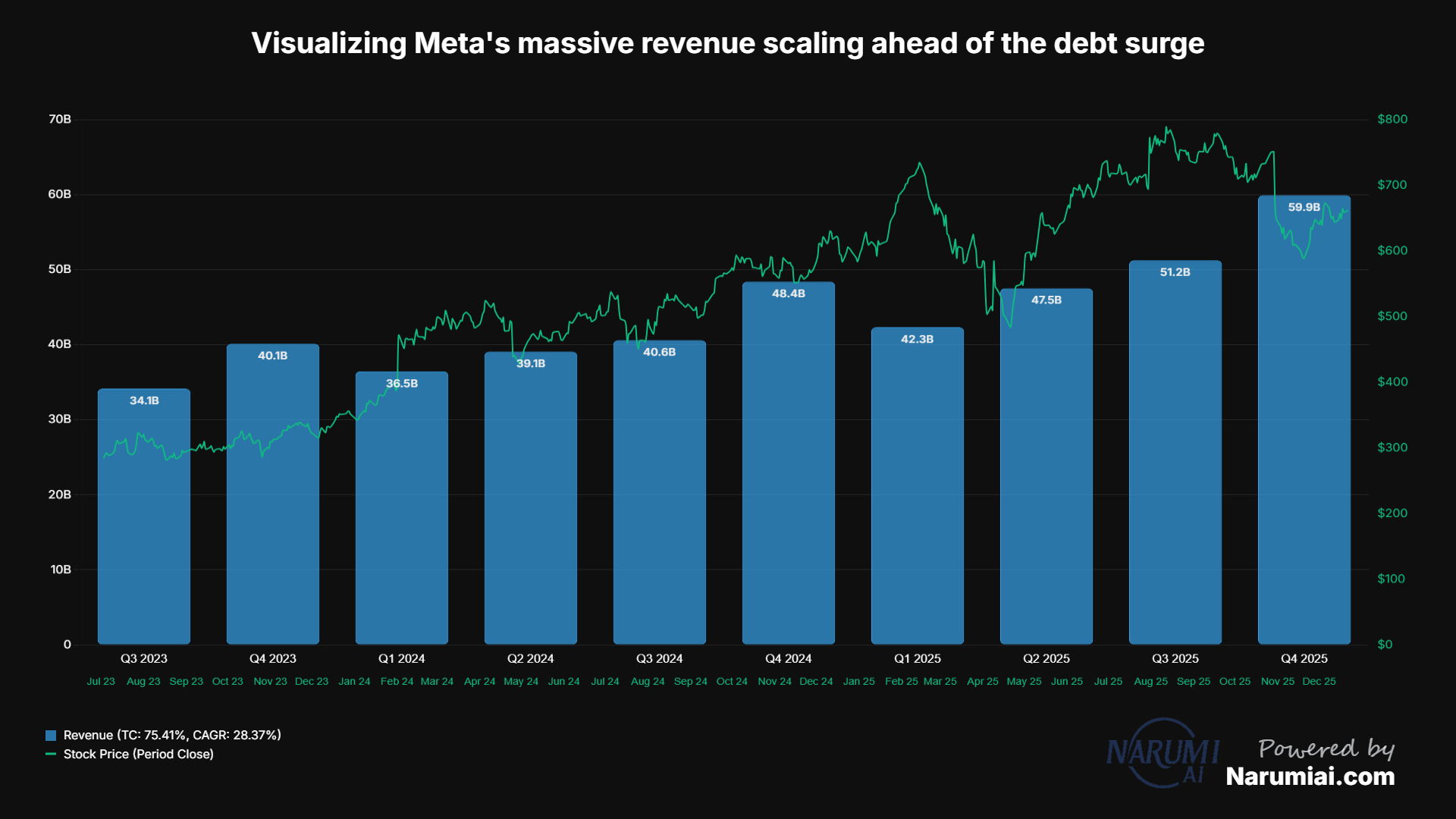
To understand the scale of this move, you have to look at the numbers. A 1-gigawatt facility can power roughly 750,000 homes. Meta is essentially building a small city dedicated entirely to silicon and cooling fans. Historically, Big Tech avoided debt like the plague, but with Meta’s CapEx guidance for 2026 reaching a jaw-dropping $125 billion to $145 billion, even a company that generated nearly $60 billion in revenue in Q4 2025 (up from $34.1 billion in Q3 2023) can’t foot the bill alone without making the balance sheet look messy.
The financial disconnect is fascinating. Despite the massive spending, Meta’s Operating Margin actually improved from 40.2% in Q3 2023 to a razor-sharp 41.3% in Q4 2025. Zuckerberg is proving he can spend like a drunken sailor while still running the ship with the efficiency of a Swiss watch. However, the long-term debt line tells the real tale of the tape.
The GPU Depreciation Trap
The biggest risk lurking in the El Paso desert isn't the heat—it’s obsolescence. Meta is borrowing money on 20- to 30-year terms to build these centers. However, the AI hardware inside (like NVIDIA’s H100s or Meta’s own MTIA chips) has a competitive lifespan of about 3 to 5 years. If the next breakthrough in AI requires a completely different physical setup, Meta could be left paying off a multi-billion dollar loan for a 'hollowed-out' shell.
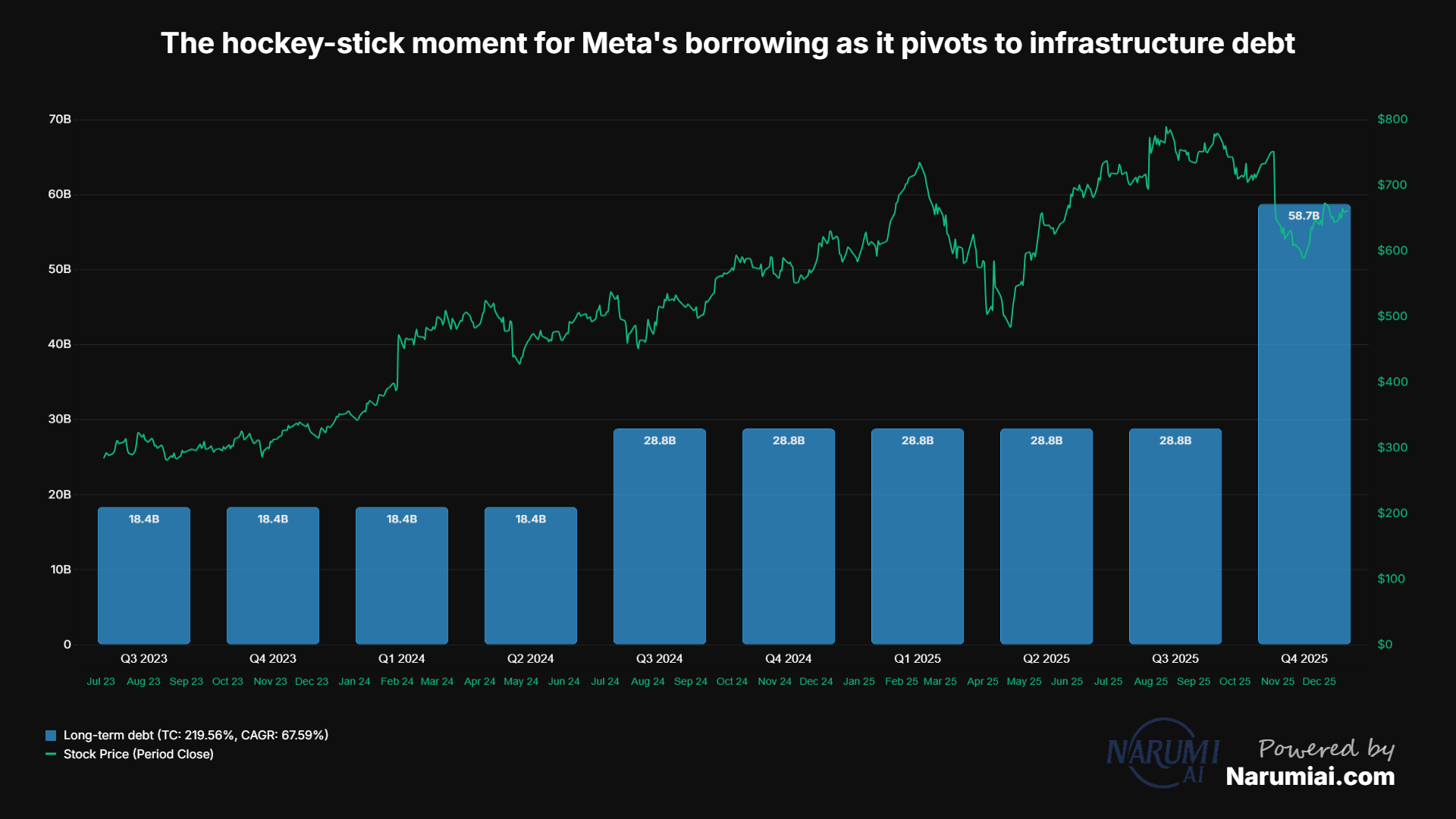
This 'Depreciation Trap' is what keeps institutional investors awake at night. If the revenue per watt doesn't grow faster than the cost of the debt and the skyrocketing energy costs, these data centers become expensive monuments to a capital-heavy era. Meta’s long-term debt has already ballooned from $18.3 billion in late 2023 to a staggering $58.7 billion by the end of 2025. That is a 220% increase in leverage in just over two years.
Wall Street’s AI Toll Booth
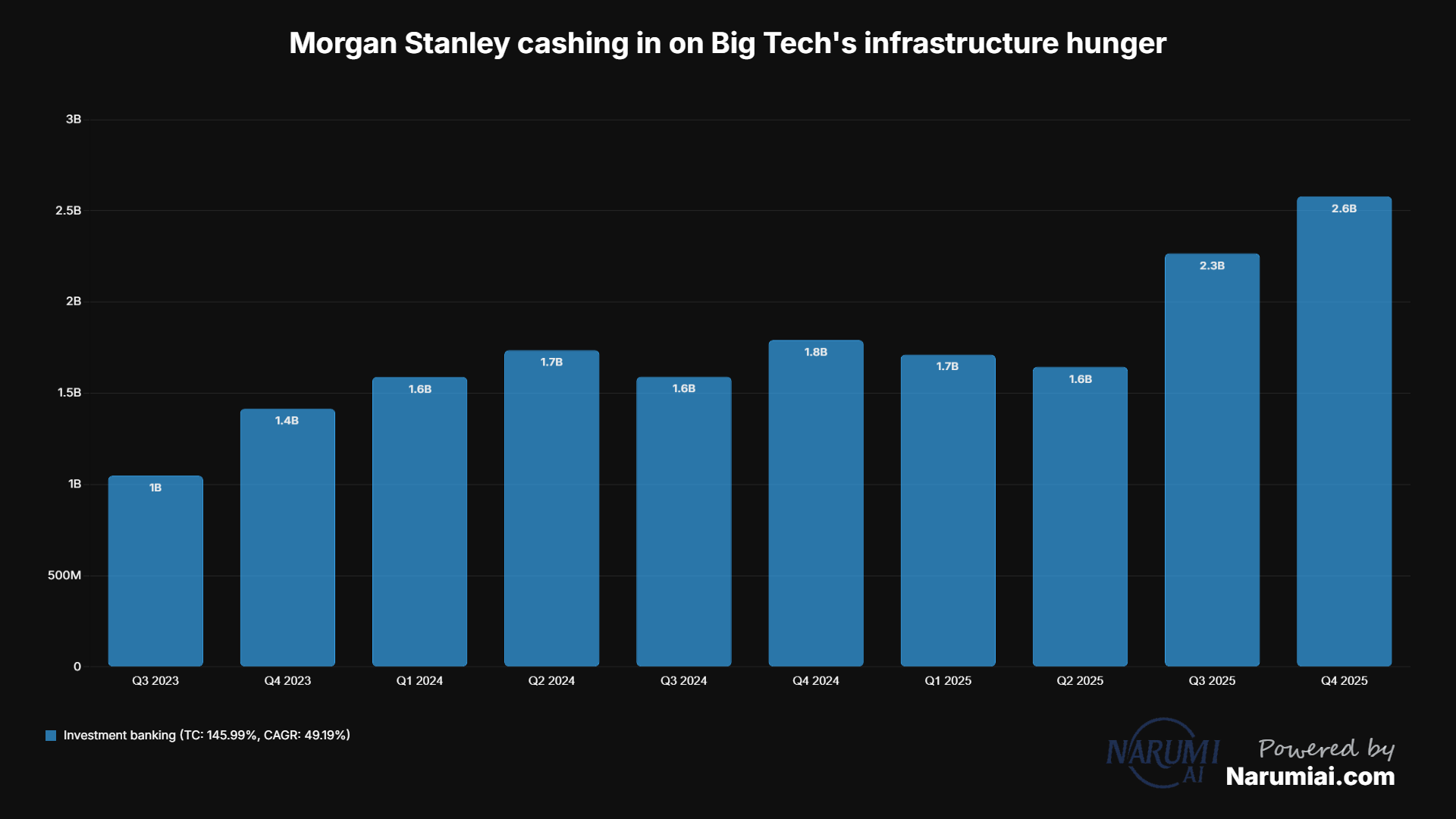
While Meta takes the risk, Morgan Stanley and JPMorgan are cashing the checks. For the big banks, these mega-infrastructure deals are the new profit engines. In a world where traditional M&A has been hit-or-miss, acting as the 'toll booth' for the AI infrastructure build-out is a gold mine. Morgan Stanley’s Investment Banking revenue hit $2.57 billion in Q4 2025, a significant jump from the $1.4 billion range just two years prior.
The Verdict: A Necessary Evil?
Is Zuck overleveraged? Not yet. Meta’s debt-to-equity ratio is climbing, but it’s still child's play compared to industrial giants or legacy tech firms like Oracle. By using debt to fund the 'boring' stuff like buildings and power lines, Meta keeps its cash free for the 'exciting' stuff like R&D and stock buybacks. But as the 1GW El Paso site prepares to come online, the pressure is on. Meta isn't just a social media company anymore; it’s a highly-leveraged bet on the future of human intelligence. Let’s hope the Texas grid can handle the bill.
Check out our Interactive Charting Tool.