Why Big Oil Refuses to Drill More Even as Middle East Tensions Spike
If this were 2014, a geopolitical flare-up in the Middle East would have sent oil executives into a wild drilling frenzy. Rigs would be multiplying, exploration budgets would be ballooning, and Wall Street would be bracing for the inevitable oversupply crash that always follows. But it is 2026, and the old playbook has been tossed into the incinerator.
As US-Iran military exchanges tighten global crude supplies and push oil prices higher, Western supermajors like ExxonMobil ($XOM) and Chevron ($CVX) are reacting with something that used to be a foreign concept in the oil patch: absolute, cold-blooded capital discipline. Instead of chasing short-term price spikes with speculative wildcatting, they are focusing on structural cash flow, low-cost supply, and keeping their promises to shareholders.
The Reformed Partygoers of Big Oil
Think of the giant oil companies as reformed partygoers. In the past, whenever crude prices spiked, they spent like sailors on high-risk, deepwater exploration projects that took a decade to produce a single drop of oil. Today, they are on a strict financial diet, locked into tight annual capital expenditure ceilings. ExxonMobil has capped its organic annual capex at $28 billion to $33 billion, while Chevron is keeping its budget to a lean $18 billion to $19 billion.
This discipline is visible when you look under the hood of ExxonMobil’s balance sheet. Between Q3 2023 and Q4 2025, the company’s baseline financials actually showed some long-term erosion before the recent 2026 geopolitical spike. Sales and other operating revenue fell from $88.57 billion in Q3 2023 to $80.04 billion in Q4 2025, while net income attributable to ExxonMobil dropped 28.3% from $9.07 billion to $6.50 billion over the same period.
Yet, despite lower baseline earnings, Exxon Mobil’s stock price has rallied from around $97 in mid-2023 to over $148 by July 2026. How? Because instead of reinvesting their cash into risky new drilling, they are returning it to shareholders or using it to buy back their own stock.
To fund this, Exxon has aggressively drawn down its cash pile, which shrank from a massive $32.94 billion in Q3 2023 to $10.68 billion in Q4 2025. Where did that cash go? Look no further than the financing activities: in Q4 2025 alone, Exxon spent $5.38 billion acquiring its own common stock and paid out a whopping $17.23 billion in dividends to shareholders.
Why Drill When You Can Just Buy?
Rather than spending billions on high-risk frontier exploration to replace their oil reserves, the supermajors have realized it is much safer to simply buy proven, low-cost reserves from their neighbors. It is the corporate equivalent of buying a fully renovated house instead of trying to build one from scratch in a supply-chain crisis.
ExxonMobil completed its massive acquisition of Pioneer Natural Resources, doubling down on short-cycle Permian Basin shale. This gives Exxon highly scalable production that can be dialed up or down in a matter of months, rather than years. Meanwhile, Chevron completed its acquisition of Hess Corporation, gaining direct access to Guyana’s high-margin, low-cost Stabroek block without having to take on greenfield exploration risks.
When these giants do spend money on upstream development, they only target "advantaged assets"—projects that can break even at Brent crude prices well under $35 to $40 per barrel. By keeping their cost floors low, they ensure that even if geopolitical tensions ease and oil prices plunge, their free cash flow remains resilient enough to keep those dividend checks clearing.
The Shield Against Inflation's Fury
The current macroeconomic environment of Middle East conflict does not just drive up oil prices; it also triggers cost-push inflation across labor, equipment, and logistics. If the Federal Reserve keeps interest rates "higher for longer" to combat this inflation, it creates a massive divide between the corporate giants and the smaller independent shale producers.
Because ExxonMobil and Chevron are integrated giants, they have a natural downstream hedge. When crude prices rise, their upstream segments rake in cash. If inflation drives up the cost of refining, their downstream chemical and refining units can often capture wider margins on finished fuels, stabilizing overall corporate cash flow. Furthermore, their massive scale allows them to negotiate long-term, multi-year service contracts with oilfield service providers, locking in lower rates for rigs and materials.
Smaller independent producers, on the other hand, are highly vulnerable to the spot market for drilling rigs and frac crews. Even worse, while ExxonMobil enjoys a conservative balance sheet with a debt-to-equity ratio of just 0.42 in Q3 2025, smaller independents are often saddled with high-yield debt. In a high-interest-rate environment, these smaller players face a brutal refinancing wall that eats directly into the cash flow they need just to stay on the drilling treadmill.
ESG is Out, 'Pragmatic Realism' is In
For years, institutional investors hammered oil majors to cut fossil fuel production and invest in green energy. But regional military instability and the resulting threat to global energy security have sparked a major U-turn in investor sentiment. The era of strict ESG exclusions has given way to "Pragmatic Realism."
Wall Street is now actively rewarding oil companies that pulled back from low-return, capital-heavy renewable projects (like offshore wind) to focus on high-margin fossil fuels. Integrated gas and Liquefied Natural Gas (LNG) portfolios—especially at Shell and ExxonMobil—are no longer viewed as carbon liabilities; they are now championed as critical pillars of global energy security.
Even activist shareholder groups have shifted their tactics. Instead of demanding rigid emissions reduction targets, they are now simply asking for detailed disclosures on how these companies will preserve cash flow and shareholder value in the long term. Investors have made it clear: they prefer buybacks and balance-sheet deleveraging over speculative green ventures.
The Road Ahead: Sanctions and OPEC+ Quotas
For investors looking at the medium-term outlook for $XOM and $CVX, the day-to-day military headlines are only part of the story. The real catalysts to watch are structural regulatory hurdles and geopolitical supply mechanisms.
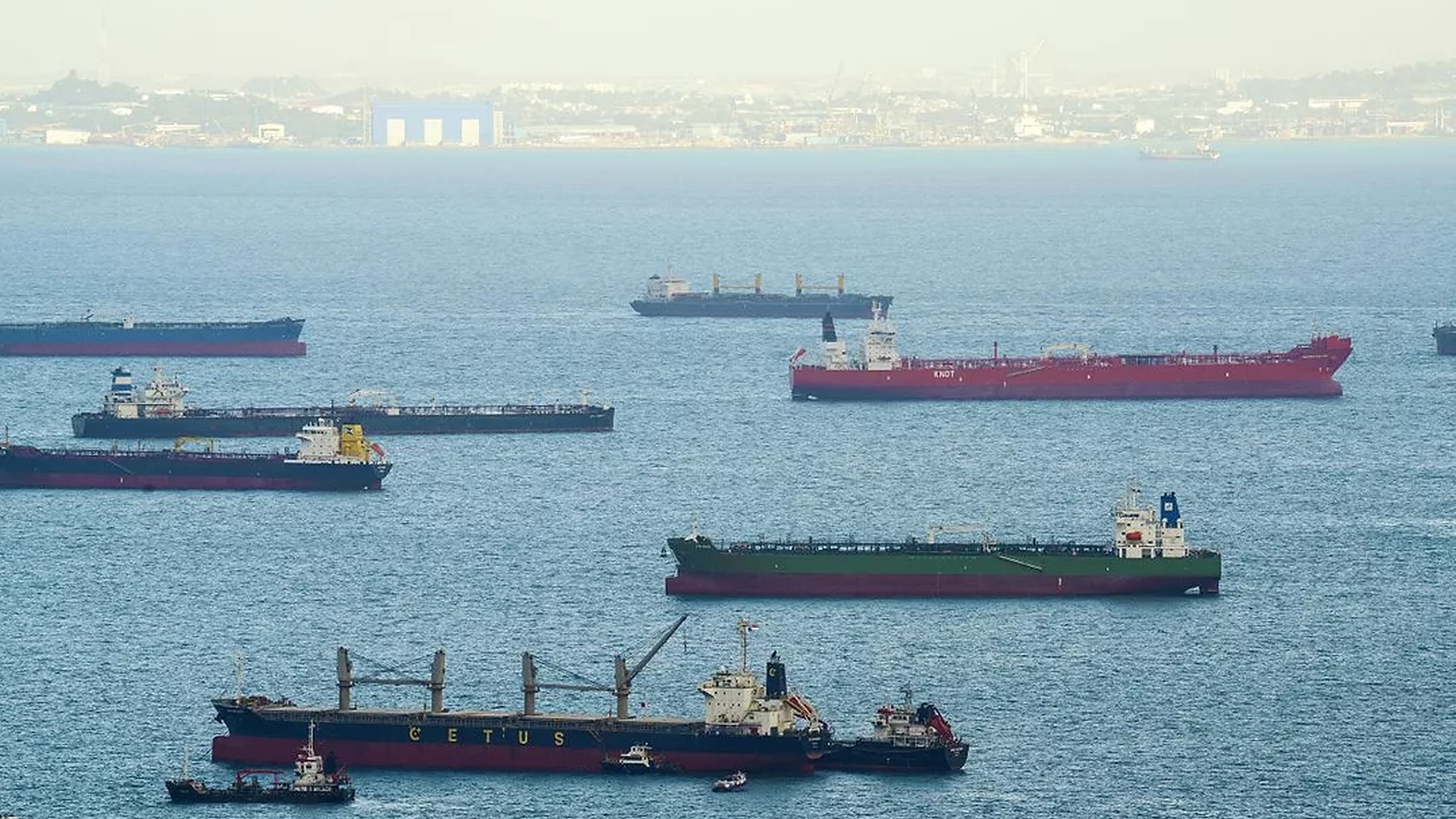
First, keep an eye on maritime sanctions. The U.S. and Europe are cracking down on the "shadow fleets" used to evade sanctions, which is squeezing global tanker capacity and driving up shipping freight rates. While this increases transport costs, global trading giants like Shell and ExxonMobil can actually profit from this volatility by exploiting regional price differentials.
Second, watch OPEC+. While geopolitical instability creates supply risks, OPEC+'s management of its spare capacity remains the ultimate regulator of oil prices. However, because Exxon and Chevron have positioned themselves in ultra-low-cost basins like the Permian and Guyana, they are uniquely insulated from OPEC’s production maneuvers. Even if OPEC+ decides to unwind its voluntary cuts and flood the market, the supermajors' low breakevens will keep them firmly in the black while higher-cost competitors get squeezed out.
Check out our Interactive Charting Tool.