War Profits and Washington’s Wrath: The Big Oil Trap
A Surcharge on the World's Arteries
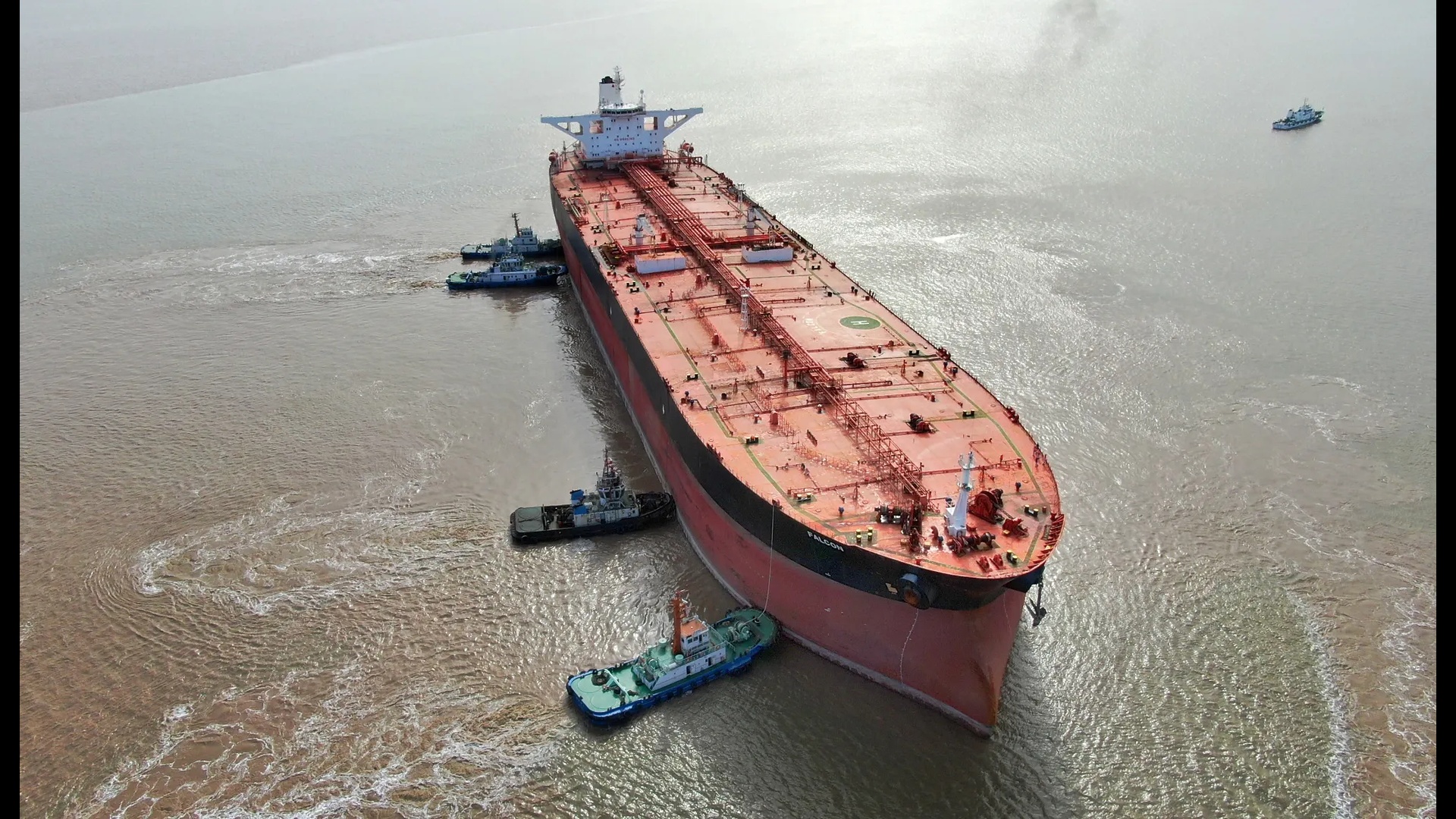
The dawn over the Strait of Hormuz no longer brings the quiet hum of global commerce; instead, it carries the scent of salt, diesel, and impending litigation. With fighting intensifying near the world’s most critical oil transit route, the U.S. and Iran are locked in a high-stakes game of maritime chicken. The immediate result? A 9.6% surge in Brent crude to $83.30 per barrel. But for the titans of Irving and San Ramon, this windfall is starting to look like a gilded cage. President Trump’s 20% surcharge on cargo passing through the Strait—intended to offset U.S. security costs—has effectively turned the global energy supply chain into a toll road, and the bill is being passed directly to the pump.
The Silent Bleed Before the Boom
While the headlines scream of surging second-quarter profits—with Exxon ($XOM) estimated to book a staggering $19 billion—a look under the hood of their recent SEC filings reveals a company that was arguably running on fumes before the first shot was fired. Between Q3 2023 and Q4 2025, Exxon’s cash and cash equivalents plummeted from $32.9 billion to a mere $10.7 billion. This 67% erosion of liquidity suggests that the current war-driven price spike isn't just a bonus; it’s a necessary lifeline for a balance sheet that has been aggressively deploying capital into acquisitions and shareholder returns.
The conflict has masked a steady decline in operational efficiency. Exxon's operating margin, which stood at a robust 19.79% in early 2023, compressed to 13.42% by mid-2025. This 'efficiency rot' is the silent enemy that $XOM must battle even as it navigates the political minefields of Washington. The market is currently celebrating the revenue jump, but savvy insiders are looking at the 'Crude oil and product purchases' line, which remains a volatile weight on the bottom line.
Chevron’s Leaner Machine vs. Exxon’s Massive Footprint
In the battle of the supermajors, Chevron ($CVX) continues to play the role of the agile foil to Exxon’s lumbering giant. While Exxon’s total assets hover near $450 billion, Chevron has maintained a more conservative posture. However, both are now facing the same existential threat: the 'Windfall Tax' talk echoing through the halls of Congress. The Trump administration’s decision to order a Department of Justice investigation into price-gouging is a calculated political maneuver that puts $XOM and $CVX in the crosshairs. The irony is thick—the same administration demanding 'energy dominance' is now threatening the very companies tasked with delivering it.
Chevron’s operating margin has historically mirrored Exxon’s, but its lower debt-to-equity ratio (0.39 vs Exxon’s 0.42 in late 2025) gives it slightly more breathing room to weather a potential regulatory storm. Institutional sentiment is shifting; as treasury yields climb to 4.61%, the 'safe haven' of Big Oil dividends is being weighed against the risk of federal intervention that could cap retail prices or mandate expensive supply chain rerouting.
The Mandatory Replenishment Bull Market
Beyond the immediate geopolitical theatre, a structural shift is occurring that most retail investors are missing. We have moved from 'Phase I' of the crisis—where markets relied on Strategic Petroleum Reserve (SPR) releases—to 'Phase II': the mandatory replenishment phase. The world’s emergency buffers are depleted. Every barrel currently being 'borrowed' from strategic reserves represents a future purchasing obligation. This creates a hard floor for oil prices that may persist long after the current tensions in the Strait subside.
For Exxon, the path forward is fraught. The company must balance the need to rebuild its cash reserves with the optical disaster of reporting record profits while Americans pay over $4.00 a gallon. If the DOJ investigation finds even a hint of 'retail lag'—the delay between falling crude prices and falling pump prices—the regulatory backlash could be swifter and more severe than any market correction. The 'Bite' here isn't just the war; it's the realization that in 2026, profit is a political liability.
The Strategic Dilemma
As we look toward the end of the fiscal year, the fundamental disconnect remains. Exxon’s business performance, characterized by eroding margins and dwindling cash, was struggling to justify its high-valuation status. The war has provided a temporary valuation mask, but it has also invited a level of government scrutiny not seen since the 1970s. For the veteran investor, the signal is clear: the current stock price appreciation may be a speculative bubble inflated by the heat of conflict, rather than a sustainable shift in corporate value.
Check out our Interactive Charting Tool.