Uncle Sam’s Billion-Dollar Rocket Boost: Inside the Axyz IPO
The Pentagon Just Became an Anchor Investor
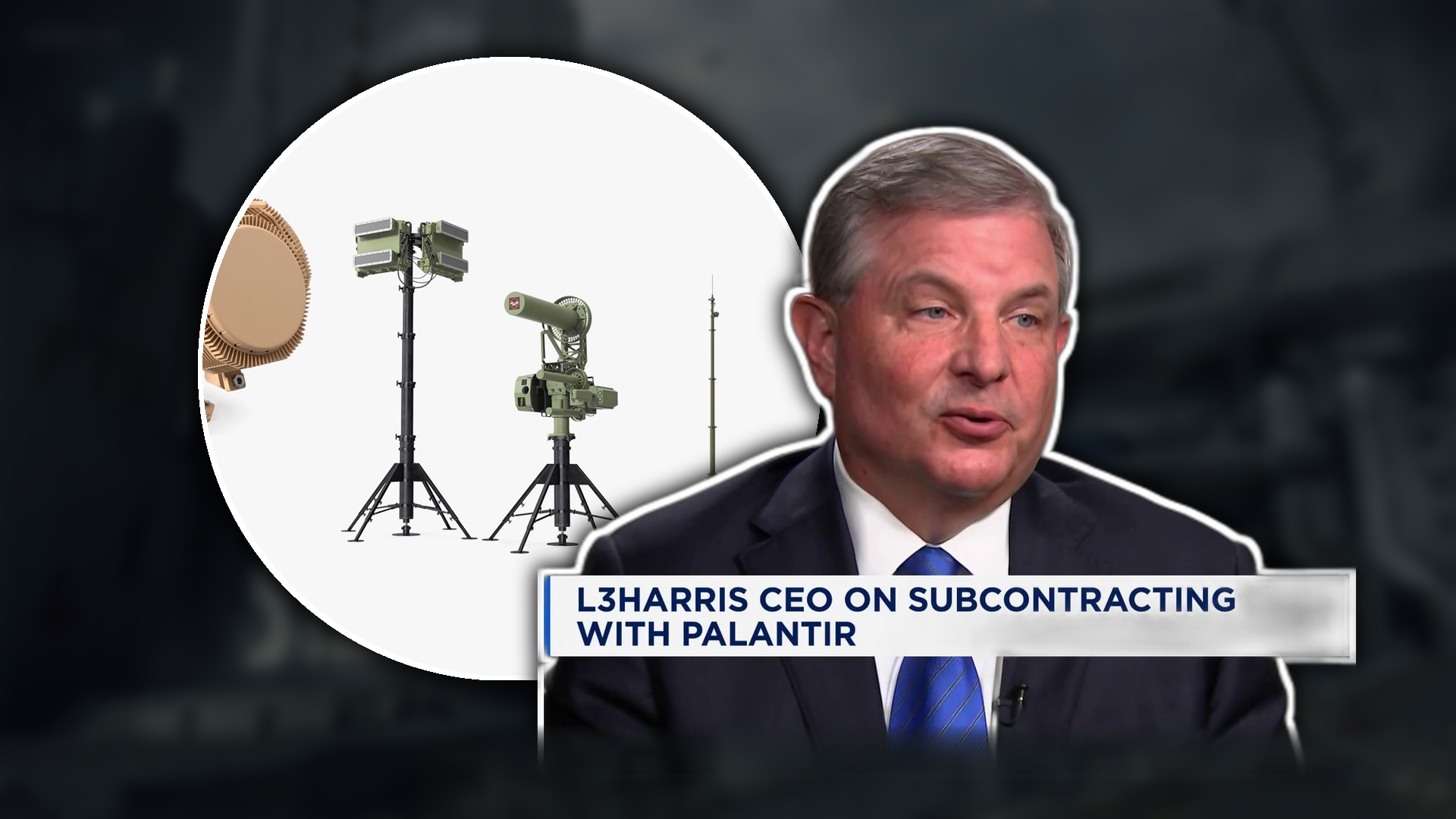
In the world of high-stakes defense contracting, the U.S. government usually plays the role of the demanding customer. But on May 1, 2026, the script has officially flipped. L3Harris ($LHX) has confidentially filed for an IPO of its missile solutions business—reportedly named Axyz—and it’s arriving with a $1 billion 'thank you' note from the Department of Defense (DoD). This isn't just a standard carve-out; it’s a strategic re-engineering of the American 'arsenal of democracy.'
Think of it like this: the DoD just acted as the lead venture capitalist in a deal to ensure the U.S. doesn't run out of the 'batteries' that power its most critical weapons. Those batteries are Solid Rocket Motors (SRMs), and right now, they are the rarest commodity in the defense world.
Breaking the Motor Monopoly
For years, the SRM market has been a cozy duopoly, with Northrop Grumman and L3Harris (via its Aerojet Rocketdyne acquisition) holding the keys to the kingdom. But 'cozy' quickly turned into 'congested' as global tensions spiked. The Axyz spinoff is designed to turn a legacy division into an agile, high-growth 'pure-play' entity that can move at the speed of a tech startup rather than a slow-moving conglomerate.
The goal is simple: scale. Axyz is targeting annual growth rates in the mid-to-high teens, fueled by a backlog that has ballooned as L3Harris integrated its Aerojet assets. The $1 billion government infusion is earmarked for 'decades’ worth of CapEx' in just a few years—think automated factories in Arkansas and Alabama that can churn out motors for GMLRS and the Sentinel ICBM with robotic precision.
By separating the missile unit, L3Harris is betting that Wall Street will reward Axyz with a 'Defense-Tech' multiple. While defense conglomerates usually trade at a sleepy 15x–18x P/E, pure-play propulsion firms can command 25x or even 30x. It’s a classic value-unlocking move: let the high-growth rocket business fly free while the parent company focuses on space-based tracking and electronic warfare.
The Ripple Effect: Winners and 'Frenemies'
While L3Harris gets the headlines, the real winners might be the companies that actually buy these motors. Lockheed Martin and RTX (formerly Raytheon) have been staring at massive backlogs for Patriot interceptors and Tomahawk missiles, often blaming 'supply chain bottlenecks' for slow deliveries. A well-capitalized, independent Axyz means Lockheed and RTX can finally stop making excuses and start shipping hardware.
However, not everyone is popping champagne. Northrop Grumman, the other half of the SRM duopoly, now faces a competitor that isn't just a rival—it’s a government-backed national champion. This creates a fascinating 'scarcity premium' for the entire sector. If Axyz debuts at a sky-high valuation, expect Northrop’s own propulsion division to get a significant 're-rating' from analysts.
The 'Argonaut' Risk: When the Customer is also the Owner
Of course, this 'National Security Argonaut' model comes with a massive side of red tape. The DoD’s $1 billion investment is in convertible preferred equity. This means the U.S. government will eventually hold a significant stake in a publicly traded company. It’s a regulatory hall of mirrors.
There is also the 'FTC factor.' The Federal Trade Commission famously blocked Lockheed Martin from buying Aerojet years ago to preserve competition. Now, L3Harris is spinning that same business out. The FTC will be watching closely to ensure L3Harris doesn't maintain a 'stealth monopoly' through its remaining equity stake, which is expected to stay above 80% initially.
What to Watch Next
The 'clock' is now ticking. We are currently in the 'quiet period' following the confidential filing. The real fireworks begin in June or July 2026, when the S-1 prospectus goes public. That’s when we’ll finally see the 'under the hood' financials—the exact margins, the conversion price for the government’s stake, and the dividend policy.
If the roadshow goes well and the pricing is revised upward, it will signal that the market is ready to treat defense manufacturing like a high-growth tech sector. For retail investors, the Axyz IPO represents a rare chance to own a 'pure-play' piece of the munitions super-cycle, backed by the deepest pockets on the planet: the U.S. Treasury.
Check out our Interactive Charting Tool.