Trump’s 24-Hour Toll Booth: The Strait of Hormuz U-Turn
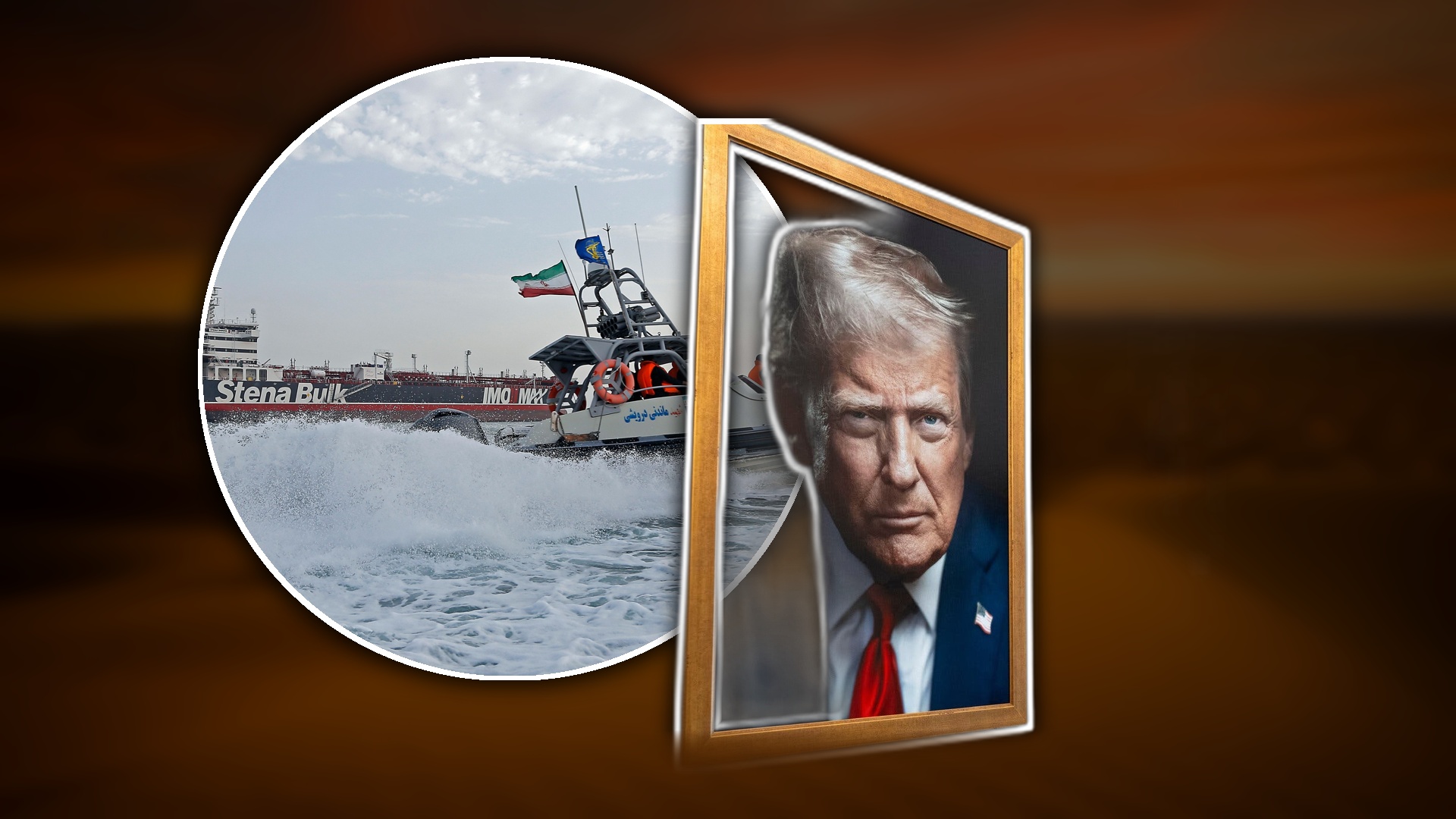
The World’s Most Expensive Game of 'Nevermind'
Imagine you’re driving on a highway that carries 20% of the world’s most essential resource, and suddenly, the toll booth operator decides to charge you a 20% 'reimbursement fee' just for passing through. Then, 24 hours later, he changes his mind and says, 'Actually, let’s just do a lunch deal instead.' That is exactly the kind of whiplash global energy markets just experienced.
On Monday, the White House proposed a massive 20% levy on non-Iranian cargo transiting the Strait of Hormuz. By Tuesday, President Trump abruptly reversed course, clarifying that the levy would be scrapped in favor of 'trade and investment deals' with Gulf states. While Brent crude pared its earlier gains on the news, don’t let the price drop fool you—the underlying tension in the world’s most critical energy chokepoint is far from resolved.
The $16 Billion Ghost Tax
When the 20% levy was first floated, analysts went into a tailspin. We’re talking about an administrative surcharge that would have added roughly $15 to $16 per barrel to the cost of oil. To put that in perspective, a single supertanker (VLCC) could have seen its transit costs jump by $32 million in one go. It was, for all intents and purposes, a massive regulatory floor placed under oil prices.
By swapping the fee for vague investment deals, the immediate 'toll risk' has evaporated, but the physical risk remains. The U.S. naval blockade on Iranian shipping is still very much active, and military strikes are still being traded. This means that while the 'administrative' premium is gone, a 'kinetic' premium of $5 to $10 per barrel is now firmly embedded in every drop of Brent crude.
The 'Policy Volatility Premium' is the New Normal
Perhaps more important than the price of oil itself is the introduction of what strategists are calling the 'Policy Volatility Premium.' In a world where maritime policy can shift 180 degrees via a social media post, institutional investors are no longer trading based on supply and demand alone. They are trading on the unpredictability of the headline itself.
This 'Trump Premium' means Brent is unlikely to return to its fundamental 'fair value' (somewhere in the low $70s) anytime soon. Traders are terrified to go 'short' because they don't know what the rules of the game will be tomorrow morning. This headline-driven volatility is at an all-time high, making traditional modeling almost impossible.
Shipping Insurance: The 'Uber Surge' of the High Seas
If you think your car insurance is expensive, try insuring a tanker in the Persian Gulf right now. The commercial maritime insurance market has undergone its most radical shift since the 1980s. Traditional annual 'War Risk' policies are effectively dead. In their place, we have 'voyage-by-voyage' underwriting.
It’s essentially surge pricing for tankers. If there was a drone strike yesterday, your insurance for today’s trip through the Strait just went through the roof. This has become so extreme that the U.S. government has had to step in as the 'insurer of last resort,' providing a $40 billion revolving reinsurance facility to keep supply lines from freezing entirely. Without this sovereign backstop, global trade in the region might have already ground to a halt.
The 'Bypass' Trade: Betting on Concrete, Not Water
Institutional investors aren't just sitting on their hands; they are moving their money into the 'Bypass Trade.' There is a clear shift away from pure-play tanker companies that rely on the Strait of Hormuz and toward midstream infrastructure that goes around it. This includes companies with exposure to Saudi Arabia’s East-West Pipeline and the UAE’s Habshan-Fujairah link.
We are seeing a 'Geographic Diversification Premium' where tanker fleets operating in the US Gulf Coast, Brazil, or West Africa are commanding higher valuations than those stuck in the Middle East. If you’re an investor, the message is clear: resilience is currently more valuable than raw volume.
Five Red Lines to Watch
While the market is breathing a sigh of relief today, that relief is incredibly fragile. There are five specific catalysts that could send Brent crude back into triple digits overnight:
Armed Escorts: If the U.S. Navy resumes active 'Project Freedom' escorts, Iran has warned it will view this as a violation of its security zones. One kinetic engagement here closes the Strait.
Bypass Sabotage: Watch for strikes on pipeline terminals in Yanbu (Saudi Arabia) or Fujairah (UAE). If these 'safety valves' are hit, the market has no plan B.
The Mine Threat: A single confirmed sea mine in the shipping lanes would cause insurance clubs to revoke coverage instantly, halting all traffic for weeks.
State-Backed Piracy: If Iran begins seizing tankers from neutral nations (like China or India) under the guise of 'environmental violations,' it forces a global reshuffling of trade routes.
The Death of Diplomacy: If the current 'April/June Framework' for a ceasefire is officially declared dead, the market will immediately price in a permanent $15-$20 geopolitical premium.
The Bottom Line
The reversal of the 20% levy is a win for short-term cost stability, but it doesn't fix the fact that the world's energy heart is currently in a state of arrhythmia. With global oil inventories projected to face steep deficits in the coming months, the market has zero margin for error. We aren't just watching oil prices; we're watching the rewriting of the rules of global trade in real-time. Stay nimble, keep your eye on the 'bypass' assets, and remember: in this market, the only constant is the next headline.
Check out our Interactive Charting Tool.