The Trillion-Dollar Power Trip: Inside the AI Infrastructure War

The $145 Billion Receipt
If you thought your last grocery bill was a shocker, take a look at Meta’s shopping list. Mark Zuckerberg’s empire is projecting a staggering $145 billion in capital expenditures for 2026. To put that in perspective, that’s more than the annual GDP of many small nations, all funneled into one goal: personal superintelligence. We’ve officially moved past the 'cool chatbot' phase of AI and entered the 'industrial arms race' phase. It’s no longer about who has the best algorithm; it’s about who has the most concrete, the most copper, and the most silicon.
This isn't just a Meta story. The ripple effects are turning the semiconductor industry into a gold mine. Samsung recently reported a mind-boggling 49-fold jump in chip income. Why? Because the world has an insatiable hunger for high-bandwidth memory (HBM). Without it, these AI models are like Ferraris with no fuel. Meanwhile, Amazon is playing the long game by building its own custom silicon, a business that’s already humming at a $20 billion annual revenue run rate. They aren't just buying the shovels anymore; they’re building the factory that makes the shovels.
The Grid is the New GPU
Here’s the catch: You can buy all the H100s or Blackwell chips you want, but they’re useless if you can’t plug them in. The 'AI Infrastructure War' has hit a massive, high-voltage wall. Data centers are projected to require over 90 gigawatts of additional power by 2027. That is a terrifying amount of electricity. We are talking about a strain on the grid so intense that tech giants are now acting like utility companies.
This bottleneck is forcing a 'Behind-the-Meter' revolution. Companies like NextEra Energy are partnering with Google to build dedicated solar and gas facilities just to keep the lights on at AI campuses. We’re even seeing the resurrection of the nuclear industry, with tech firms looking at Small Modular Reactors (SMRs) to provide 24/7 carbon-free power. In 2026, the hottest tech play isn’t a software company—it’s a utility company with a fast-track permit.
A Breath of Thin Air
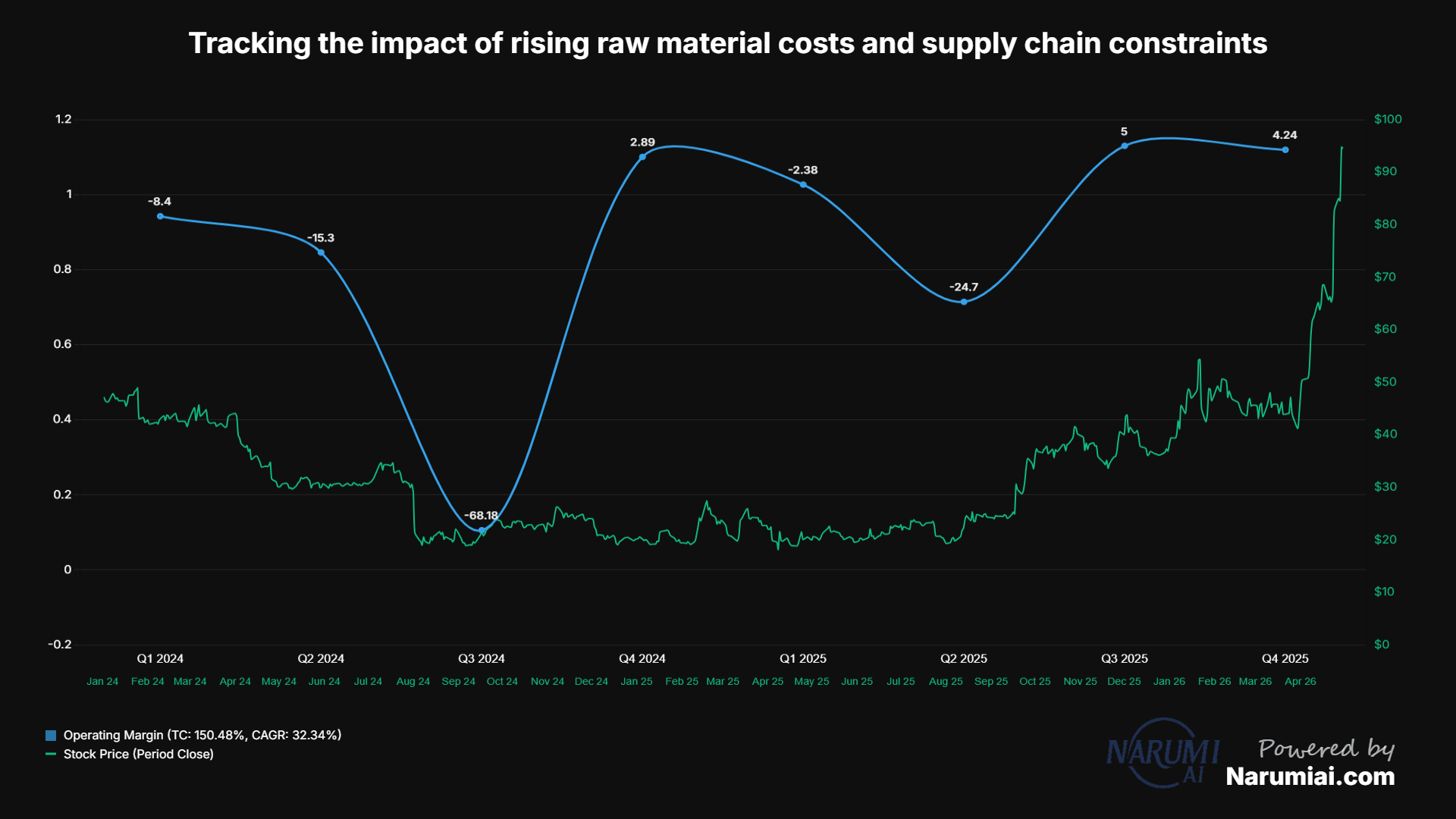
Just when you thought the supply chain was finally healing, a new villain has entered the chat: a critical helium shortage. While you might associate helium with birthday balloons, it is essential for cooling the magnets and lasers used in high-end semiconductor manufacturing. According to Barron’s, this shortage threatens the production of chips for everything from your Tesla to the supercomputers training the next LLM. It’s a classic 'for want of a nail' scenario. You can spend $145 billion on a data center, but if you can't get the gas to cool the machines, the whole operation grinds to a halt.
The "Show Me the Money" Phase
For the last two years, investors gave Big Tech a pass on spending. As long as you said 'AI' three times in an earnings call, your stock went up. Those days are over. We are entering the 'Monetization Over Mentions' era. Analysts are now scrutinizing the ROI Gap. While CapEx is growing at a pace comparable to the dot-com era, only about 21% of S&P 500 companies can currently prove they are making more money because of AI.
This has created a 'Valuation Gap.' Companies that can translate AI into real-world productivity gains are seeing their margins expand at twice the global average. Those that can't? They’re facing a reality check. The market is no longer rewarding potential; it’s rewarding proof. This is why we’re seeing a rotation into 'Hard Assets'—investors are ditching pure SaaS plays for companies with data centers, energy contracts, and proprietary silicon.
Sovereignty is the New Software
Finally, keep an eye on the map. The AI Infrastructure War has gone geopolitical. It’s not just Google vs. Microsoft; it’s the EU vs. the US vs. the Middle East. Nations are pivoting toward 'Sovereign AI'—building domestic data centers to ensure their data and compute power aren't dependent on a foreign hyperscaler. This 'battle of the stacks' is leading to a fragmented global market, where 'EU-Sovereign Clouds' are becoming a legal necessity thanks to the August 2026 enforcement of the EU AI Act.
As we head into the back half of 2026, the focus will shift from *training* models to *inference* (running them). This 'Inference Pivot' will move the money away from massive desert data centers and toward 'Edge' facilities closer to users. The war isn't ending; it's just moving to your neighborhood.
Check out our Interactive Charting Tool.