The Permanent Risk Premium: Why $91 Oil and $4,000 Gold Are the New Floor
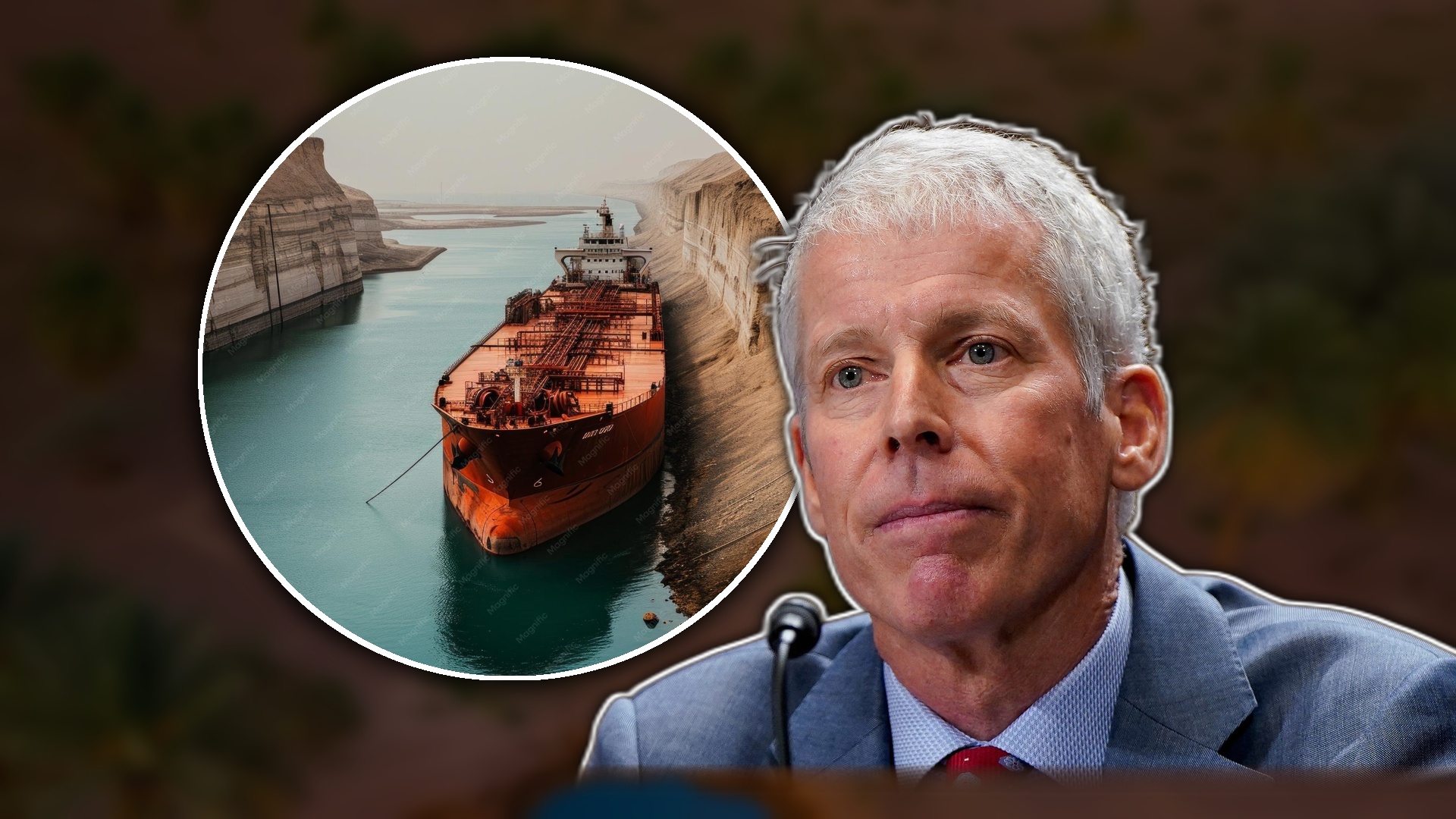
The Midnight Sun over Bab el-Mandeb
For decades, the global economy operated on the elegant, if fragile, assumption of frictionless trade. That illusion died somewhere between the expanded military strikes in the Persian Gulf and the latest Houthi threat to blockade the Red Sea. Today, the 'just-in-time' logistics model isn't just broken; it’s being priced out of existence. With Brent crude surging to $91.01 per barrel and gold defying gravity at $4,000 per ounce, we aren't looking at a temporary market tantrum. We are witnessing the birth of a permanent geopolitical risk premium.
The $1 Million Detour
The math for global shipping conglomerates like Maersk and MSC has turned predatory. Avoiding the Bab el-Mandeb Strait by diverting around the Cape of Good Hope adds roughly 4,000 nautical miles to a voyage. In the boardroom, that’s not just a line on a map—it’s a $1,000,000 fuel penalty per round trip. This 'African Detour' has effectively removed the efficiency of the Suez Canal from the global balance sheet, forcing energy supermajors like Shell and BP to choose between safety and solvency.
The Permian’s Geopolitical Dividend
While the Middle East smolders, the geographic calculus of energy portfolios is shifting toward 'friend-shoring.' Capital is migrating toward the US Permian Basin, Guyana, and Brazil. These regions may have steeper depletion curves or higher lifting costs than the low-cost fields of the Persian Gulf, but they carry zero transit-blockade risk. This is the fundamental disconnect: the market is beginning to value political stability over geological abundance. For companies like ExxonMobil or Chevron, their Western Hemisphere assets are no longer just oil fields—they are geopolitical hedges.
Fiat’s Crisis of Faith
The most alarming signal, however, isn't found in a barrel of oil, but in a bar of gold. Gold’s ascent past $4,000 per ounce is a silent vote of no confidence in the resilience of fiat currencies. Historically, US Treasuries were the ultimate safe haven, but with real yields compressed by stubborn inflation and national debt-to-GDP ratios at record highs, institutional capital is fleeing paper for hard assets. This isn't just a flight to safety; it’s a flight from the dollar’s weaponization and the looming shadow of debt monetization.
The Involuntary Green Transition
Ironically, this geopolitical friction may do more for the energy transition than a decade of climate summits. When the risk premium on hydrocarbons becomes a permanent tax, the Levelized Cost of Energy (LCOE) for solar, wind, and nuclear suddenly looks much more attractive. Heavy industrial consumers are no longer looking at renewables through the lens of ESG mandates; they are looking at them as a volatility hedge. A domestic nuclear plant or a utility-scale solar farm cannot be blockaded by a naval strike or a maritime insurance hike.
The Verdict: A New Baseline for Volatility
The United Nations' warnings of sustained fuel disruptions suggest that the era of state-directed energy management has arrived. We are moving toward mandatory Strategic Petroleum Reserve releases and potentially, fuel rationing in import-dependent nations. For the investor, the takeaway is clear: volatility is no longer a spike to be traded; it is the default setting. The 'risk-free' return is a relic of a more peaceful era, replaced by a world where the price of everything includes the cost of the warships required to protect it.
Check out our Interactive Charting Tool.