The Ozempic Economy: From Fat Loss to Forever Subscriptions
The Great Lifestyle Land Grab
Forget everything you thought you knew about 'diet drugs.' As of May 2026, the narrative around GLP-1s has undergone a massive facelift. We’ve officially moved past the 'skinny shot' era and entered the 'Total Metabolic Health' epoch. Novo Nordisk ($NVO) and Eli Lilly ($LLY) aren't just selling vials anymore; they are building digital moats designed to keep patients engaged—and paying—for decades.
The catalyst? A tidal wave of data suggesting these drugs do way more than just quiet 'food noise.' New research shows a powerful 'halo effect,' specifically regarding cancer prevention. By reducing systemic inflammation and regulating insulin, these drugs are being repositioned as a preventative shield against obesity-related cancers, such as colorectal and liver varieties. This isn't just health news; it’s a business model pivot from episodic treatment to a 'Netflix-style' wellness subscription.
The Lilly Blueprint: Scaling the Unscalable
While Novo Nordisk is busy securing the global supply chain, Eli Lilly has been executing a masterclass in vertical integration. Through its LillyDirect platform and partnerships with AI-coaching firms like Welldoc, Lilly is effectively becoming a tech company that happens to sell molecules. The financial data reflects this 'Big Tech' trajectory.
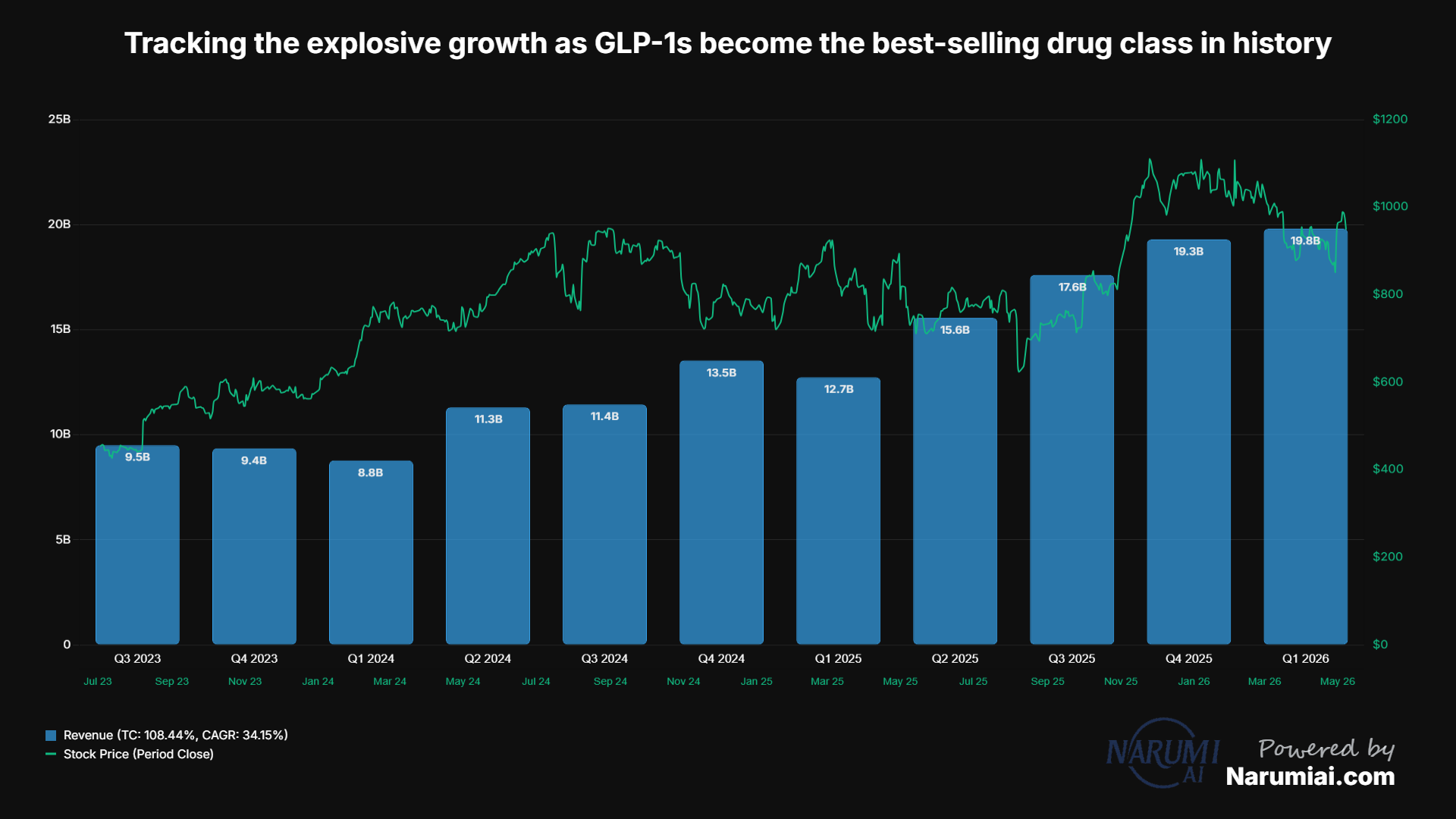
Looking at the numbers, Lilly’s revenue exploded from $9.49 billion in Q3 2023 to a staggering $19.29 billion by Q4 2025. That is more than a doubling of the top line in just over two years. This growth isn't just coming from volume; it's coming from efficiency. Despite massive investments, Lilly’s Net Margin climbed to 34.4% in the latest quarter. For context, that’s software-level profitability in a business that requires massive physical factories.
The Battle for the 'Companion' App
The pivot to wellness hubs has forced traditional weight-loss players to evolve or go extinct. WeightWatchers ($WW) has completed its transformation into a 'clinical support layer,' launching Med+ to integrate behavioral science with drug access. They aren't fighting the drugs anymore—they’re hugging them. Meanwhile, Hims & Hers ($HIMS) has pivoted away from the legal minefield of compounded drugs to become a branded distribution partner for the giants.
The goal for these platforms is to solve the 'Adherence Paradox.' Data shows that nearly 90% of patients struggle to stay on GLP-1s long-term due to side effects or 'GLP-1 fatigue.' By bundling the drug with AI coaching and muscle-preservation programs, these companies are trying to lower their 'churn'—the rate at which customers stop their subscriptions.
The 'Muscle' Problem and the Future Pipeline
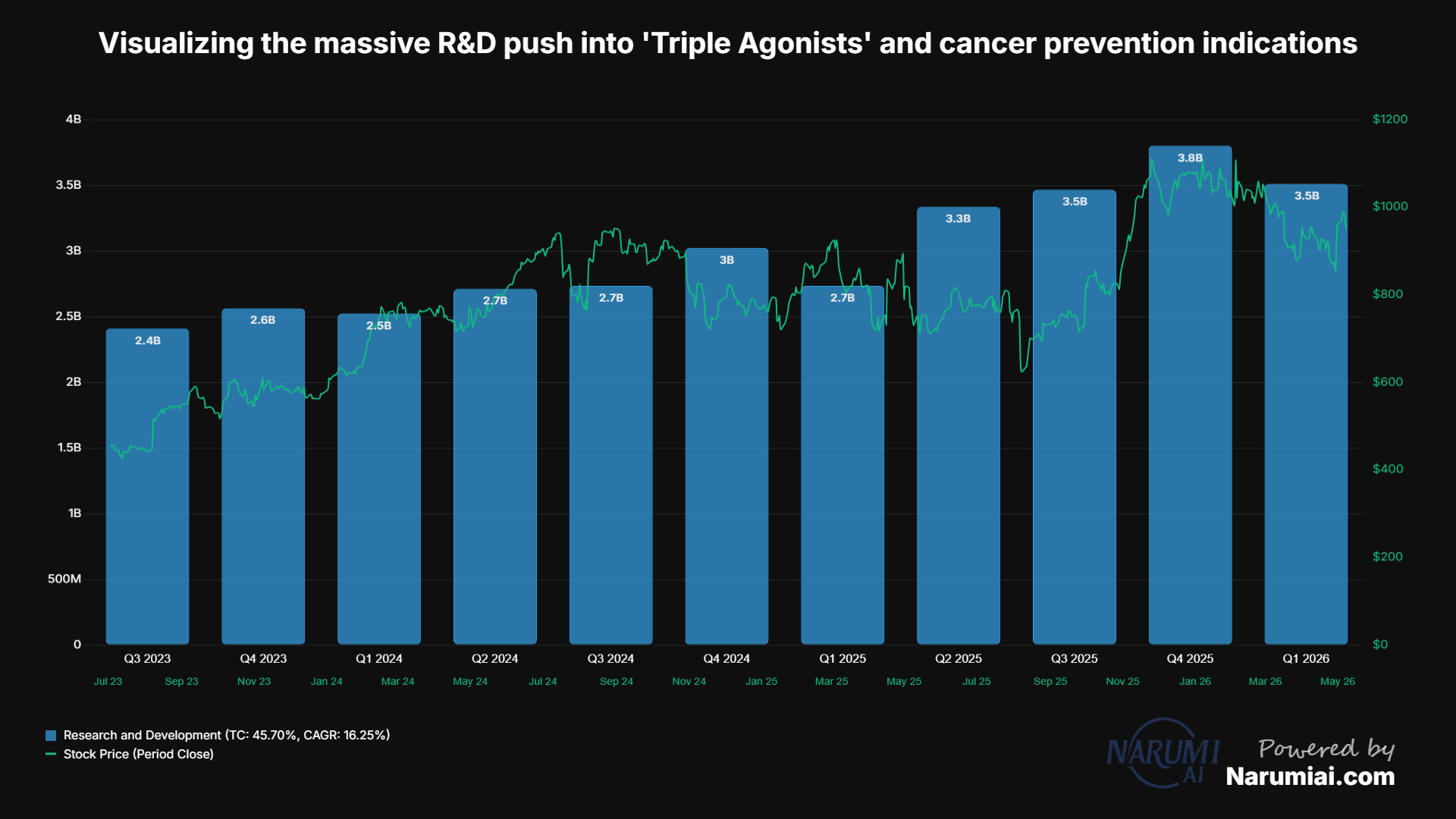
The biggest threat to this wellness utopia? Sarcopenia—or the loss of lean muscle mass. To justify premium pricing and keep users in their 'ecosystems,' NVO and LLY are pouring billions into 'Triple Agonists.' These are the next generation of drugs targeting GLP-1, GIP, and Glucagon to maximize fat loss while protecting muscle.
We are also seeing a shift toward 'Peptides in a Pill.' The rollout of oral GLP-1s removes the 'needle barrier,' allowing these medications to be prescribed earlier as a preventive measure. If you can take a pill every morning that manages your weight, protects your heart, and lowers your cancer risk, you aren't a patient; you're a lifelong subscriber to the 'Metabolic Hub.'
The Fundamental Disconnect
For investors, the question is no longer about whether the drugs work, but whether the 'Mega-Cap' valuations are sustainable. Eli Lilly’s market cap has flirted with the $1 trillion mark, trading at a P/E ratio that looks more like a high-growth AI startup (46.7x) than a legacy pharma company. This valuation assumes that the 'wellness ecosystem' successfully transitions millions of people from temporary weight-loss seekers into permanent health-maintenance users.
With Medicare starting to cover these drugs for standalone indications in 2026, the volume is guaranteed. The real test will be the regulatory scrutiny over 'off-label' wellness claims and the data privacy of the millions of users now logging their most intimate biological data into pharma-owned apps. The 'Ozempic Economy' is here, and it’s hungry for more than just weight loss.
Check out our Interactive Charting Tool.