The Orbital Hegemon: SpaceX and the Re-Engineering of Global Capital
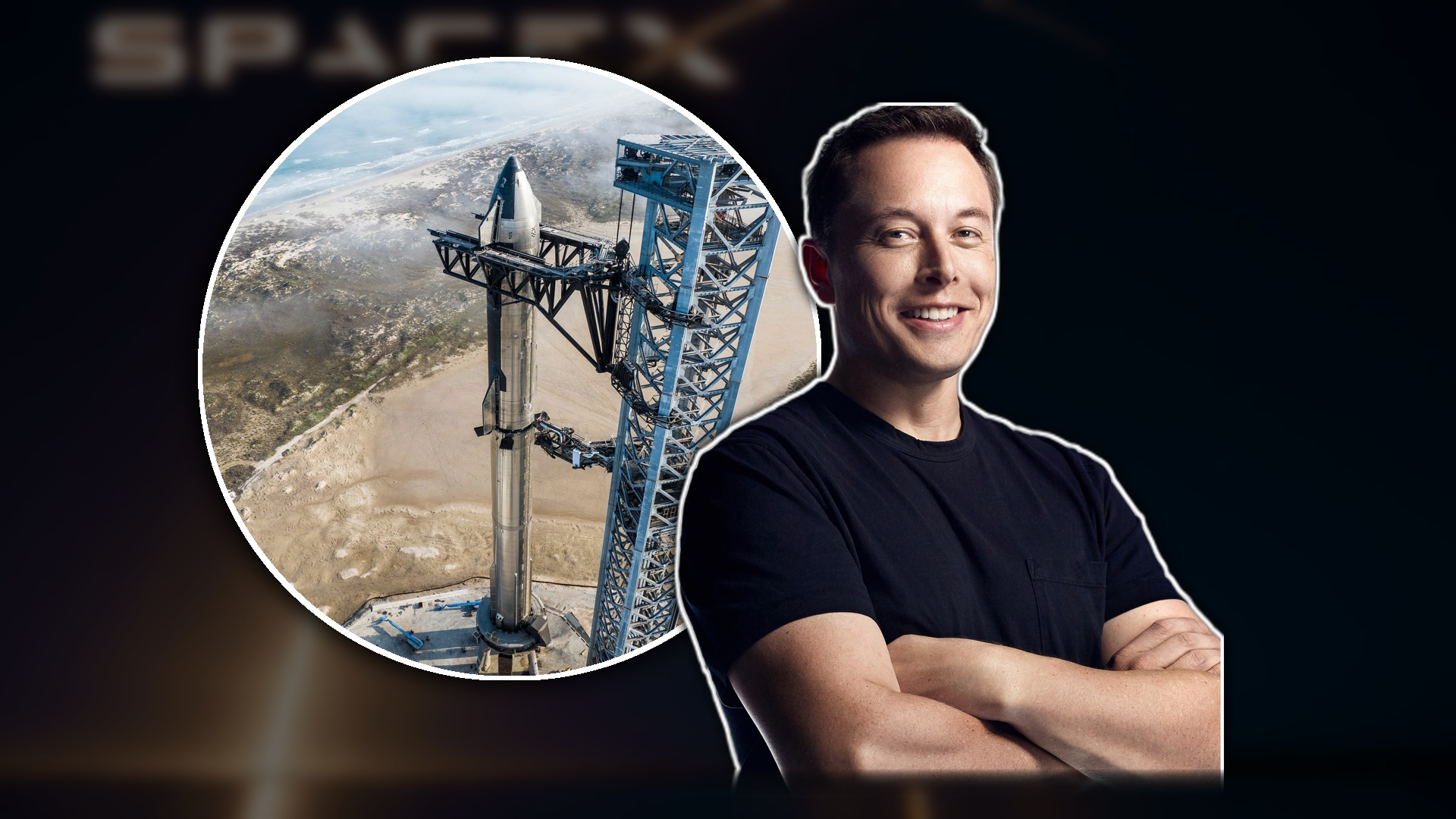
The Gravity Well of a Trillion-Dollar Debut
In the history of global capital markets, there are moments that do not merely reflect the state of the economy, but actively reshape its geometry. The impending debut of SpaceX on the Nasdaq, targeting a $75 billion capital raise at a $1.77 trillion valuation, is precisely such a watershed. This is not the arrival of a new aerospace company; it is the crowning of a sovereign-grade infrastructure monopoly. At its current target, SpaceX is entering the public arena with a valuation that dwarfs the entire legacy aerospace sector combined, signaling a structural shift in how we value the bridge between Earth and the digital frontier.
The sheer magnitude of the offering—oversubscribed with more than $250 billion in orders—creates what macro-economists call a 'capital siphon.' As institutional asset managers scramble to find the $75 billion required for the primary offering, we are witnessing a quiet but profound liquidation of secondary market positions. To make room for a giant that will immediately command a top-tier weight in the Nasdaq-100, funds are trimming positions in established mega-cap tech stalwarts. This is the 'Musk Gravity Well' in action: a reallocation of liquidity that forces the rest of the market to contract to accommodate its new center of mass.
The Silicon-Titanium Merger
To understand the 'Strategist’s' view of SpaceX, one must look past the rockets. While the public focuses on the spectacle of Starship, the true economic moat is being built through the vertical integration of custom silicon and orbital data. The announcement of the $55 billion 'Terafab' facility and the 'AI1' orbital data center satellites reveals a company that is transcending the transportation business. SpaceX is no longer just moving payloads; it is building a 1-terawatt space compute network.
This move into semiconductor manufacturing and space-based AI processing creates a 'conglomerate premium' that traditional defense primes like Boeing or Lockheed Martin simply cannot replicate. While legacy players trade at 1.5x to 3x sales based on low-margin government contracts, SpaceX is commanding a 94x sales multiple. This disconnect is not irrationality; it is the market pricing SpaceX as the foundational layer of the next decade’s AI infrastructure. By bypassing Earth's energy bottlenecks and terrestrial data center cooling limits, SpaceX is positioning itself as the only entity capable of hosting the massive compute clusters required for the next generation of artificial intelligence.
The End of the Old Guard
For the 'Old Guard' of aerospace and defense, the SpaceX IPO is an extinction-level event for their current valuation models. Institutional portfolios allocated to 'Industrial Innovation' are now faced with a brutal re-weighting challenge. To make room for a $1.77 trillion giant that controls 80% of U.S. rocket launches, asset managers are forced to divest from legacy firms. This is the 'Pure-Play Discount' in its most aggressive form. Investors are increasingly penalizing companies that operate in single verticals, preferring the vertically integrated model that combines launch, telecommunications (Starlink), and silicon design.
We are seeing the emergence of a valuation chasm. Legacy giants are being relegated to the status of specialized contractors, while SpaceX takes the role of the platform. In the strategist’s eyes, SpaceX is building the global high-speed highway, while its competitors are being forced to specialize in the sensors and software that travel upon it. This power dynamic is further cemented by Starlink, which accounted for roughly $11.4 billion of the company’s 2025 revenue, providing the recurring cash flow necessary to fund the capital-intensive 'Terafab' projects.
The Sovereign Single-Point-of-Failure
However, with this unprecedented scale comes unprecedented risk. The SEC and national security bodies are rightfully scrutinizing the 'controlled company' status of SpaceX. With Elon Musk retaining 85% of the voting power despite holding only 42% of the equity, the company operates with a level of autonomy that is rare for a trillion-dollar entity. The integration of AI into global satellite constellations crosses directly into the realm of national security, creating a 'Sovereign Single-Point-of-Failure.'
The regulatory friction is not just about governance; it is about the physics of the business. Post-IPO, the market will demand hard proof that SpaceX can solve the 'Payload Bottleneck.' Starlink V3 satellites and AI data centers are too heavy for current rockets; their success is entirely dependent on the flawless execution of the Starship program. Any protracted regulatory delay or technical failure in Starship’s reusability cadence will directly bottleneck the company's highest-margin revenue streams.
The Verdict for the Next Decade
As the 'Strategist,' we view the SpaceX IPO not as a finish line, but as the deployment of a new global operating system. The windfall for university endowments like Stanford and UNC—who held patient capital for over two decades—vindicates the 'Endowment Model' of investing in hard-tech industrial megaprojects. It signals to the venture capital world that the highest compounding returns no longer belong to asset-light software, but to asset-heavy, vertically integrated 'Frontier Tech.'
SpaceX is being priced as an omnipresent infrastructure monopoly. To defend its trillion-dollar valuation, it must now transition from visionary capital consumption to highly predictable, hyper-profitable operational execution. The next decade will be defined by whether SpaceX can turn the vacuum of space into the world's most profitable data center. The gravity of this IPO has already shifted the market's axis; now, we wait to see if the rest of the tech world can stay in orbit.
Check out our Interactive Charting Tool.