The Hyperscale Hunger Games: Microsoft’s $190B AI Power Play
The $600 Billion Entry Fee
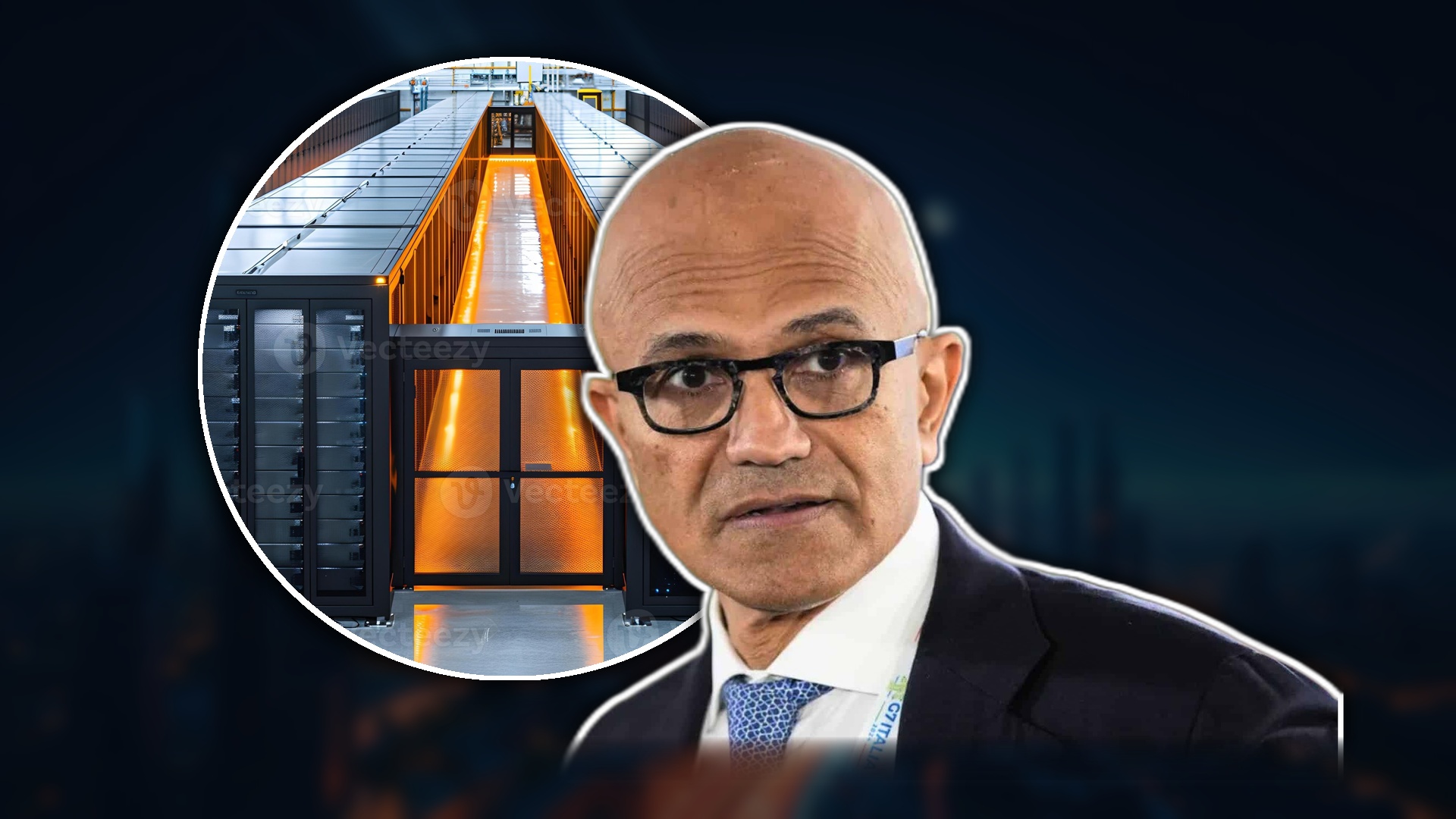
Welcome to the era of 'Industrial AI,' where the cost of staying relevant is now measured in the GDP of mid-sized nations. We are currently witnessing a historic arms race between the 'Hyperscalers'—Microsoft, Alphabet, and Meta—who are collectively expected to drop over $600 billion on AI infrastructure in 2026 alone. To put that in perspective, that is more than the entire annual economic output of countries like Thailand or Austria, all funneled into data centers, custom silicon, and enough electricity to power a small continent.
For Microsoft ($MSFT), the strategy is clear: they aren't just building a software company anymore; they are building the global power grid for intelligence. By treating compute as the new 'electricity,' CEO Satya Nadella is betting that as long as Microsoft owns the grid (Azure), they win regardless of which specific AI applications eventually dominate the market. But as any homeowner knows, upgrading the grid is incredibly expensive.
The Price of Building the Future
The numbers coming out of Redmond are nothing short of breathtaking. In Q2 2026, Microsoft’s capital expenditure (Capex)—the money they spend on long-term physical assets like data centers—hit a staggering $29.87 billion. Compare that to the $9.91 billion they spent in Q1 2024, and you see a company that has tripled its spending pace in just two years. This is the 'Nvidia Tax' in full effect, combined with the massive logistical challenge of securing land and power for these digital cathedrals.
While revenue is growing—climbing 43% from $56.5 billion in early 2024 to over $81.2 billion in the latest quarter—the real story is hidden in the cash flow. Free Cash Flow (FCF), the lifeblood of a company’s ability to pay dividends and buy back shares, is feeling the squeeze. In early 2024, Microsoft was generating roughly $20.6 billion in FCF per quarter. Fast forward to Q2 2026, and that figure has shriveled to approximately $5.88 billion. Microsoft is successfully growing its top line, but it is effectively 'eating its own lunch' to fund the infrastructure required to stay ahead of Google and Meta.
The Margin Magic Act
Despite the massive spending, Microsoft has managed a feat that defies traditional corporate gravity: keeping its profit margins stable. The company's Operating Margin stood at 47.09% in Q2 2026, virtually unchanged from the 47.59% it reported two years ago. This suggests that for every dollar Microsoft spends on AI, it is finding a way to extract enough efficiency—or charge enough for its 20 million paid Copilot seats—to keep the lights on without sacrificing profitability.
The Competitive Crossfire: Google and Meta
Microsoft isn't fighting this war in a vacuum. Alphabet ($GOOGL) has recently gained the 'Investor Confidence' trophy, with Google Cloud revenue surging 63% as it leverages a decade of in-house TPU (Tensor Processing Unit) development. While Microsoft is still heavily paying the 'Nvidia Tax,' Google’s vertical integration allows them to run AI workloads with better unit economics.
Meanwhile, Meta ($META) is playing a different game entirely. Mark Zuckerberg is pivoting the social media giant into an AI infrastructure provider through the open-source Llama models. Meta’s strategy is to make its architecture the global standard, ensuring that the next generation of AI tools is optimized for Meta’s hardware. However, investors remain wary of Meta’s projected $145 billion Capex, fearing a repeat of the 'Reality Labs' spending sinkhole of years past.
The 'Shovel Sellers' and the Middle East Risk
While the Hyperscalers battle for dominance, the real winners are the companies selling the 'shovels' for this gold mine. NVIDIA ($NVDA) and TSMC ($TSM) are capturing the lion's share of this $600 billion pot. In fact, analysts estimate that the top five hyperscalers account for over 50% of NVIDIA’s data center revenue.
However, a new risk is emerging on the horizon: the Middle East. Sovereign wealth funds from the UAE and Saudi Arabia currently account for roughly 25% of global AI investment commitments. If geopolitical tensions in the region lead to a capital pullback or the cancellation of massive data center projects, the impact on the global AI market could be catastrophic. As tech investor Jack Selby noted, the market may be 'underpricing the risk' of a Middle Eastern retreat, which could drain hundreds of billions from the AI boom overnight.
The Regulatory Moat
Paradoxically, the massive cost of the AI spending war is creating a regulatory moat that protects the giants. As the EU AI Act enters its full enforcement phase in late 2026, the compliance costs alone are enough to bankrupt smaller startups. Only companies with the scale of Microsoft can afford the massive legal and energy-matching infrastructure required to stay compliant. Regulators may be investigating Microsoft for 'bundling' its AI tools, but their own rules are ensuring that only the biggest players can survive the 'AI Utility' era.
The Verdict: A Bridge to Somewhere?
The big question for late 2026 remains: can Microsoft turn 'intelligence' into a recurring utility bill for every business on Earth? With Copilot paid seats growing 250% year-over-year, the early signs are promising. However, the market is no longer giving credit for 'vision.' Investors are now demanding 'AI Accountability'—tangible ROI for every billion spent on silicon.
Microsoft is currently priced for perfection, and while its 'Power Grid' strategy is sound, any stall in Azure’s growth or a failure to migrate workloads to its internal 'Maia' chips could lead to a painful re-rating. For now, Nadella is building a bridge to the future; he just has to hope the market is ready to pay the toll when they get there.
Check out our Interactive Charting Tool.