The Hsinchu Paradox: Why Record Profits Are Triggering a Tech Panic
The Hsinchu Paradox
In the cleanrooms of Hsinchu, the mood should be celebratory. Taiwan Semiconductor Manufacturing Company ($TSM) has just delivered a masterclass in industrial dominance, reporting a staggering 77% annual earnings surge for Q2 2026. On paper, the AI revolution is not just alive; it is thriving. Yet, across the Pacific, the mood in Manhattan is decidedly funereal. The PHLX Semiconductor Index (SOX) has been sliced by 15%, and the Nikkei is reeling. It is a classic market divergence: the 'picks-and-shovels' are sharper than ever, but the miners are starting to look exhausted.
The $690 Billion ROI Cliff
The friction point isn't the technology; it's the math. Institutional investors are staring at a widening chasm between the capital being poured into AI infrastructure and the actual revenue trickling out of it. Sell-side estimates now project 2026 capital expenditure (Capex) for the top five U.S. hyperscalers—Microsoft, Alphabet, Meta, Amazon, and Apple—to exceed $690 billion. To put that in perspective, AI Capex has skyrocketed from roughly 33% of these giants' cash flow from operations in 2023 to an estimated 93% in 2026.
The market is no longer rewarding 'future promises.' Wall Street is demanding proof of final demand—enterprise software revenue or subscription growth—to justify this level of spending. When Meta strategically pivots to license its excess AI compute capacity, it sends a shiver through the semiconductor sector. It suggests that the 'compute-to-spare' era is arriving sooner than the software applications intended to use it.
The Pricing Power Trap
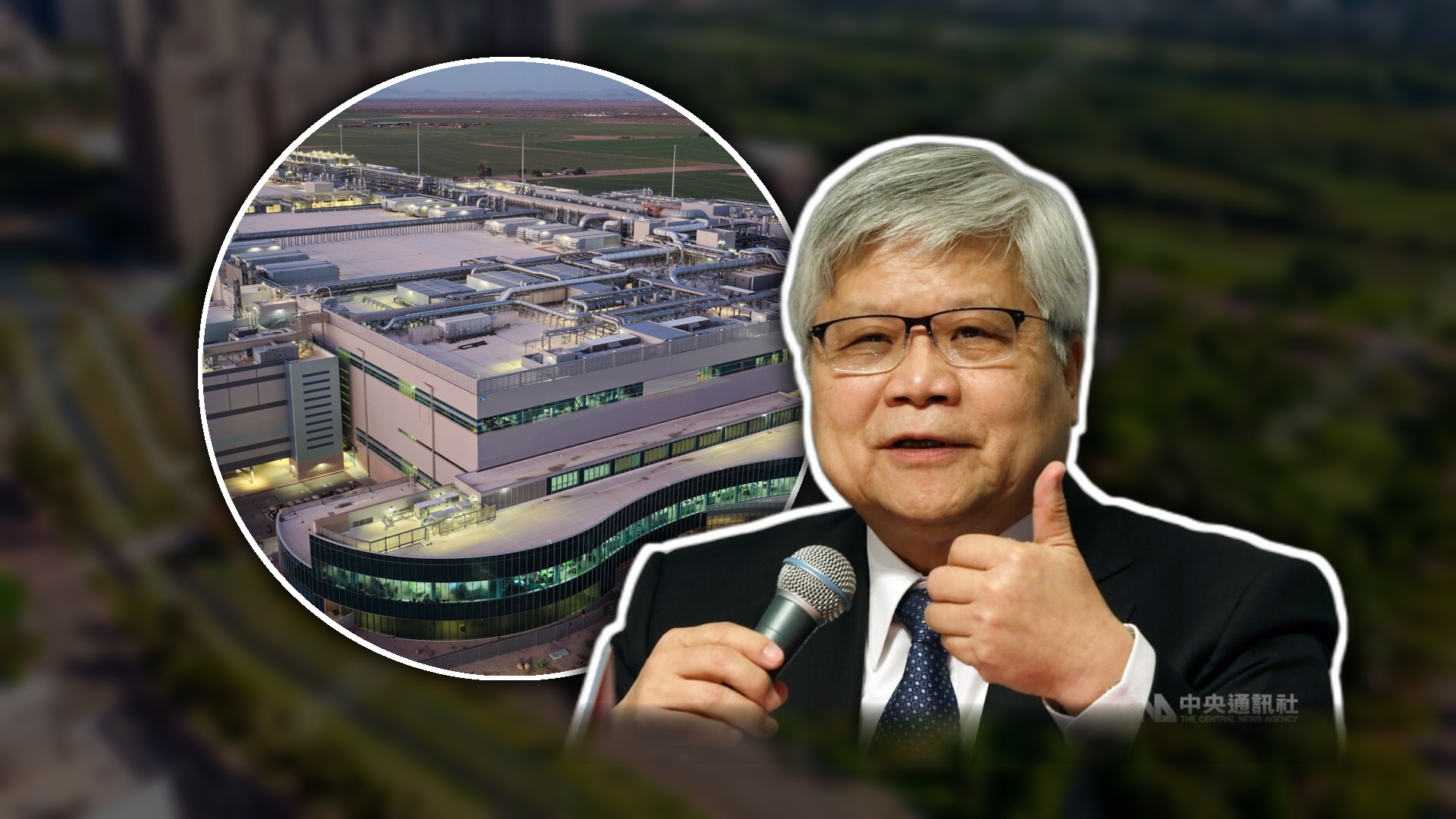
TSMC’s blockbuster guidance was fueled by its absolute pricing power. With gross margins reaching a breathtaking 67.7%, TSMC has effectively turned its advanced 3nm and 5nm nodes into a high-tech toll booth. But one company's margin is another's cost. As TSMC raises wafer prices to fund its $265 billion global expansion—including the high-cost Arizona facilities—downstream chip designers like Nvidia and Broadcom are finding themselves in a vice. If they cannot pass these rising costs onto cash-strapped hyperscalers, the stellar profit margins of the last two years will begin to evaporate.
Western Digital’s Cyclical Tightrope
While TSMC plays in the stratosphere of logic chips, the memory and storage players are fighting a different war. Western Digital ($WDC) serves as the perfect foil to the AI logic boom. Unlike the proprietary 'moats' of the foundry world, WDC is exposed to the brutal cyclicality of NAND flash. A look at their internal numbers reveals a company swinging violently between feast and famine.
In Q3 2024, Western Digital’s revenue bottomed out at $1.75 billion, leaving the company bleeding. Fast forward to Q2 2026, and revenue has climbed back to $3.017 billion. More impressively, the bottom line has swung from a net loss of $685 million in early 2024 to a massive $1.84 billion profit in the most recent quarter. However, this recovery is fragile. NAND is a commodity, and if data centers pull back on storing massive training datasets, the 'AI-premium' for enterprise SSDs (eSSDs) could vanish overnight.
The HBM Shield and the Geopolitical Drag
In contrast to WDC’s commodity struggle, SK Hynix ($SKHY) has attempted to build a fortress around its High-Bandwidth Memory (HBM) lead. By locking in Long-Term Agreements (LTAs) with Nvidia and Google, SK Hynix has effectively de-risked its balance sheet, maintaining a debt-to-equity ratio under 12%. But even a lean balance sheet cannot escape the gravity of geopolitics.
The tightening of U.S. export controls in 2026—including a 25% premium on foreign-produced chips and strict volume caps—is fracturing the global supply chain. TSMC, as the primary foundry for the world, bears the brunt of this. The geographical diversification into Arizona and Europe, while politically necessary, is a 'Capex dilution' disadvantage. Fabricating chips outside of Taiwan is significantly more expensive, threatening long-term margins if U.S. export controls limit the addressable market for those newly built, high-cost overseas fabs.
The Asset Rotation is Real
The 15% correction in the SOX index isn't a glitch; it's a hedge against the 'Catch Down' scenario. If hyperscalers blink and delay their 2027 budgets to protect their free cash flow, the semiconductor industry faces a severe cyclical downturn. Analysts are now closely monitoring TSMC’s CoWoS (Chip-on-Wafer-on-Substrate) backlog. Currently, this advanced packaging is the ceiling for AI chip shipments. If lead times begin to shrink, it is the first sign that the immediate, desperate rush for AI hardware is cooling. For now, the 'AI Mirage' remains beautiful, but the smart money is already looking for the exit.
Check out our Interactive Charting Tool.