The Grid is Ghosting Us: How Cummins is Turning AI into a $9B Power Play
The 'Bring Your Own Power' Era
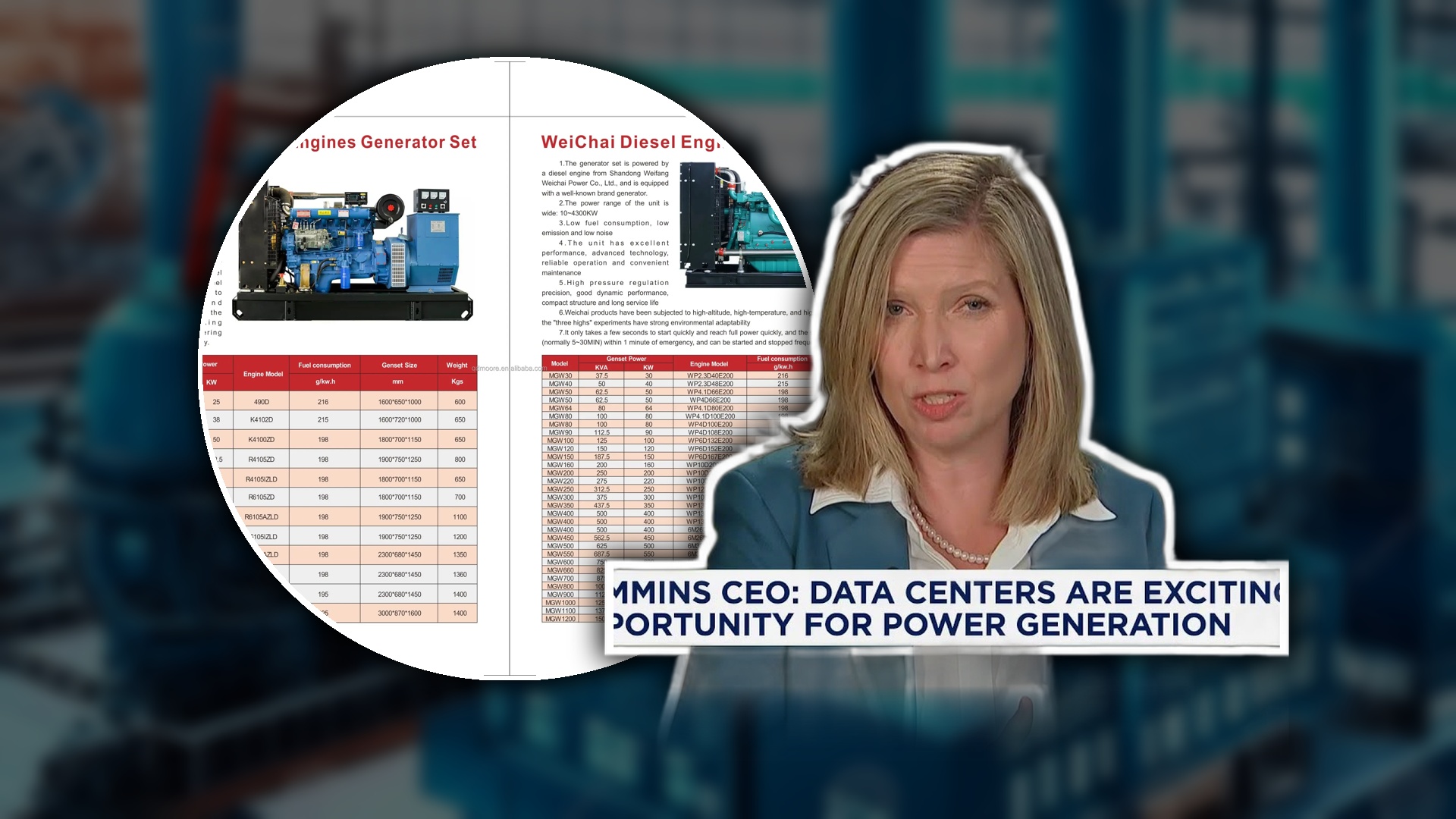
If you thought Cummins ($CMI) only lived under the hood of a Peterbilt, think again. The 105-year-old engine giant is trading the highway for the hyperscale, pivoting its massive industrial footprint to become the literal heartbeat of the AI revolution. Why? Because the power grid is ghosting the tech giants. With AI training and inference requiring rack densities to skyrocket past 30 kW, data centers are shifting toward a 'Bring Your Own Power' (BYOP) model to bypass utility interconnection queues that can stretch up to seven years.
Morgan Stanley projects a staggering 160% surge in data center power demand by 2030. In this environment, the humble generator has become the most precious asset in the tech stack. Cummins is leaning into this chaos, targeting a massive $9 billion in data center revenue as it rebrands from a truck supplier to an AI infrastructure titan.
The $9 Billion Pivot by the Numbers
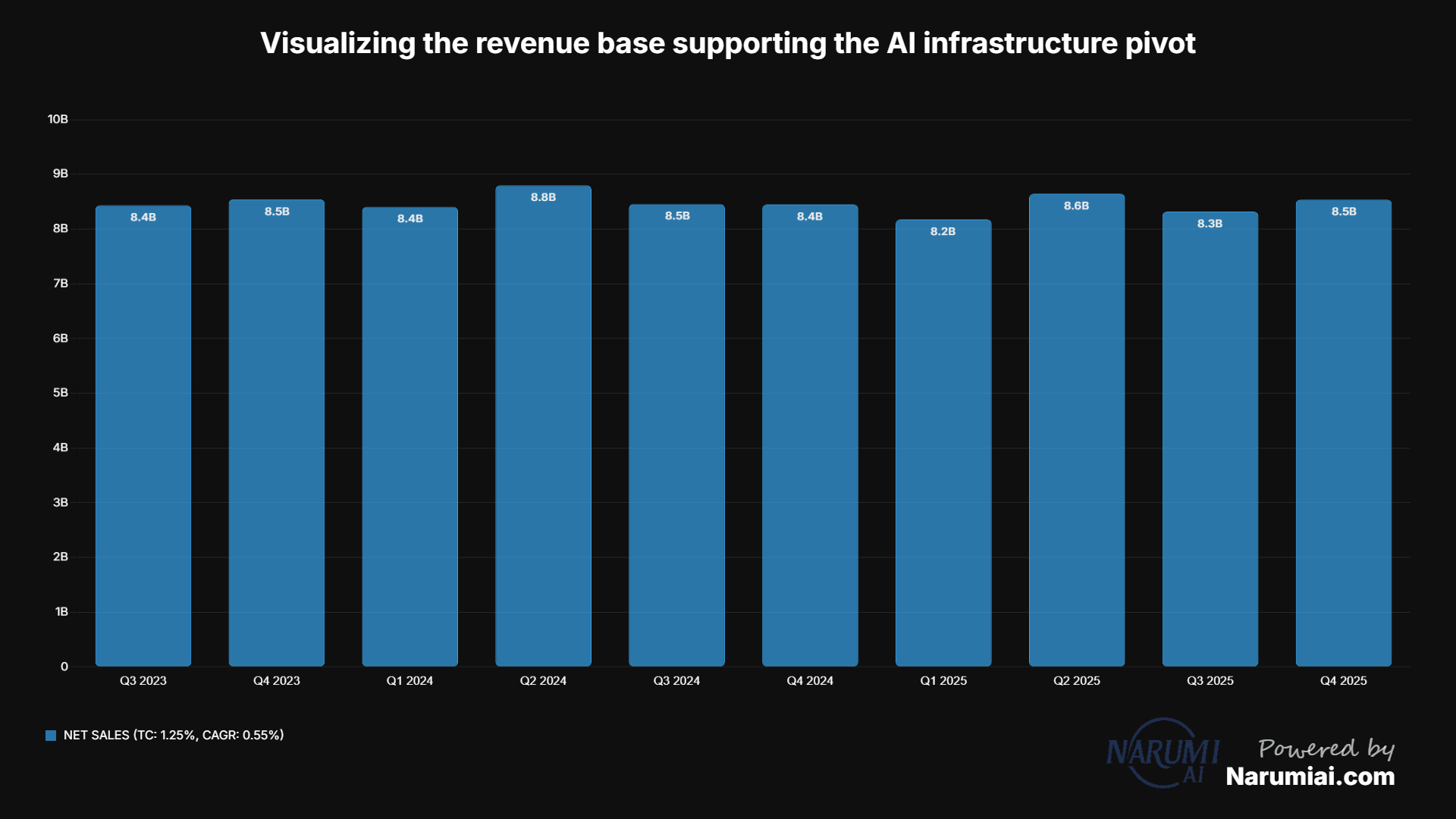
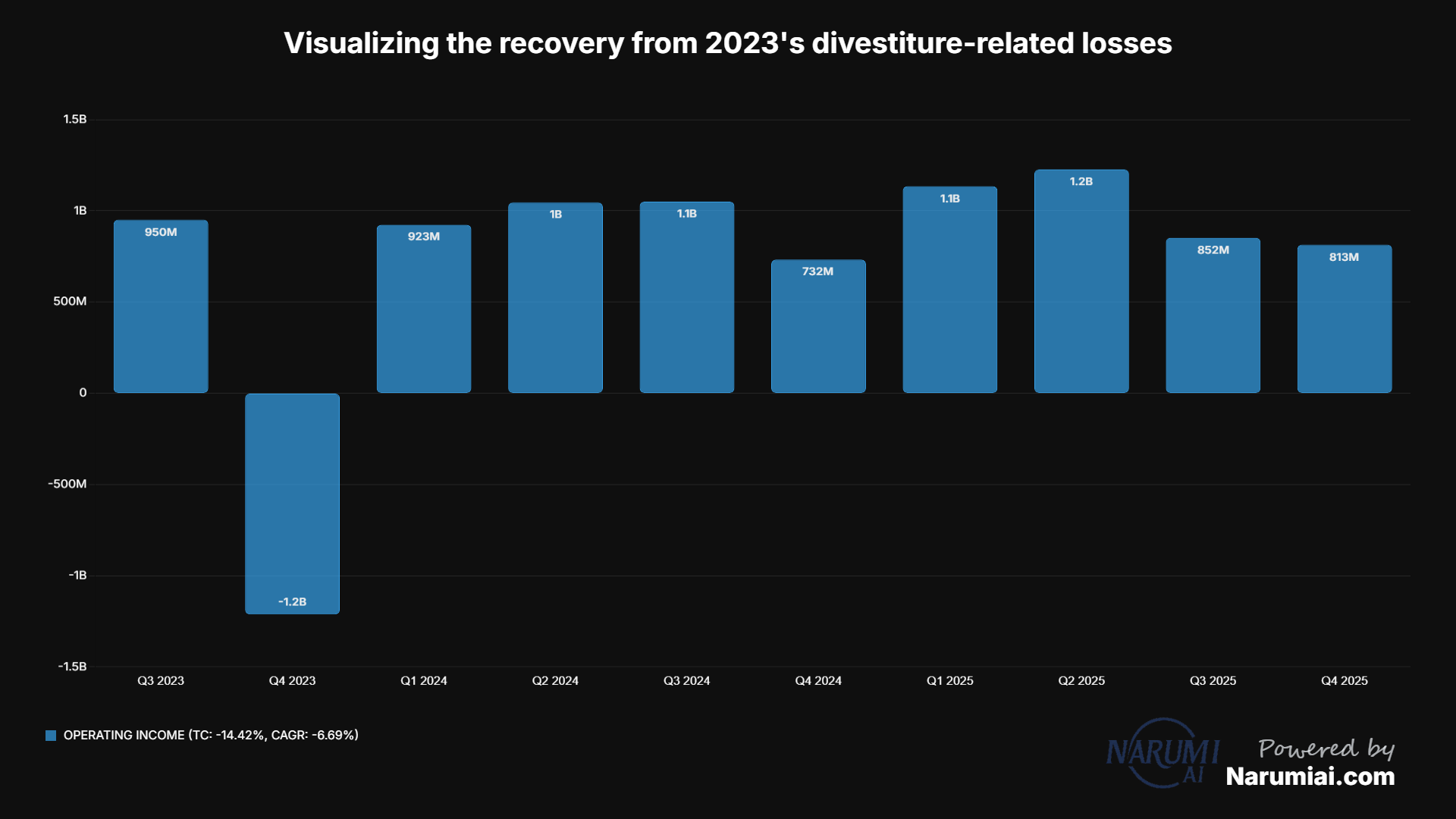
While the market often views Cummins through the lens of cyclical trucking, the financial engine is being re-tooled for mission-critical power. In Q4 2025, Cummins reported Net Sales of $8.536 billion, a steady climb from the $8.431 billion seen in Q3 2023. However, the real story lies in the recovery of its bottom line. After a turbulent Q4 2023—where the company saw a net loss attributable to divestiture-related charges—Cummins has stabilized, posting Net Income of $593 million in the latest quarter.
The efficiency metrics tell a story of aggressive scaling. We calculated an Operating Margin of 9.52% for Q4 2025 (Operating Income of $813M / Net Sales of $8.536B). While this is a slight compression from the 11.26% margin seen in Q3 2023, it reflects a massive internal reallocation of capital toward R&D and the doubling of power generation manufacturing capacity. Cummins is essentially building the plane while flying it, shifting factory floor space away from legacy internal combustion truck engines toward high-horsepower industrial platforms like the Centum Series.
The Grid-to-Chip War
Cummins isn't the only player at the table. Traditional rivals like Caterpillar ($CAT) are launching a 'Prime Power Counter-Offensive,' leveraging a massive $63 billion backlog to secure market share in continuous natural gas generation. While data centers once used generators only for emergencies, the AI age requires 'Behind-the-Meter' (BTM) prime generation—engines that run 24/7 because the local utility simply can't keep up.
Downstream, the 'picks and shovels' players are feeling the heat. Vertiv ($VRT) is scaling its South Carolina facilities by 7x to handle the liquid cooling and integrated rack systems that AI chips demand. Meanwhile, TTM Technologies ($TTMI) is seeing record demand for high-layer-count circuit boards, with its data center segment forecasting a 66% year-over-year surge. These companies are the connective tissue between Cummins' raw power and the silicon accelerators.
The Lead-Time Trap and Legal Headwinds
Despite the tailwinds, the path to $9 billion is littered with bottlenecks. Lead times for large transformers and switchgear have stretched to nearly five years industry-wide. Cummins’ supply chain is under immense pressure to source copper for alternators and high-grade electrical steel, placing it in direct competition with the EV and electrical grid sectors. To maintain agility, Cummins is relying on modular, containerized designs that bypass traditional construction timelines.
There is also a legal shadow over this rapid expansion. In May 2026, a Delaware jury found Cummins liable for misappropriating trade secrets from C3 AI, highlighting the intense friction that occurs when industrial giants try to 'bolt on' software capabilities for the AI stack. For investors, this serves as a reminder that the pivot to high-tech infrastructure carries intellectual property risks that didn't exist in the world of diesel pistons.
The Final Word on the Power Play
Cummins' balance sheet remains its strongest weapon. With Cash and Cash Equivalents reaching $2.845 billion in Q4 2025—up from $2.179 billion two years prior—the company has the dry powder to fund its $50 billion total corporate revenue target for 2030. By successfully navigating the transition from automotive cyclicality to infrastructure permanence, Cummins is positioning itself as a foundational play on the physical reality of AI.
As GlobalFoundries ($GFS) moves into quantum computing hardware and Flex ($FLEX) scales 'Physical AI' to automate factories, the demand for stable, high-density power is only going one way. Cummins may have started in a garage in Indiana, but its future is being written in the server halls of Northern Virginia and the chip foundries of the world.
Check out our Interactive Charting Tool.