The Great Silicon Bifurcation

The Mirage of Volatility
To the casual observer, the market action of early June 2026 looks like a standard jitter in a high-interest-rate environment. A strong jobs report triggers a sell-off; a few days later, a recovery ensues. But for those of us tracking the structural architecture of the next decade, these price swings are merely surface noise. We are witnessing the 'Great Silicon Bifurcation.' The recent tech rebound, spurred by Nvidia CEO Jensen Huang’s characterization of the dip as a 'buying opportunity,' isn't just about sentiment—it’s about the market finally distinguishing between companies that own the future's bottlenecks and those merely trying to build their way out of the past.
In this higher-for-longer interest rate era, the cost of capital has become a filter. It separates the 'Quality Growth' assets, like Micron, from the 'Capital-Strained' pivots, like Intel. While the market recovers, it is doing so with a new level of discernment. Investors are no longer buying 'tech' as a monolith; they are buying pricing power and cash-flow insulation.
The AI Bottleneck and the Memory Premium
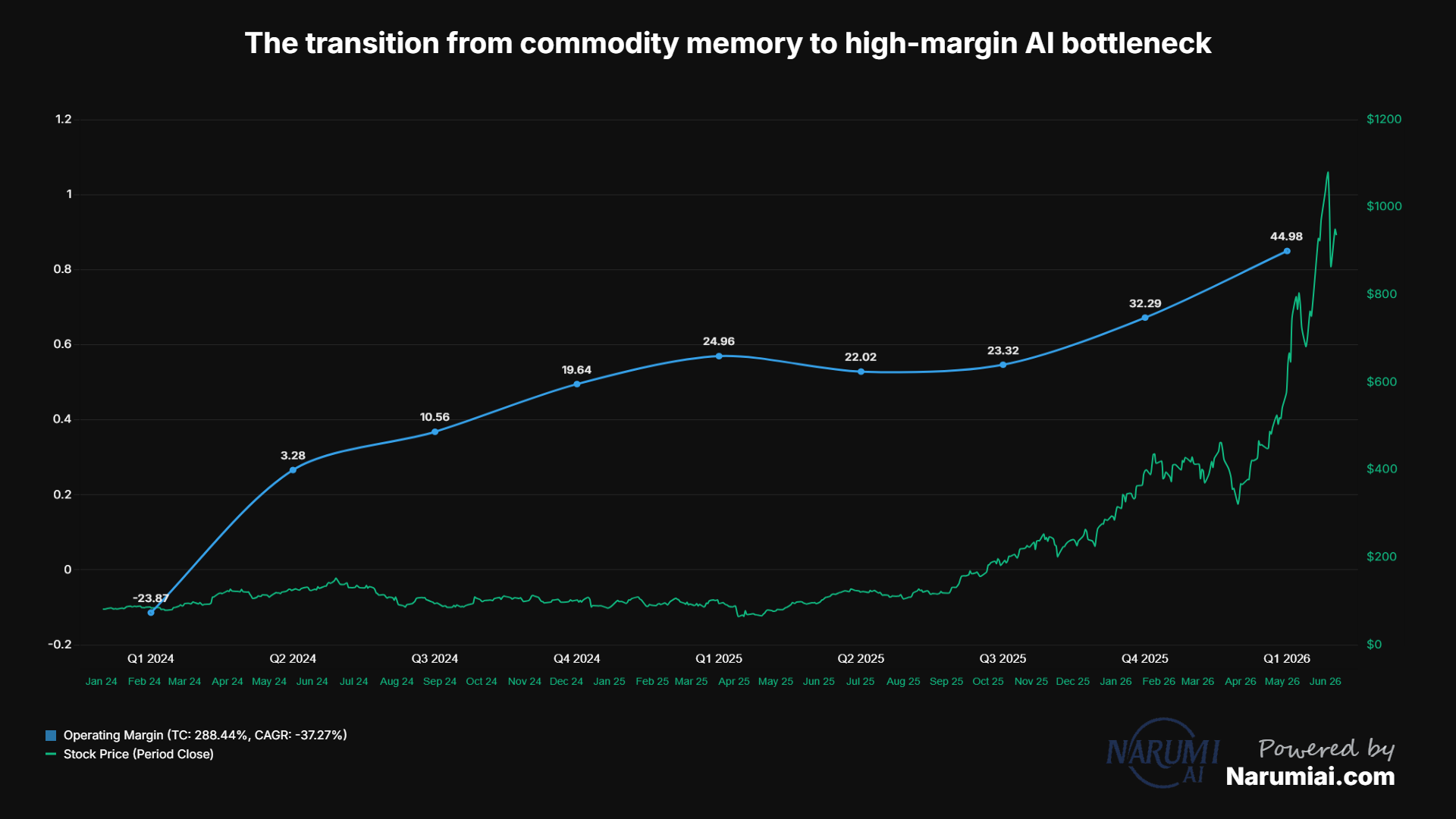
Consider the divergence between Micron and Intel. Micron has successfully transitioned from a commodity-cycle victim to a specialized AI asset. By dominating High-Bandwidth Memory (HBM), they have positioned themselves at the very center of the AI hardware bottleneck. Because hyperscalers are effectively waiting in line for their chips, Micron possesses the rare ability to pass structural costs—including the higher cost of debt—directly to the consumer. This is the definition of an economic moat in 2026.
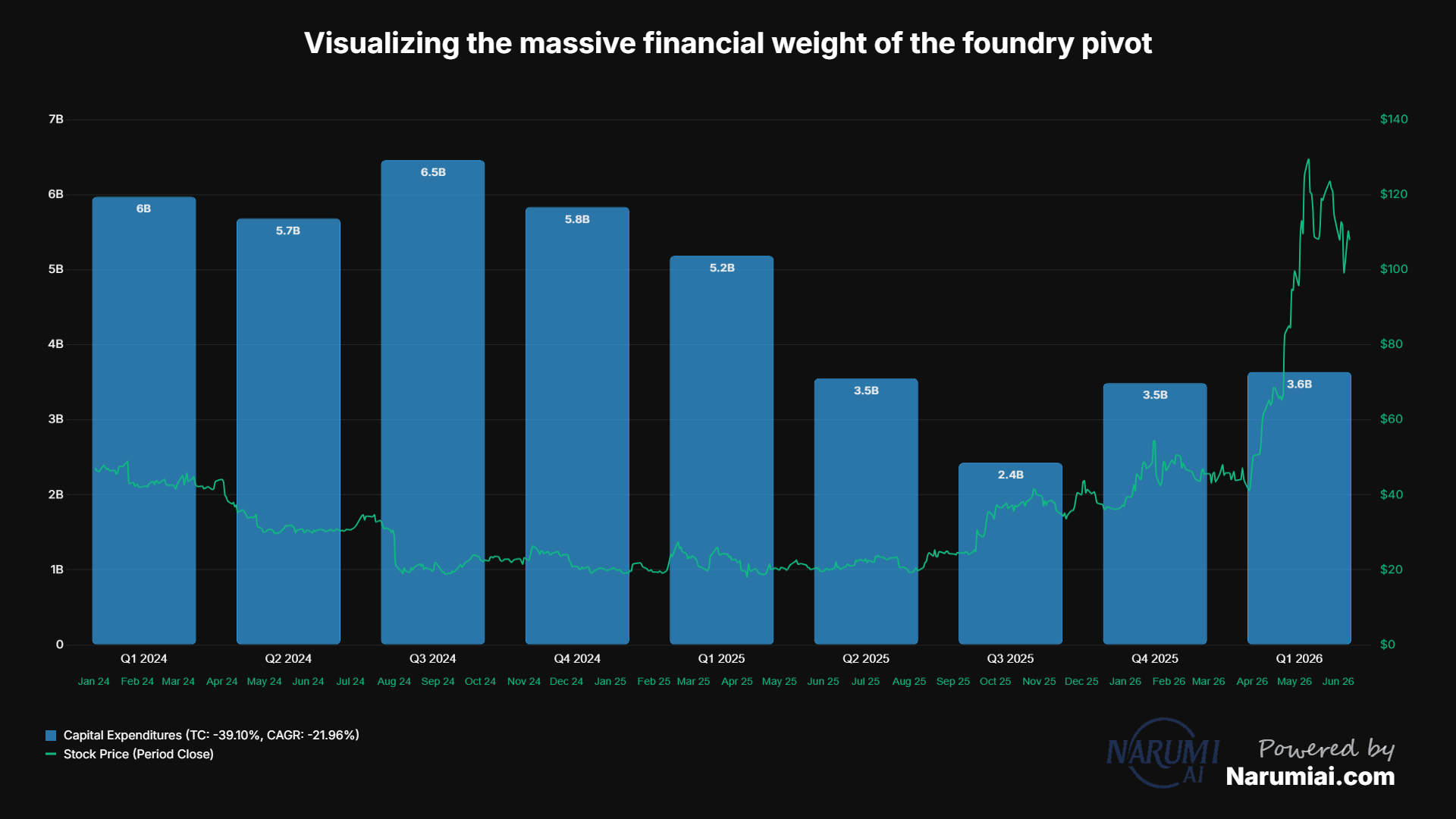
Conversely, Intel represents a high-stakes geopolitical gamble. Their pivot into a third-party foundry business is perhaps the most capital-intensive endeavor in modern history. In an environment of 5% interest rates, building multi-billion dollar 'fabs' before they are profitable is a grueling exercise in financial endurance. Intel is not just fighting TSMC; it is fighting the gravity of its own balance sheet.
From Off-the-Shelf to Custom Architecture
The recent news of Marvell Technology joining the S&P 500 is a symptom of the second major shift: the rise of custom silicon. For the last three years, the narrative was dominated by Nvidia’s general-purpose GPUs. But as the industry matures, the 'Hyperscalers'—Google, Amazon, Meta—are moving toward Application-Specific Integrated Circuits (ASICs) to lower power consumption and increase efficiency. Marvell’s inclusion in the benchmark index validates this shift from 'off-the-shelf' to 'proprietary' infrastructure.
This transition changes the valuation math. Companies like Broadcom and Marvell are no longer just chipmakers; they are co-architects of the cloud giants' internal hardware. This deep integration creates a 'switching cost' moat that is far more durable than a simple performance lead in a single chip generation.
The Physical Limits of the Digital Gold Rush
However, the strategist must look beyond the silicon. The greatest threat to this sustained rebound isn't interest rates or even competition—it’s the physical utility grid. We are approaching a 'Power Wall.' A next-generation AI data center requires as much electricity as a mid-sized city. Interconnection queues for the power grid now face multi-year backlogs.
Furthermore, the upstream supply chain remains fragile. The industry’s reliance on high-grade helium and specialized industrial gases means that a single geopolitical tremor in the Middle East can halt the lithography machines in Taiwan or Arizona. The market is currently pricing in a smooth scaling of infrastructure, but the reality is that the next decade will be defined by 'Physical Scarcity'—of power, of land, and of raw materials.
The Verdict for the Next Decade
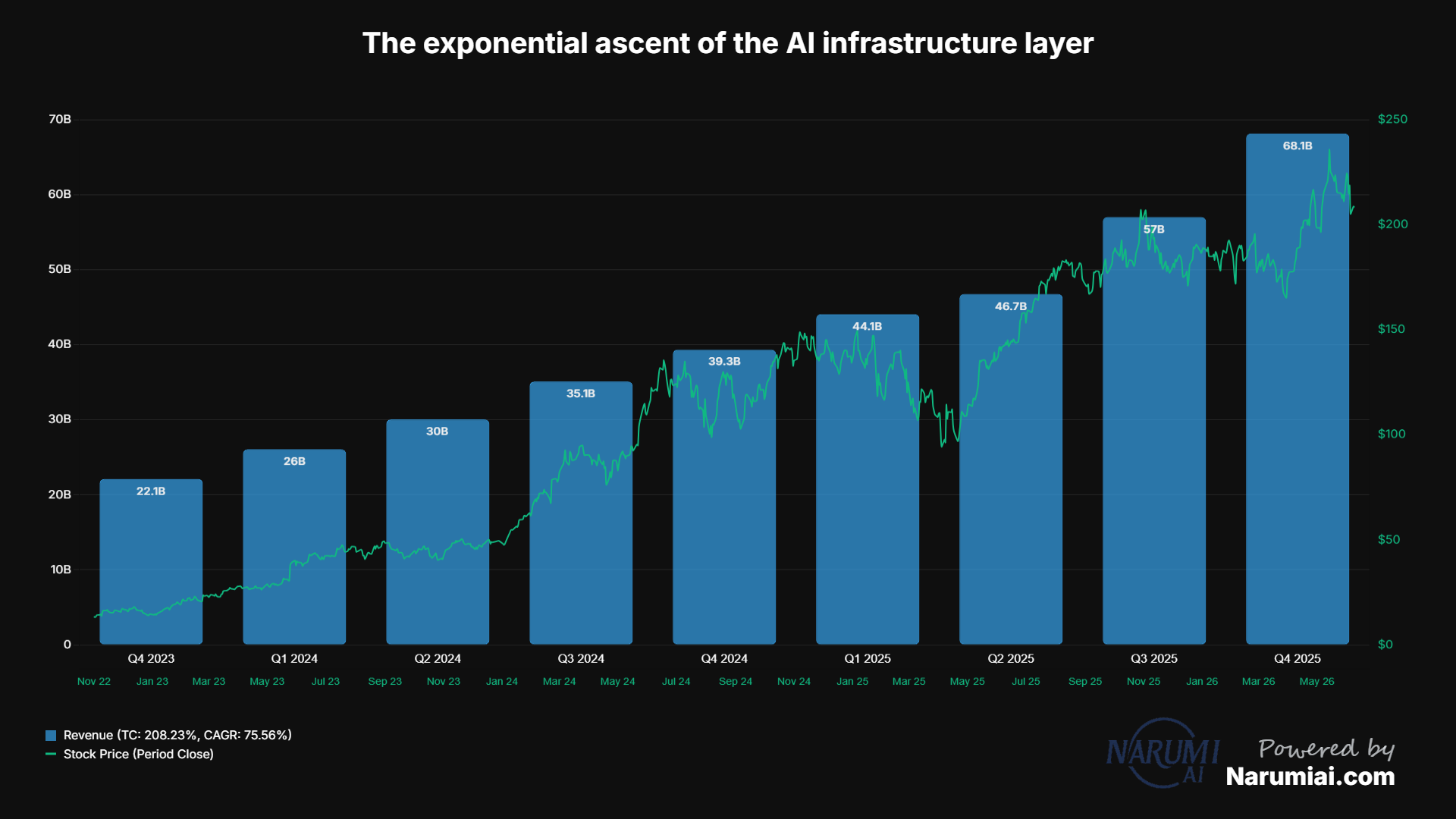
As Goldman Sachs remains constructive on the S&P 500, citing disciplined hedge fund positioning, we must recognize that the 'index' is becoming a tale of two economies. On one side, we have the AI infrastructure layer, which is generating tangible, massive earnings growth. On the other, we have the broader market, which remains 'brittle' and sensitive to every macro data release.
The 'buying opportunity' Huang speaks of is real, but it is narrow. The winners of the next decade will be those who can self-fund their expansion and those who solve the physical bottlenecks of the AI era. For the rest, the high cost of capital will continue to act as a relentless ceiling. We are no longer in a tide that lifts all boats; we are in a market that is learning to swim in deep, expensive water.
Check out our Interactive Charting Tool.