The Great Physical Land Grab: Diller’s MGM Gambit and the End of Digital Fluff
The Strip’s New Digital Architect
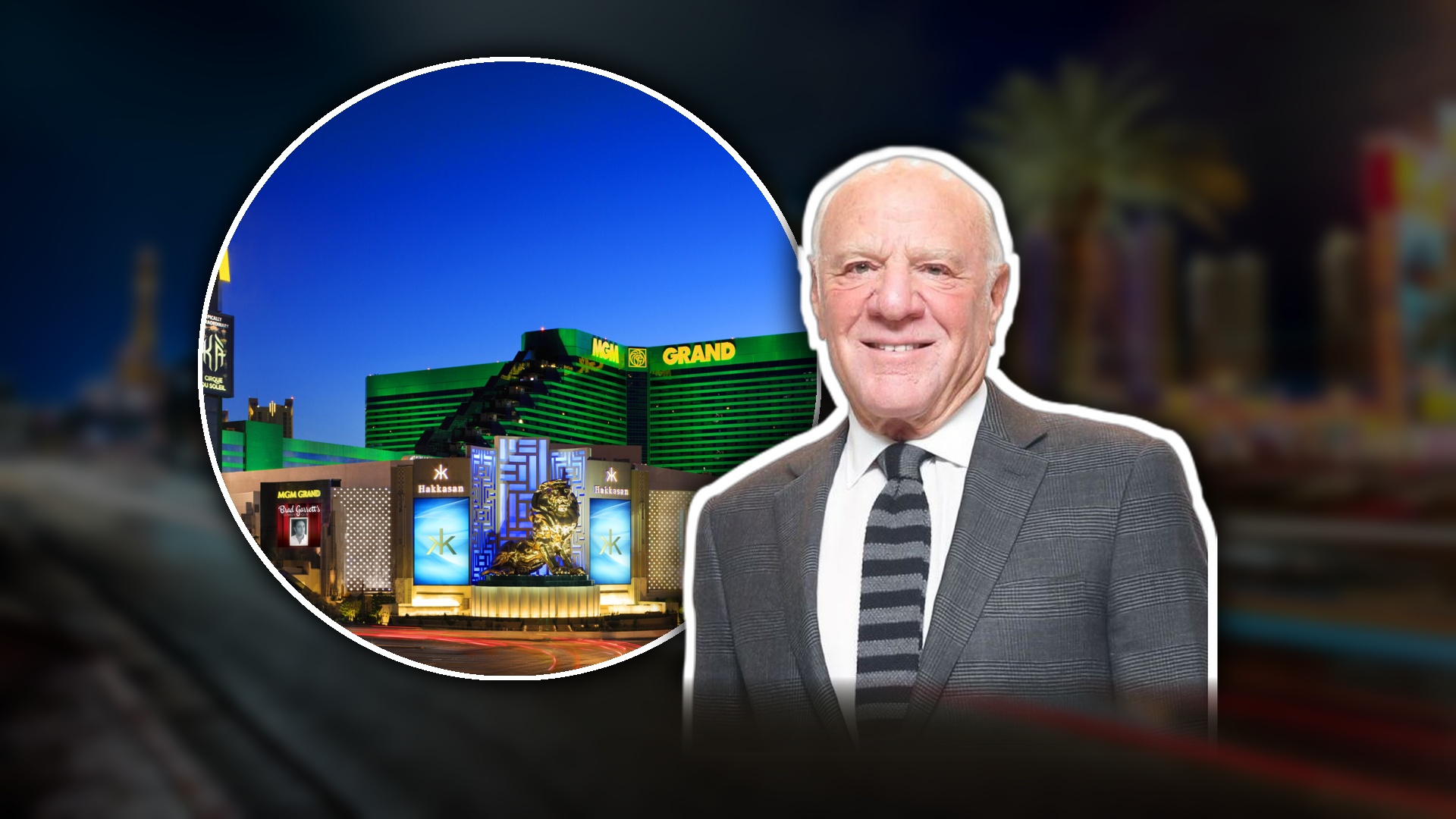
Las Vegas has always been a city of illusions, but the latest move by Barry Diller’s People Inc. is grounded in a cold, hard reality: the digital world is becoming too crowded, and the physical world is where the real moats remain. Diller’s all-cash offer of $48.30 per share for MGM Resorts ($MGM) isn't just a bet on blackjack and baccarat; it’s a strategic pivot toward assets that cannot be replicated by an algorithm or disintermediated by a chatbot.
For years, the public markets have treated casino giants like legacy dinosaurs. Diller, the man who built interactive empires from QVC to Expedia, sees the opposite. He sees a physical 'entertainment nucleus' that controls 40% of the Las Vegas Strip—a portfolio including the Bellagio and ARIA that serves as the ultimate top-of-funnel for the high-margin digital future of BetMGM. By taking a controlling 50.1% stake, Diller is effectively insulating MGM from the quarter-to-quarter hysterics of Wall Street, allowing for the kind of long-term capital intensity that a public ticker rarely tolerates.
The Calculus of Concrete
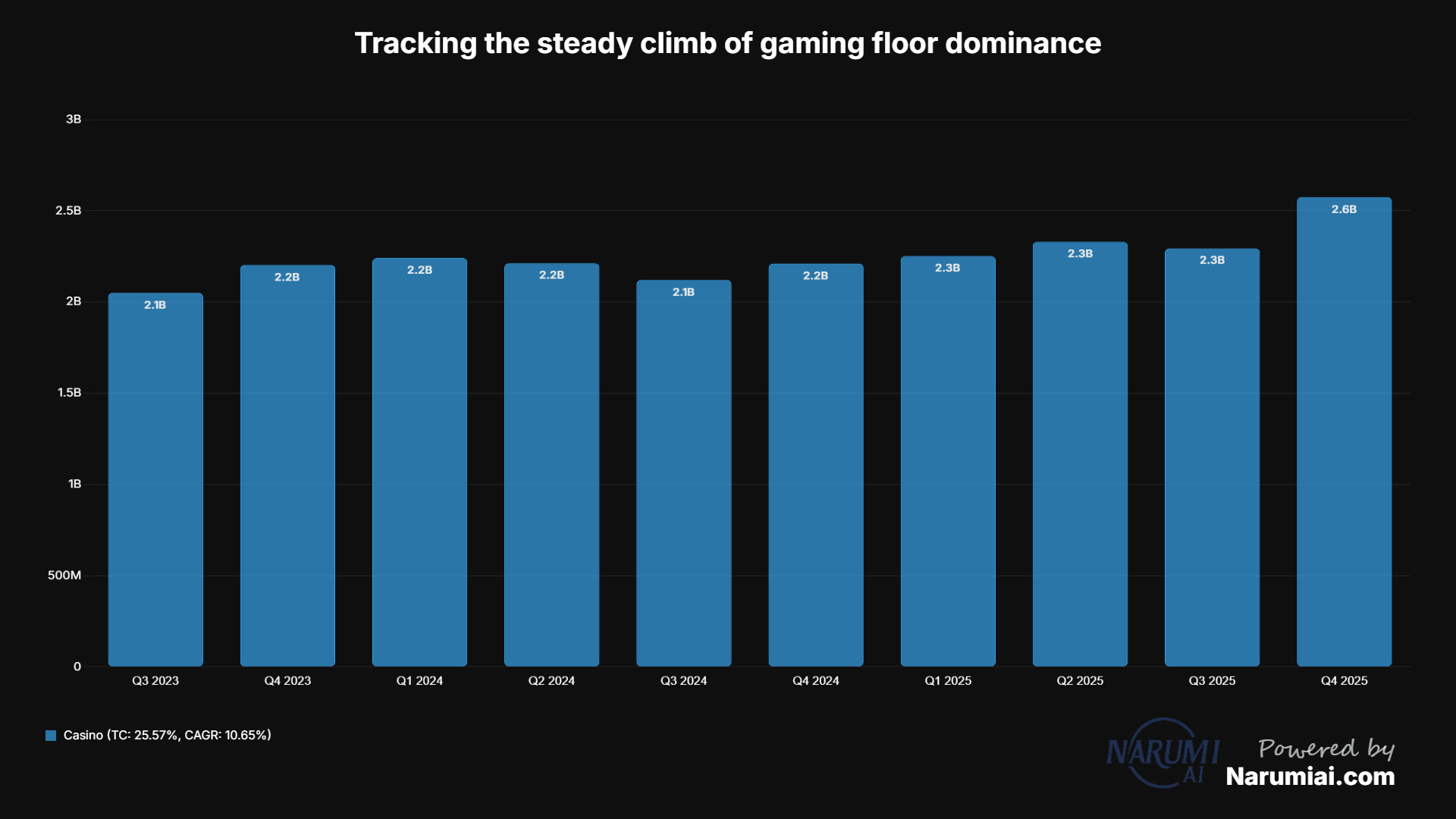
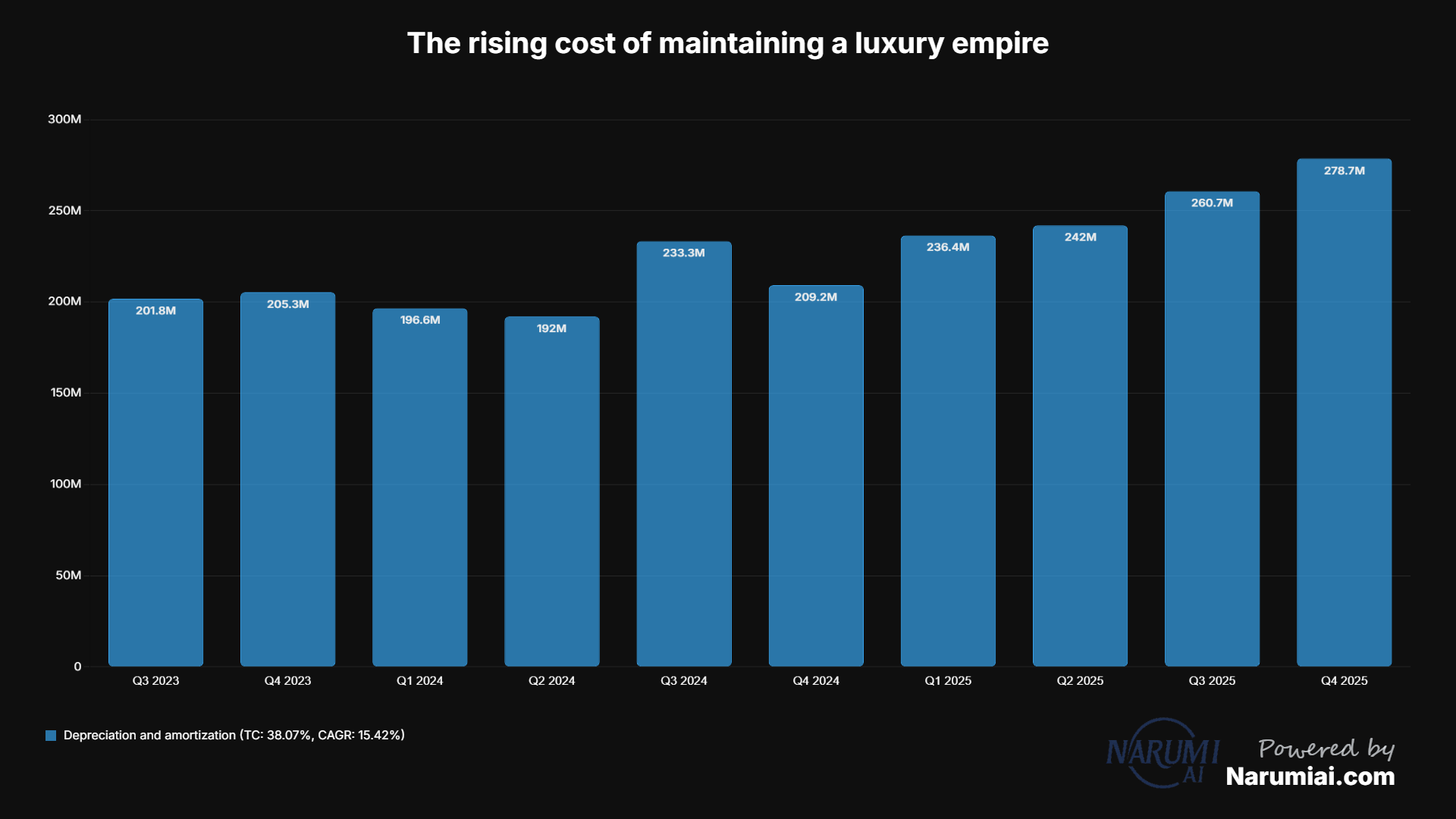
While the top-line story for MGM looks like a jackpot, a closer look at the ledger reveals why a private-equity-style intervention might be necessary. In Q4 2025, MGM’s Casino revenue hit a staggering $2.57 billion, up from $2.05 billion in the same quarter two years prior. However, the 'silent bleed' is found in the cost of maintaining these gilded cages. Depreciation and amortization expenses have climbed from $201 million in Q3 2023 to $278 million by the end of 2025.
The conflict here is one of margins. Despite the revenue surge, MGM’s operating income has shown signs of fatigue. In Q4 2023, the company generated $419 million in operating income on roughly $4.4 billion in total revenue (~9.5% margin). Fast forward to Q4 2025, and while revenue grew to approximately $4.6 billion, operating income fell to $325 million, dragging margins down to roughly 7%. Diller’s arrival suggests a belief that tech-driven optimization—honed from his years at IAC—can trim the fat that legacy hospitality management has allowed to accumulate.
Berkshire’s Housing Hedge
Diller isn’t the only titan hunting for tangible moats. Berkshire Hathaway ($BRK.B), under the newly minted leadership of Greg Abel, has launched its own 'elephant' deal: the $6.8 billion acquisition of homebuilder Taylor Morrison Home ($TMHC). This isn't just a cyclical bet on the housing market bottoming out; it’s a masterclass in vertical integration. By folding the nation’s 6th largest builder into a portfolio that already includes Benjamin Moore, Johns Manville, and Shaw Floors, Berkshire is creating a closed-loop ecosystem where it captures every dollar from the foundation to the final coat of paint.
The move serves as a perfect foil to the MGM deal. While Diller seeks to optimize the customer-facing digital experience of a physical asset, Berkshire is optimizing the back-end supply chain of the American dream. Both moves signal a profound skepticism of the 'AI-native' hype cycle that has seen capital flee from established business models toward unproven startups. For Berkshire, the $380 billion cash pile is finally being weaponized against the volatility of the public markets.
The Invisible Friction
The path to the winner's circle is rarely smooth. For MGM, the primary risk lies in the BetMGM joint venture with Entain. Diller’s vision for a tech-optimized casino requires total control, yet he remains tethered to a UK partner in a 50/50 split. Institutional investors are already pricing in a sweetened bid, as MGM’s stock surged past the $48.30 offer immediately after the announcement. This suggests the market believes Diller is lowballing the value of the Strip’s 'entertainment nucleus.'
Furthermore, the regulatory hurdles are gargantuan. Transitioning a global gaming operator to a new ownership structure requires clearing the high bars set by commissions in Nevada and, more delicately, Macau. MGM China remains a geopolitical wildcard. If Diller cannot navigate the sensitivities of the Macau concessions, the 'physical moat' strategy could face a significant breach.
The Verdict: A Return to Reality
What we are witnessing is the 'Great Re-Shoring' of institutional capital. From the Bellagio fountains to the Sun Belt suburbs of Taylor Morrison, the world’s most sophisticated investors are retreating from the ephemeral and reinvesting in the essential. Diller and Abel are betting that in an age of artificial intelligence, the most valuable thing you can own is something you can actually touch. The question for MGM shareholders is no longer if they should sell, but how much more Diller is willing to pay to secure his piece of the desert.
Check out our Interactive Charting Tool.