The Great Energy Rewiring: Beyond the Islamabad Breakthrough
The Illusion of the Islamabad Dip
The headlines of May 2026 suggest a world breathing a sigh of relief. As news broke of potential conflict resolution between Washington and Tehran during talks in Islamabad, Brent crude prices retreated from their harrowing peaks, sliding toward the $100 mark. But for the strategic observer, this price action is mere noise. The structural reality is that the Iran-Israel conflict has already permanently altered the global economic motherboard. We are no longer in a world of 'just-in-time' energy; we have entered the era of 'just-in-case' structural fortification.
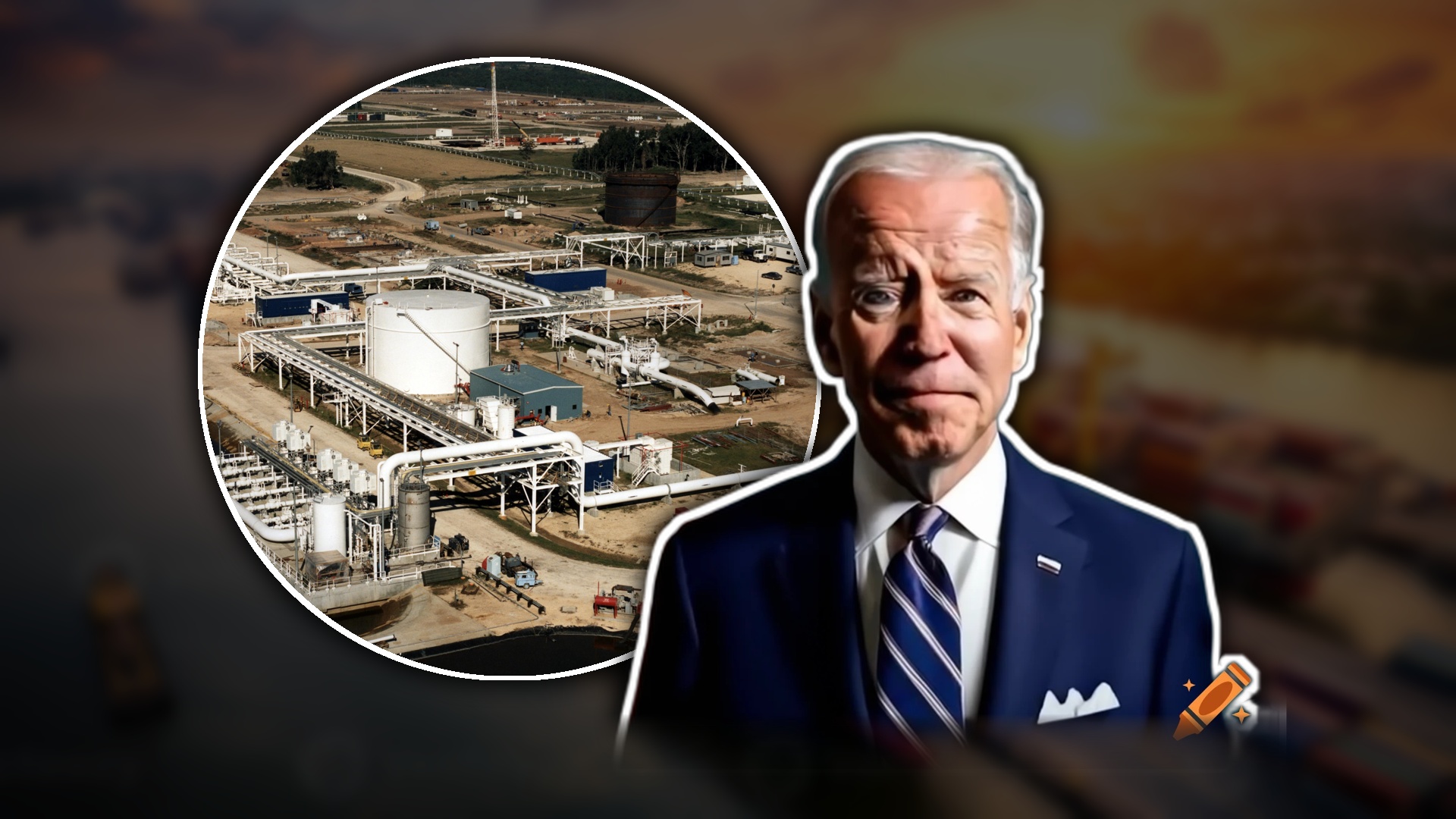
The most glaring symptom of this shift is the state of the U.S. Strategic Petroleum Reserve (SPR). To stabilize a world on the brink, the U.S. has executed record-breaking withdrawals, leaving the reserve at approximately 374 million barrels—its lowest level in decades. This is not a cost-free intervention; it is a massive transfer of future volatility onto the present. By draining the sovereign 'credit card' of energy, the West has effectively created an artificial price floor. When the time comes to refill these buffers, the market will face a structural demand of nearly 1.8 million barrels per day for a full year, ensuring that 'cheap oil' remains a relic of the pre-2026 era.
Japan’s Renewable Escape Hatch
While the West depletes its reserves, East Asia is providing a masterclass in adaptation. Japan, historically vulnerable due to its 95% reliance on Middle Eastern crude, has demonstrated a surprising resilience, with exports rising 14.8% in April despite the chaos. This is not luck; it is a fundamental pivot in corporate strategy. Japanese export giants have moved aggressively away from utility dependence, utilizing a surge in Corporate Power Purchase Agreements (PPAs) to lock in fixed-rate, domestic clean energy.
By decoupling their electricity costs from the volatility of the Strait of Hormuz, Japanese manufacturers are gaining a structural advantage over South Korean peers. While Korean chaebols have relied on expiring financial derivatives—now rolling over at punitive costs—Japan has focused on physical insulation. This shift, accelerated by the 2026 Green Transformation Emission Trading System (GX-ETS), allows Japanese firms to pass input costs to global consumers without losing market share, backed by a structurally weak Yen.
The Rise of Fortress Australia
In the financial sector, the ripples of the conflict have reached the shores of Sydney. Australian regulators, led by APRA, have signaled a 'security-first' approach that contrasts sharply with the lighter-touch regimes of the US and EU. The implementation of CPS 230 mandates that banks map out 'severe but plausible' disruptions, effectively forcing institutions to hold higher capital buffers against geopolitical shocks.
This creates a 'Fortress Australia' scenario. While Australian banks like $CBA or $NAB may see their Net Interest Margins (NIM) compressed by the cost of holding these liquid, lower-yielding assets, they are emerging as the global gold standard for safety. In a world where the Strait of Hormuz can close overnight, the premium on 'boring' and 'over-capitalized' banks is rising. They may lack the aggressive growth of Wall Street, but they possess the structural durability required for the next decade of volatility.
The Death of the LNG Transition Myth
Perhaps the most profound shift is the destruction of the narrative that Liquefied Natural Gas (LNG) is a 'safe' transition fuel. The strikes on Qatar’s Ras Laffan facility have exposed a critical flaw: LNG infrastructure is highly centralized and physically fragile. Experts estimate that reconstruction could take three to five years, a timeline that has sent shockwaves through emerging markets in Asia.
As we look toward the remainder of 2026, the ' Islamabad Breakthrough' should be viewed with skepticism. The geopolitical risk premium is now a permanent feature of the landscape. Whether through the fragmentation of maritime insurance or the shift toward overland Eurasian trade routes, the global economy is being rewired for a world where the Middle East is no longer the undisputed center of the energy universe. The winners of the next decade will not be those who trade the daily swings, but those who build the moats of domestic energy autonomy.
Check out our Interactive Charting Tool.