The Great Decoupling: Why Coinbase and MicroStrategy Are Firing Humans

The Death of the Coordination Tax
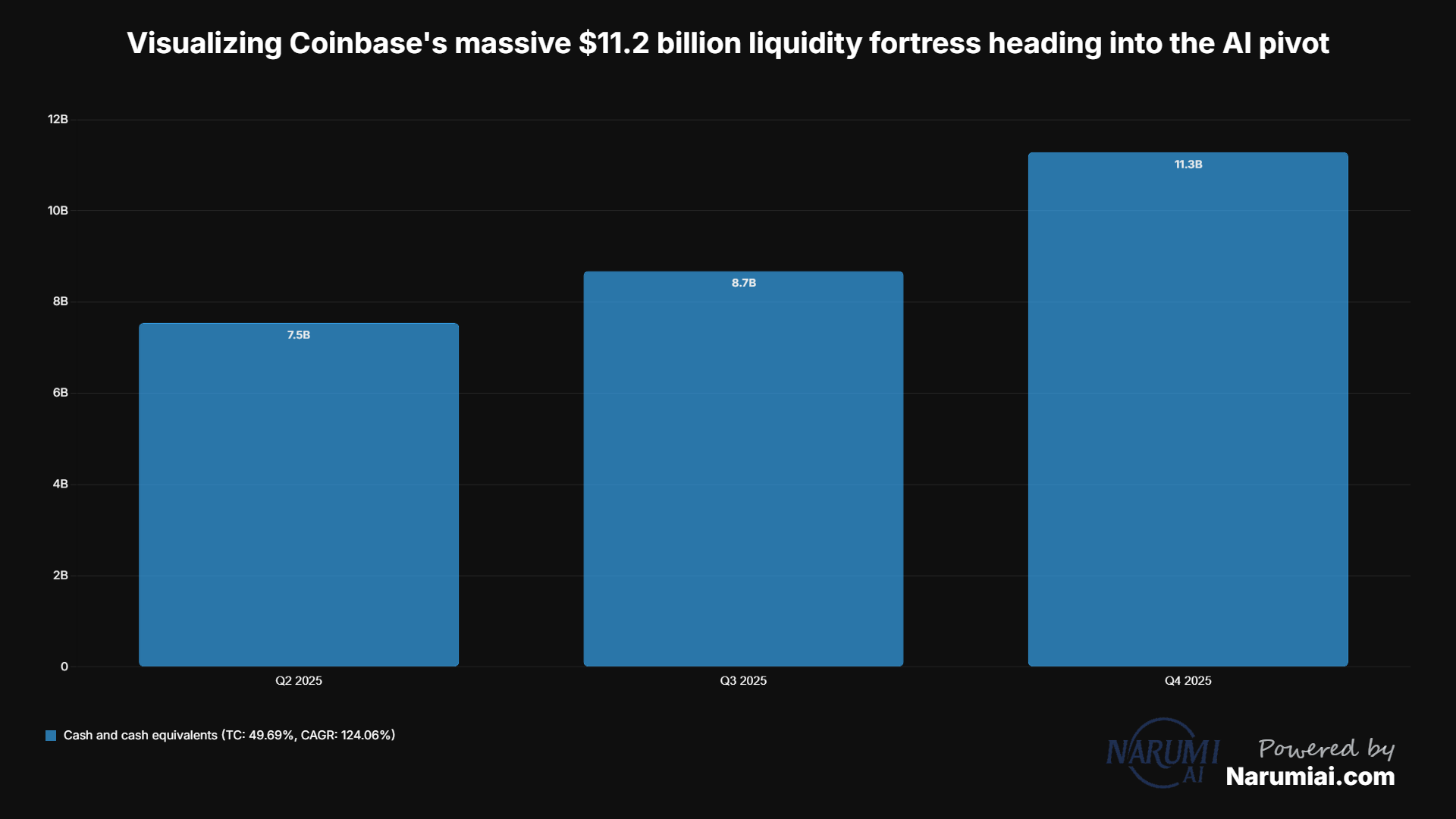
In the high-velocity world of digital assets, the most significant shift of May 2026 isn't found in the price of Bitcoin, but in the structural dismantling of the corporate hierarchy. Coinbase’s decision to cut 14% of its workforce—roughly 700 souls—is not a retreat; it is a radical re-engineering. CEO Brian Armstrong is attempting to solve the 'coordination tax' that plagues growing enterprises by pivoting to an 'AI-native' model. By eliminating 'pure managers' and mandating that every leader be a 'player-coach,' Coinbase is betting that the next decade of finance belongs to lean, automated utilities rather than labor-intensive institutions.
This is a philosophical pivot toward Agentic Commerce. We are moving from a platform designed for human traders to an infrastructure built for AI agents. When Armstrong speaks of engineers using AI to ship code in days rather than weeks, he is describing a future where the 'cost-to-serve' drops so low that competitors still burdened by human-centric compliance and support staff simply cannot maintain margins. In Q3 2025, Coinbase reported an operating margin of approximately 25.7%, a stark recovery from the negative margins of early 2025. This lean-ness is now the primary economic moat.
The Balance Sheet as a Leveraged Alpha Machine
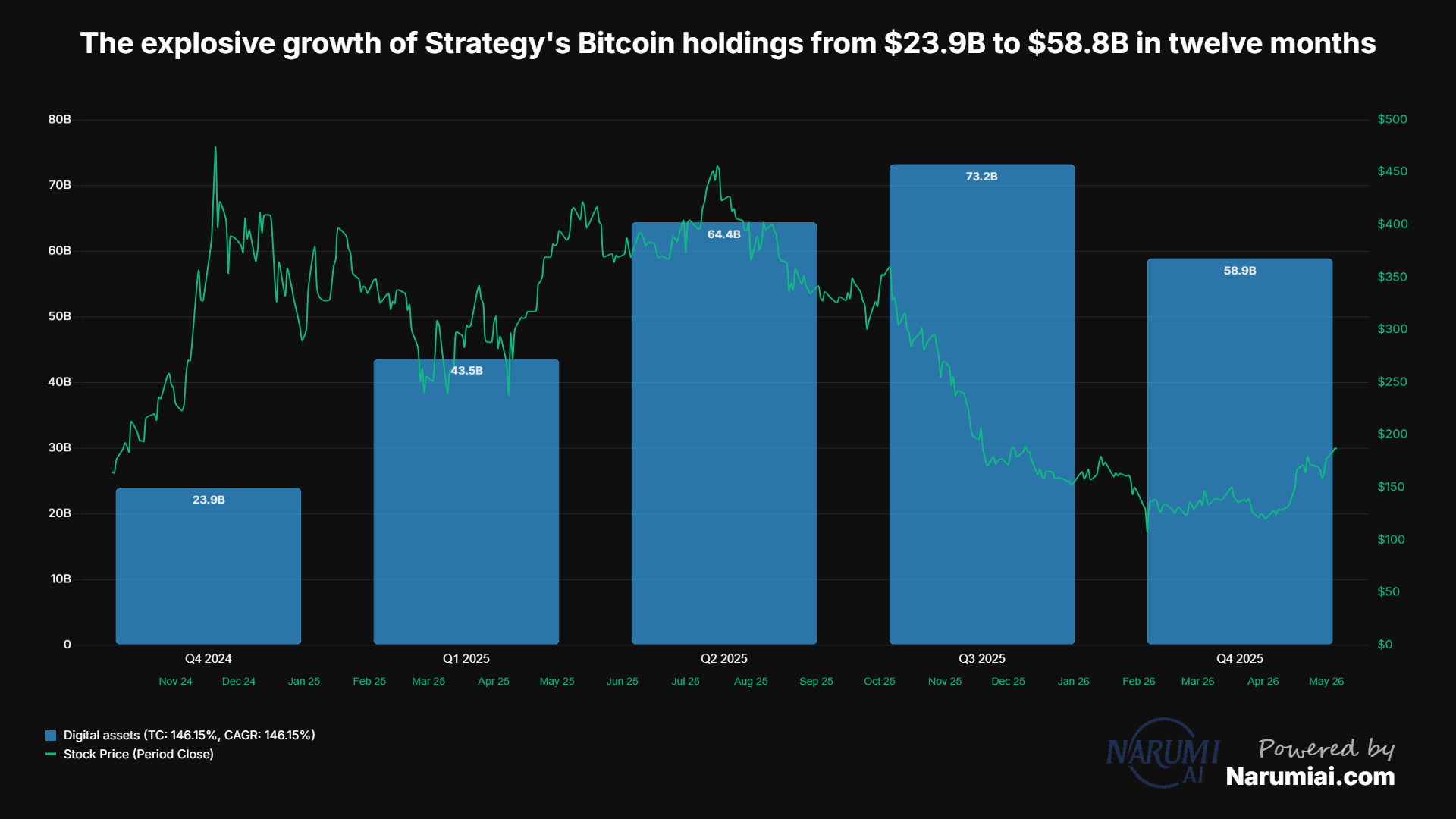
While Coinbase automates the firm, MicroStrategy—now rebranded simply as Strategy—is automating the treasury. The headline $12.54 billion net loss for Q1 2026 is, to the sophisticated strategist, a non-event. It is an accounting artifact of Fair Value rules, a 'ghost' in the machine driven by unrealized Bitcoin volatility. The real story lies in the evolution of the 'BTC Yield'—the metric that measures Bitcoin holdings relative to diluted shares. Strategy has transformed itself into a specialized merchant bank for the Bitcoin economy, using its STRC preferred stock to create a 'Digital Credit' system that buffers it against the very volatility that produces its headline losses.
Strategy's capital allocation strategy is now a 'recycling' engine. By issuing $7.37 billion in offerings during a single quarter, they are proving that institutional appetite for leveraged Bitcoin exposure remains insatiable, even when the underlying asset experiences a 23% drawdown. Their '21/21' plan—targeting $42 billion in capital raises over three years—is a move to escape the gravity of the traditional dollar-based banking system entirely.
The Dollar’s Digital Life Support
The macro backdrop for these shifts is a 'strange sell-off' in the U.S. dollar, which has declined 10% against major currencies. Yet, in a paradox of modern economics, the 98% dominance of dollar-backed stablecoins has cemented the USD's status as the global reserve asset for the machine economy. Coinbase’s partnership with Circle and the growth of USDC have turned the exchange into a systemically important holder of U.S. Treasuries. This creates a 'Shadow Bank' trap: as stablecoins become the primary demand driver for U.S. debt, Coinbase faces the risk of regulatory capture where the government may enforce 'no-yield' rules to prevent a bank run from the legacy system into digital dollars.
For the long-term investor, the signal is clear. We are entering an era where the most valuable companies are those that can decouple their growth from headcount and their treasury from the traditional banking rail. Coinbase is building the rails for AI agents to transact, while Strategy is providing the collateral. The 1,000-word story of the next decade is not about a 'crypto winter,' but about the cold, efficient dawn of machine-led finance.
Check out our Interactive Charting Tool.