The Great AI Swap: Trading Cubicles for Compute

The Org Chart is Getting a Software Update
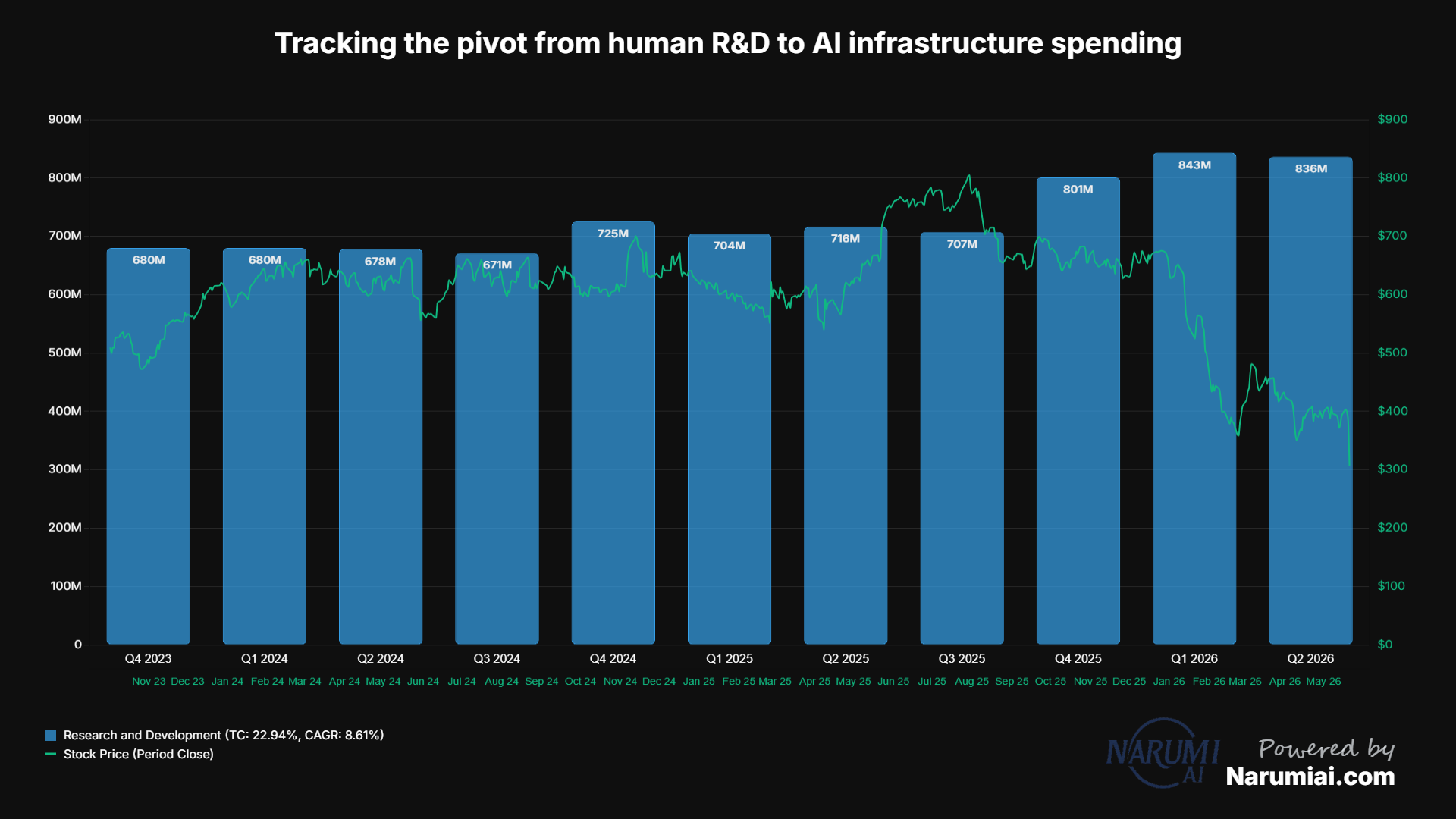
For decades, the math for software companies was simple: if you wanted to grow revenue by 20%, you probably needed to grow your headcount by something close to that. More sales meant more sales reps; more customers meant more support staff. But in May 2026, that linear logic is officially dead. Intuit ($INTU) just sent a shockwave through the market by announcing it’s laying off 1,800 employees—roughly 10% of its workforce—while simultaneously raising its financial guidance. This isn't the defensive, 'batten down the hatches' cost-cutting we saw in 2023. This is an offensive pivot.
We are entering the era of the Great AI Swap. Companies like Intuit, Cisco, and Verizon are no longer trimming fat; they are harvesting human capital to pay their massive 'AI tax.' They are trading Operating Expenses (OpEx)—the salaries and benefits paid to humans—for Capital Expenditures (CapEx)—the billions of dollars required to build data centers and rent the raw compute power needed to run autonomous agents.
Moving From 'Copilots' to 'Agents'
To understand why Intuit is willing to let go of 17% of its global team, you have to understand the shift from Generative AI to Agentic AI. In 2024 and 2025, we were in the 'Copilot' era. AI was a digital assistant that sat on your shoulder and helped you write an email or a line of code. It was a productivity booster for humans.
In 2026, the 'Agent' has taken over. An AI Agent doesn't just suggest an answer; it executes the workflow. It can file a tax return, reconcile a balance sheet, and handle a customer dispute from start to finish without a human ever touching the keyboard. When the software is the employee, you don't need the middle manager whose primary job was to coordinate human tasks. This is leading to an extreme organizational flattening. As Intuit streamlines, they are removing the 'complexity layers' that traditionally slowed down product cycles.
The $700 Billion Compute Bill
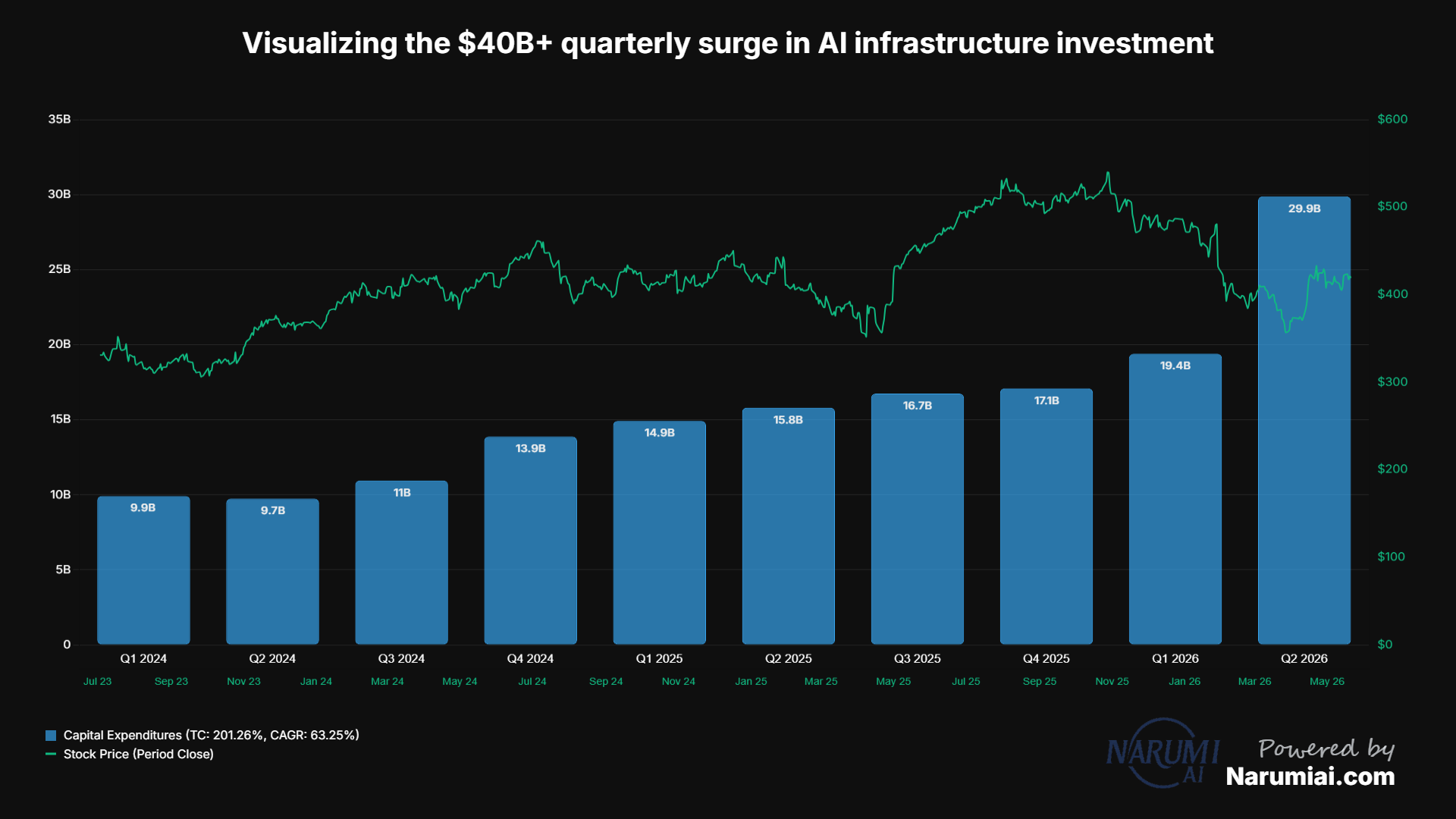
The transition isn't cheap. The 'hyperscalers'—Microsoft, Google, and Oracle—are currently engaged in a capital arms race that makes the Cold War look like a schoolyard spat. Combined, Big Tech's 2026 CapEx is expected to hit a staggering $700 billion to $725 billion. Microsoft alone is spending upwards of $40 billion per quarter to build the 'Frontier Firm' infrastructure.
For a company like Intuit, staying relevant means they have to pay to play in this ecosystem. They are forging massive, multi-year dependencies with providers like OpenAI and Anthropic. To afford these 'token consumption' costs—which Goldman Sachs predicts will increase 24-fold by 2030—they have to cannibalize their own legacy, high-headcount models. It’s a race to become 'AI-native' before a nimble startup with zero legacy costs does it to them first.
The Risk of 'Institutional Amnesia'
While Wall Street initially cheered the margin expansion, a quieter, more nervous sentiment is brewing among long-term institutional investors. There is a very real danger of Institutional Amnesia. When you cut 17% of your workforce, you aren't just cutting 'layers'; you're cutting the people who understand the undocumented 'why' behind the system architecture.
Standard workflows are easy for AI to automate. But business survival often hinges on edge cases—those weird, non-linear anomalies like a localized tax code mutation or a catastrophic network failure. If the humans who understand these anomalies are gone, the company becomes structurally fragile. Furthermore, by wiping out entry-level roles, tech firms are dismantling their own talent pipelines. Where will the directors of 2035 come from if there are no junior analysts in 2026?
The 'U-Shaped' Labor Trap
There is also a financial paradox at play: the U-Shaped Labor Cost Trap. While companies are saving money by laying off generalist staff, the cost of hiring the rare 'System Architects' and 'AI Governance Experts' needed to manage these agents is skyrocketing. These specialists are commanding salaries that can effectively erase the savings gained from the initial layoffs. Institutional investors are now looking beyond the 'headcount reduction' headline and asking for a more critical metric: Free Cash Flow per Employee. If that number isn't climbing aggressively, the restructuring is just 'AI-washing' a stagnant business.
What’s Next: The Rise of the Guardian Agent
The next catalyst for this restructuring will be the mainstreaming of Guardian Agents. Right now, many companies are hesitant to go 'full autonomous' because of legal and compliance fears. They still want a 'human-in-the-loop' to make sure the AI doesn't hallucinate a tax deduction. However, once standardized AI frameworks are released that can audit other AI agents for bias and errors, the compliance logjam will break. When that happens, expect another, even faster wave of workforce restructuring as the 'human-in-the-loop' becomes a 'human-on-the-horizon.'
The bottom line for investors? The tech sector is no longer a bet on how many people a company can hire to build software. It is a bet on how effectively a company can replace its own legacy structure with a standardized, multi-agent platform architecture. In the Agentic Era, the winners won't be the companies with the biggest teams—they'll be the ones with the best architects.
Check out our Interactive Charting Tool.