The End of Play: Why Nintendo is Choosing Margins Over Masses
The AI-Industrial Complex Eats the Living Room
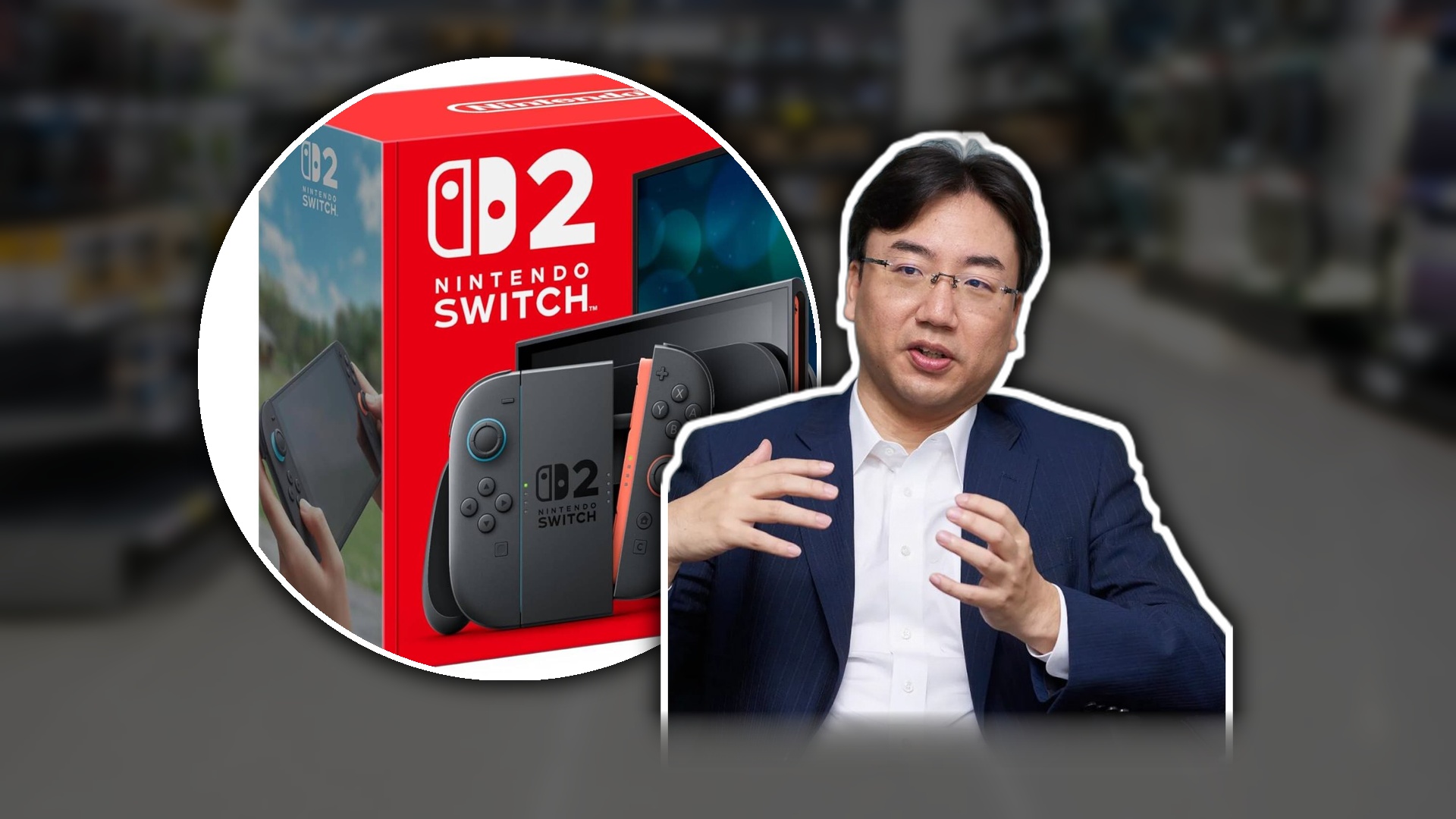
For decades, the video game industry operated on a reliable, almost comforting rhythm: hardware prices fell as technology matured. This was the 'Price Umbrella' theory in action—as components became cheaper to manufacture, the savings were passed to the consumer to expand the install base. But in May 2026, that era officially died. The recent 7% slide in Nintendo’s shares following the announcement of a $499.99 price point for the Switch 2 is not merely a reaction to a 'sticker shock' event; it is a symptom of a structural shift in the global economy. We are witnessing the birth of the 'Post-Affordability' era of entertainment.
The culprit is what industry insiders are calling 'RAMmageddon.' The insatiable hunger of AI data centers for high-performance memory has effectively cannibalized the supply chain for consumer electronics. As foundries prioritize high-margin AI chips for the likes of Nvidia, the LPDDR5X RAM required for a modern handheld has seen costs surge by nearly 90%. Nintendo, once the king of the 'blue ocean' strategy—selling affordable fun to families—now finds itself forced into a defensive crouch, protecting its margins at the expense of its mass-market soul.
The Boutique Strategy vs. The Media Powerhouse
The divergence between Nintendo and Sony has never been more profound. While Nintendo’s stock retreated, Sony’s shares climbed 10%. This isn't because Sony found a magical source of cheap silicon; rather, it is because Sony has successfully decoupled its valuation from the raw number of plastic boxes it sells. Sony has spent the last five years transitioning into a 'Platform as a Service' (PaaS) media powerhouse. With PS Plus subscription tiers and a growing presence in PC gaming and film, Sony can weather a hardware slowdown. If a consumer balks at a $650 PS5, Sony still captures their value through recurring digital revenue.
Nintendo, conversely, remains tethered to the 'Integrated Model.' They are a hardware company that sells software to justify the hardware. This makes them uniquely vulnerable to the 'Single Cycle Risk.' When the hardware becomes a $500 luxury item, the barrier to entry for a family of four becomes a wall. Without a 'system seller'—a mainline Zelda or a 3D Mario—on the immediate horizon for late 2026, investors are rightly questioning if a Star Fox remake or a Yoshi title can generate the gravitational pull needed to overcome a half-thousand-dollar entry fee.
The Software Vacuum and the GTA VI Buffer
In the strategist’s view, the most dangerous part of Nintendo’s current position isn't the price—it's the timing. The market is currently staring down the barrel of the most anticipated media event of the decade: the launch of Grand Theft Auto VI in November 2026. Sony sits comfortably in the shadow of this behemoth. Even as a third-party title, GTA VI acts as a massive hardware catalyst for the PS5 Pro, which Sony has positioned as the 'premium' way to experience the next generation.
Nintendo’s conservative forecast of 16.5 million units—down from earlier expectations of nearly 20 million—suggests management is well aware of this 'Software Vacuum.' By low-balling expectations, they are attempting to manage the narrative of a slower adoption curve. However, for a company that relies on the 'Nintendo Magic' of human-centric polish, the move toward AI-assisted development to cut costs and fill the pipeline with 'B-tier' remasters is a reputational minefield. If the Switch 2 is seen as 'expensive for what it is,' Nintendo risks a Wii U-style momentum stall that could take years to correct.
The Next Decade: A Luxury Handheld in a High-Cost World
We must consider the possibility that Nintendo is intentionally shrinking its target demographic. By pricing the Switch 2 at $500, they are moving away from the 'toy' category and into the 'luxury lifestyle' category. This is a high-margin, lower-volume play that protects the bottom line in a world of permanent supply chain volatility. But this strategy assumes that the 'Nintendo brand' carries the same Veblen-good status as an iPhone or a Leica camera.
The strategic challenge for the next decade will be value perception. In a high-inflation environment, can Nintendo prove that a handheld experience is worth nearly as much as a dedicated home console? As Sony leverages its scale to secure long-term chip deals and expands its ecosystem into PC and mobile, Nintendo is doubling down on its exclusivity. It is a gamble on the enduring power of IP in an era where 'time-share' in ecosystems like Fortnite is becoming more valuable than 'wallet-share' in hardware cycles. For now, the market is on the sidelines, waiting to see if Nintendo still has a rabbit to pull out of its $500 hat.
Check out our Interactive Charting Tool.