The AI Reckoning: Why the $1.3 Trillion Chip Rout is a Necessary Evil

The Day the Music Stopped in Seoul
The trading floors in Seoul don’t usually resemble a scene from a disaster movie, but on June 24, 2026, the silence was deafening. It was the sound of air escaping the most inflated balloon in financial history. As the Kospi plummeted 10% in a single session, triggered by a global exodus from AI-related equities, the industry’s titans—Samsung Electronics and SK Hynix—watched billions in market cap vanish before the lunch bell. This wasn’t just a bad day at the office; it was a structural reset of the semiconductor world order.
For the better part of two years, the narrative was simple: build it, and the hyperscalers will buy it. But as the rout deepens across the Pacific and into the heart of Silicon Valley, the market is finally asking the one question corporate PR teams have spent months dodging: Where is the ROI?
NVIDIA’s Golden Cage and the Margin Trap
At the center of this storm sits NVIDIA ($NVDA). To look at their balance sheet is to see a company that has effectively captured the entire economic surplus of the AI era. Between Q3 2023 and Q4 2025, NVIDIA’s revenue exploded from $18.12 billion to a staggering $68.13 billion. It is a growth trajectory that defies the laws of physics for a hardware company.
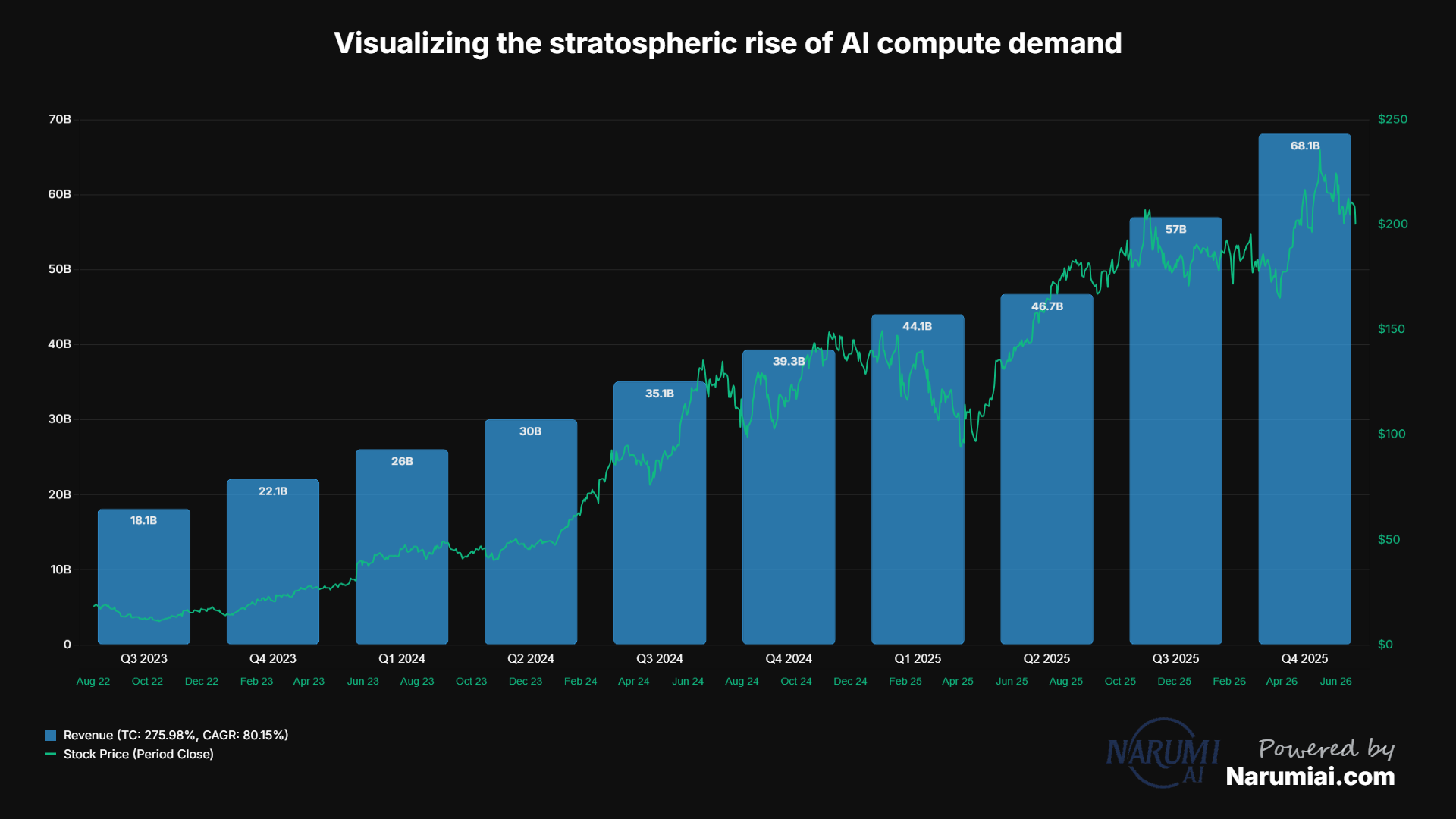
However, the skepticism creeping into the WSJ Insider’s notes focuses on the 'Operating Margin.' By our calculations, NVIDIA’s operating margin climbed from 57.5% in late 2023 to a razor-sharp 65.0% by the end of 2025. While this suggests an unshakeable moat, it also marks NVIDIA as the primary target for cost-cutting hyperscalers. When Microsoft and Alphabet look at their own bleeding CapEx, they see NVIDIA’s 65% margin as their own lost profit. The rout is a signal that the pricing power is beginning to tilt back toward the buyers.
The HBM Arms Race Hits a Speed Bump
If NVIDIA is the general of the AI army, SK Hynix ($000660) has been its most loyal lieutenant, providing the High Bandwidth Memory (HBM) that allows these GPUs to breathe. The company’s dominance in HBM3E has made it a darling of the AI boom, but that specialization is now its greatest vulnerability. As the global tech sell-off intensifies, SK Hynix’s reliance on the 'bleeding edge' means that any cooling in hyperscaler demand hits them first and hardest.
The contrast with Samsung Electronics ($005930) is stark. While Samsung has historically lagged in the HBM validation race—struggling to clear NVIDIA’s rigorous quality hurdles—its massive diversification is suddenly looking like a masterstroke. Samsung isn't just an AI play; it’s a consumer electronics giant, a legacy chipmaker, and a mobile powerhouse with a cash chest that can weather a multi-year winter.
The ROI Inquisition and the Valuation Reset
The market is no longer valuing these firms as speculative software startups. We are seeing a compression of P/E multiples back to reality. NVIDIA’s P/E, which sat at 1.78 in Q3 2023 (a reflection of the massive earnings jump that hadn't yet been priced in), has normalized to 24.5 by the end of 2025. This isn't a collapse; it's a maturation.
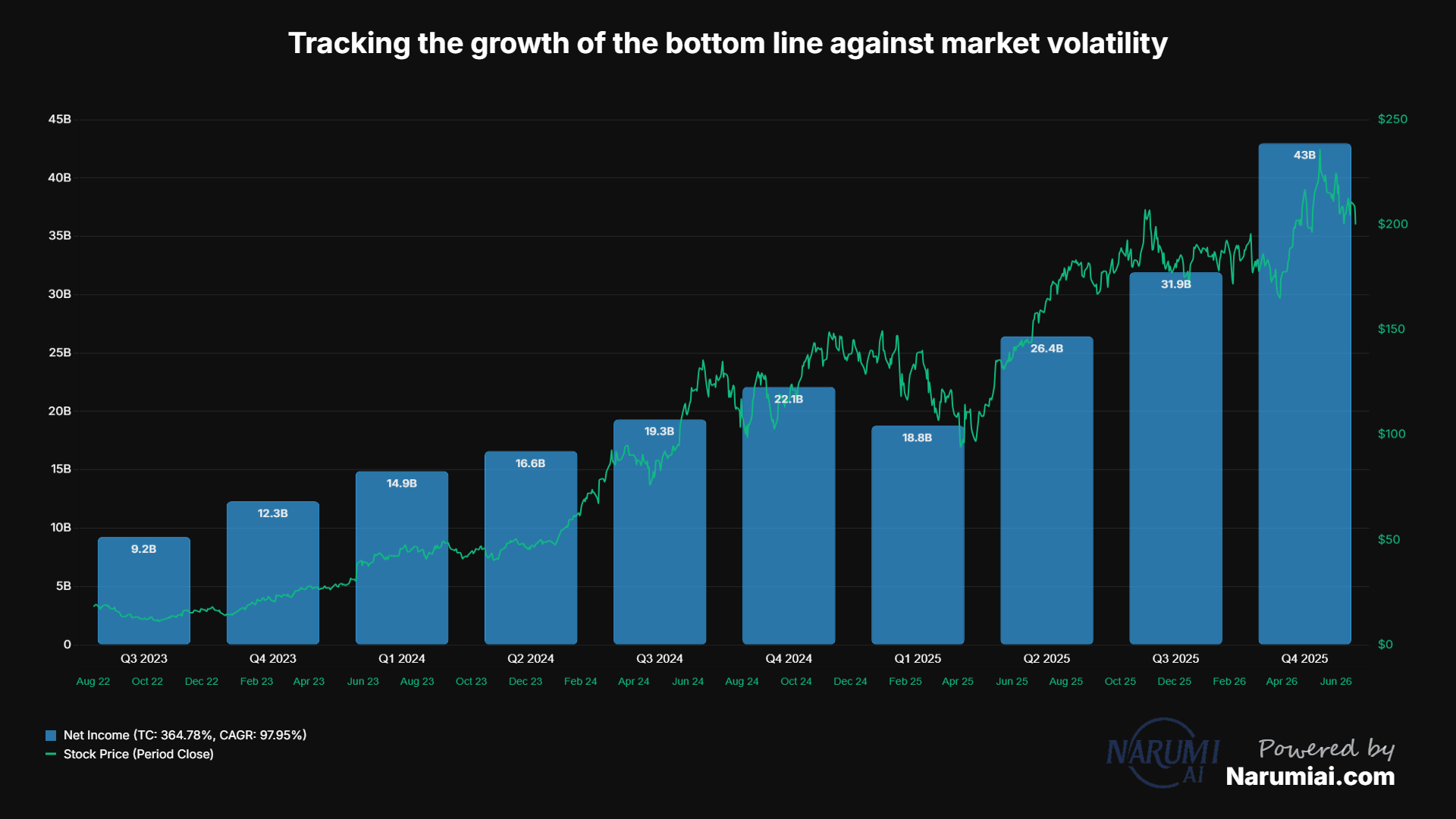
The conflict lies in the 'Volume Paradox.' High-end AI chips project to account for 50% of the industry’s revenue in 2026, yet they represent less than 1% of total global chip volumes. This is a top-heavy industry built on a very narrow foundation. Any regulatory hiccup—such as the U.S. Bureau of Industry and Security’s tightening export controls or China’s retaliatory mineral embargoes—could shatter the supply chain for that crucial 1%.
The Waiting Game in Suwon
The next major catalyst isn't a product launch; it’s a validation. All eyes are on Samsung’s expected July 24, 2026, earnings. The whisper on the street is whether their next-gen HBM3E has finally cleared NVIDIA’s testing. If it has, the market rout might find its floor. If not, the rotation out of 'pure AI' and into defensive value names like Texas Instruments or even Apple will accelerate.
Ultimately, this rout is a healthy, if painful, correction. It is flushing out the leveraged retail players and forcing the 'Magnificent Seven' to justify their infrastructure spend. For the long-term investor, the structural shift toward an AI-integrated economy remains intact, but the days of easy money and unearned multiples are buried under a mountain of sell orders.
Check out our Interactive Charting Tool.