The AI Power Grab: Why Your Digital Future is Moving to the Factory Floor
The End of the 'Cloud' as We Know It
For years, we’ve been told that AI lives in a nebulous 'cloud'—a digital ether where magic happens. But as we cross into the summer of 2026, the mask is slipping. AI is not a ghost; it is a physical beast that eats electricity, breathes liquid coolant, and demands millions of tons of rare earth magnets. The latest moves from Nvidia, Tesla, and Baker Hughes prove that the next phase of the AI gold rush isn't about who has the best algorithm—it’s about who owns the power grid and the hardware supply chain.
We are witnessing a massive transition from Operational Expenditure (OpEx) to Capital Expenditure (CapEx). In plain English: companies are tired of paying 'rent' to big cloud providers like Amazon or Google. They want to own the 'house,' the 'land,' and the 'power plant' that runs it. This is the era of Sovereign AI, and the price of entry is measured in the billions.
Nvidia’s $10 Billion 'Fortress' Strategy
Nvidia is no longer just a chip designer; it is becoming a global landlord for the AI era. By dropping $1 billion into South Korean giant Naver and partnering with Brookfield for a staggering $9 billion infrastructure framework, Nvidia is executing a 'sovereign' play. They aren't just selling the shovels; they are building the entire mine.
Think of it like this: instead of South Korea renting compute power from a US-based cloud provider (and sending their data and dollars overseas), they are building their own 'AI Factory.' This GAK Sejong data center is scaling from 55 megawatts to a massive 1-gigawatt footprint. For investors, this changes the ROI calculation. We’re moving away from volatile, on-demand cloud pricing toward steady, utility-like returns based on long-term infrastructure assets.
Baker Hughes: The Unlikely AI Darling
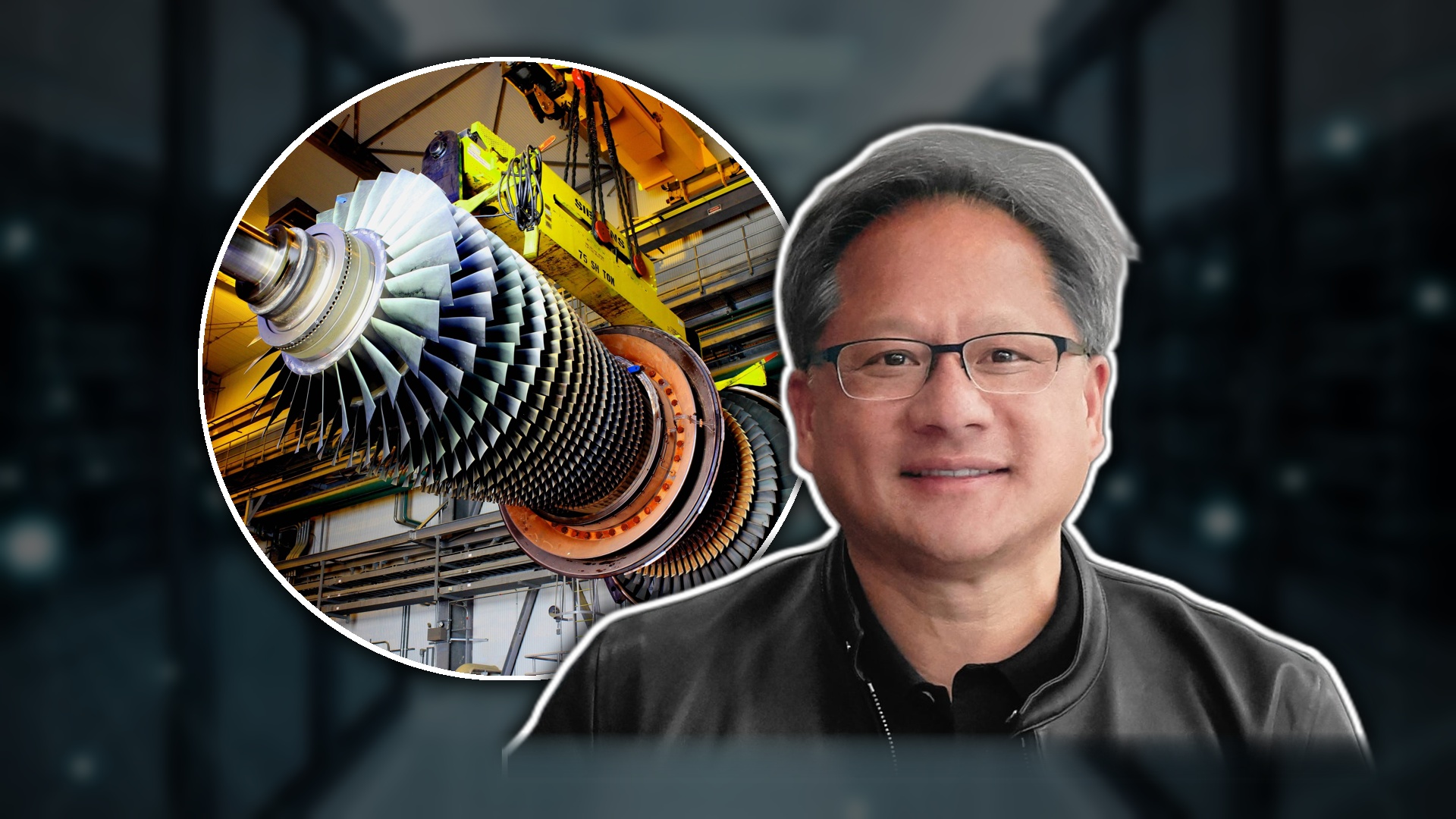
If you had 'Oilfield Services Giant' on your 2026 AI Bingo card, congratulations. Baker Hughes ($BKR) is currently proving that the biggest bottleneck for AI isn't intelligence—it's heat and power. The company just raised its outlook thanks to record bookings for data center cooling systems and gas infrastructure.
As AI clusters grow, they get incredibly hot. You can’t just point a desk fan at a Blackwell chip and hope for the best. Baker Hughes is pivoting its expertise in industrial turbines and thermal management to keep these digital brains from melting. This is a valuation decoupling in real-time. While traditional oil services are tied to the cyclical (and often depressing) price of crude, Baker Hughes' new 'AI Energy' segment is being priced like a high-growth tech utility.
Tesla’s $25 Billion High-Wire Act
While Nvidia builds the factories and Baker Hughes cools them, Elon Musk is writing the biggest check in the room. Tesla is currently pouring over $25 billion into AI and robotics capex this year alone. This comes at a time when car margins are feeling the squeeze, leading to a massive debate on Wall Street: Is this a visionary competitive moat or a 'fixed-cost trap'?
Tesla’s bet is that the Cybercab and Optimus robots will eventually turn the company into a software-and-services powerhouse. But building the 'Dojo' supercomputer and training these models requires a massive upfront sacrifice. Analysts are watching the 'Compute-to-Utilization' ratios closely. If Tesla can't monetize this $25 billion through FSD licensing or robotaxi revenue soon, that massive spend starts looking like a heavy anchor rather than a rocket booster.
The 'Mine-to-Magnet' Security Blanket
Finally, there is the question of what these machines are actually made of. REalloys is leading the charge for a domestic 'mine-to-magnet' supply chain. Why does this matter? Because right now, China holds the keys to the rare earth elements needed for the high-performance motors in every Tesla robot and every data center actuator.
The hurdle isn't just digging the dirt; it's the 'Midstream Vacuum.' Turning raw ore into a usable magnet is a chemically complex, environmentally sensitive, and capital-intensive nightmare. Until the U.S. can master the separation and metallization process, the entire AI hardware boom is essentially on a 'lease' from foreign exporters. Investors are beginning to price in this Geopolitical Fuel Shock, rewarding companies that are securing their own raw material destiny.
The Bottom Line
The 'Cloud' is coming back down to Earth. The winners of the next decade won't just have the smartest code—they will have the most turbines, the most magnets, and the most reliable power grids. Whether it's Nvidia's sovereign factories, Baker Hughes' cooling loops, or Tesla's robotics moonshot, the AI trade has officially entered its industrial phase. Keep your eyes on the CapEx; that's where the real story is being written.
Check out our Interactive Charting Tool.