The AI Bill Comes Due: Google and Tesla Face a Reckoning
The $28 Billion Receipt
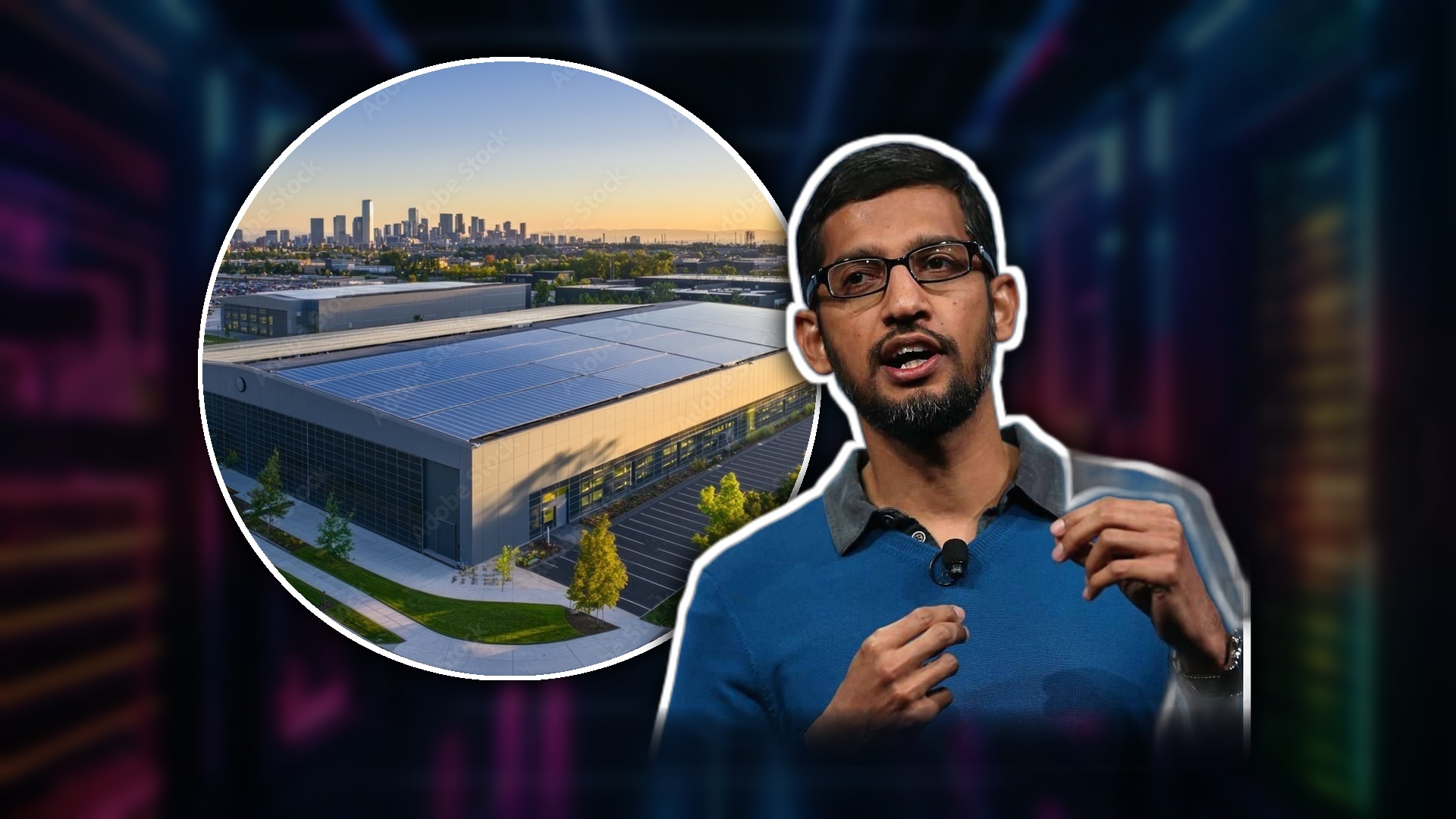
The mood in the mahogany-lined halls of lower Manhattan has shifted. For two years, the narrative was simple: spend whatever it takes to win the AI arms race. But as the July heat settles over the city in 2026, the invoices have started to arrive, and they are eye-watering. Google ($GOOGL), once the undisputed king of high-margin software, is increasingly looking like a capital-intensive utility provider. The numbers tell a story of a company sprinting to stay in place. In Q3 2023, Alphabet’s quarterly capital expenditure sat at a relatively modest $8.06 billion. By Q4 2025, that figure had ballooned to a staggering $27.85 billion—a 245% increase in just over two years.
This massive outlay is creating a visible drag on what matters most to the street: Free Cash Flow (FCF). While Google’s revenues have grown from $76.7 billion in Q3 2023 to $113.8 billion in Q4 2025, the FCF Margin has suffered a quiet, persistent erosion. The company ended 2023 with an FCF Margin of 29.47%. By the end of 2025, that margin had compressed to 21.57%. The 'AI Tax' is no longer a theoretical concern; it is a line item that is eating into the company’s ability to sustain the aggressive share buybacks that have historically propped up its valuation.
Tesla’s Identity Crisis in the Compute Age
If Google is a giant trying to maintain its stride, Tesla ($TSLA) is a company undergoing a full-blown identity crisis. Elon Musk has spent the last year convincing the market that Tesla is an AI company first and a car company second, but the financial data suggests the transition is proving painful. Tesla’s core automotive sales, once the engine of its meteoric rise, have stalled. In Q3 2023, automotive sales were $18.58 billion; by Q4 2025, they had dropped to $16.75 billion. Despite this, the company continues to pour billions into FSD (Full Self-Driving) compute clusters and Dojo infrastructure.
The result is a collapse in profitability that would be terminal for any other manufacturer. Tesla’s Net Margin has cratered from 8.04% in Q3 2023 to a razor-thin 3.44% in Q4 2025. Institutional investors are starting to look past the 'vision' and at the unit economics. Analysts are now using the 'Inference-to-Training' revenue ratio to judge if these compute clusters are actually generating recurring income or merely sitting idle as expensive trophies of ambition. With a P/E ratio that has exploded to 416.41 as of Q4 2025, the disconnect between Tesla's business performance and its valuation has reached a breaking point.
When the Grid Says No
Beyond the spreadsheets, a more physical bottleneck is emerging: the electrical grid. The massive data centers required by Google and the compute clusters needed by Tesla are running into a wall of power availability. We are moving from a crisis of capital to a crisis of kilowatts. Traditional server racks consume 5-15 kW, but AI-optimized racks demand up to 100 kW. This has forced these giants into the energy business, pursuing 'Behind-the-Meter' solutions and direct investments in nuclear and natural gas. These aren't just strategic moves; they are desperate attempts to keep their multi-billion-dollar hardware from becoming 'stranded assets'—expensive GPUs with no power to run them.
This energy bottleneck adds another layer of holding costs. When a data center sits idle due to power delays, the hardware continues to depreciate. In Q4 2025, Google’s depreciation of property and equipment hit $6.04 billion, nearly double its Q3 2023 level. This 'Depreciation Trap' means that the pressure to monetize AI products immediately is not just a management preference—it is a mathematical necessity to prevent a total margin collapse.
The Institutional Pivot to Execution
The 'AI Hype' phase of 2023-2024 has officially ended. Institutional investors are no longer satisfied with qualitative promises of 'AI integration.' They are rotating into small-caps and defensive assets, leaving the mega-caps to prove their worth. The market is now looking for concrete catalysts: net revenue retention in cloud segments and, for Tesla, the elusive regulatory clearance for unsupervised autonomy. If Google cannot prove that its $18.6 billion quarterly R&D spend leads to a defensible moat against agile, AI-native startups, its status as a 'growth' stock may be permanently re-rated to that of a cyclical utility.
The verdict is clear: the era of free-spending experimentation is over. The coming quarters will be defined by 'Fundamental Execution.' For Google and Tesla, the challenge is no longer about who can build the biggest model, but who can turn those models into cash before the capital intensity of the AI era burns through their remaining reserves.
Check out our Interactive Charting Tool.