The $908 Question: Is Meta’s AI Ad Machine Defying Gravity?

The Infrastructure Marathon
The sentiment on Wall Street has undergone a violent shift. Where investors once whispered about an ‘AI bubble’ and the dangers of reckless capital spending, the mood in April 2026 is one of desperate, supply-constrained reality. JPMorgan’s latest report confirms what the hyperscalers have been signaling in the shadows: computing power is the new global bottleneck. With Meta, Google, Amazon, and Microsoft projected to dump a staggering $645 billion into AI infrastructure this year, the focus has moved from ‘if they build it’ to ‘who can serve the most queries at the lowest cost per watt.’
Meta’s Predictive Discovery Engine
Meta Platforms ($META) sits at the center of this storm, with UBS recently hiking its price target to $908. The bull case is simple yet profound: Meta has successfully converted its social graph into a predictive discovery engine. In Q4 2025, ad impressions surged 18% year-over-year, while the price per ad climbed 6%. This isn't just organic growth; it is the result of a massive, consolidated runtime model that drove a 3% increase in conversion rates across Instagram and Reels.
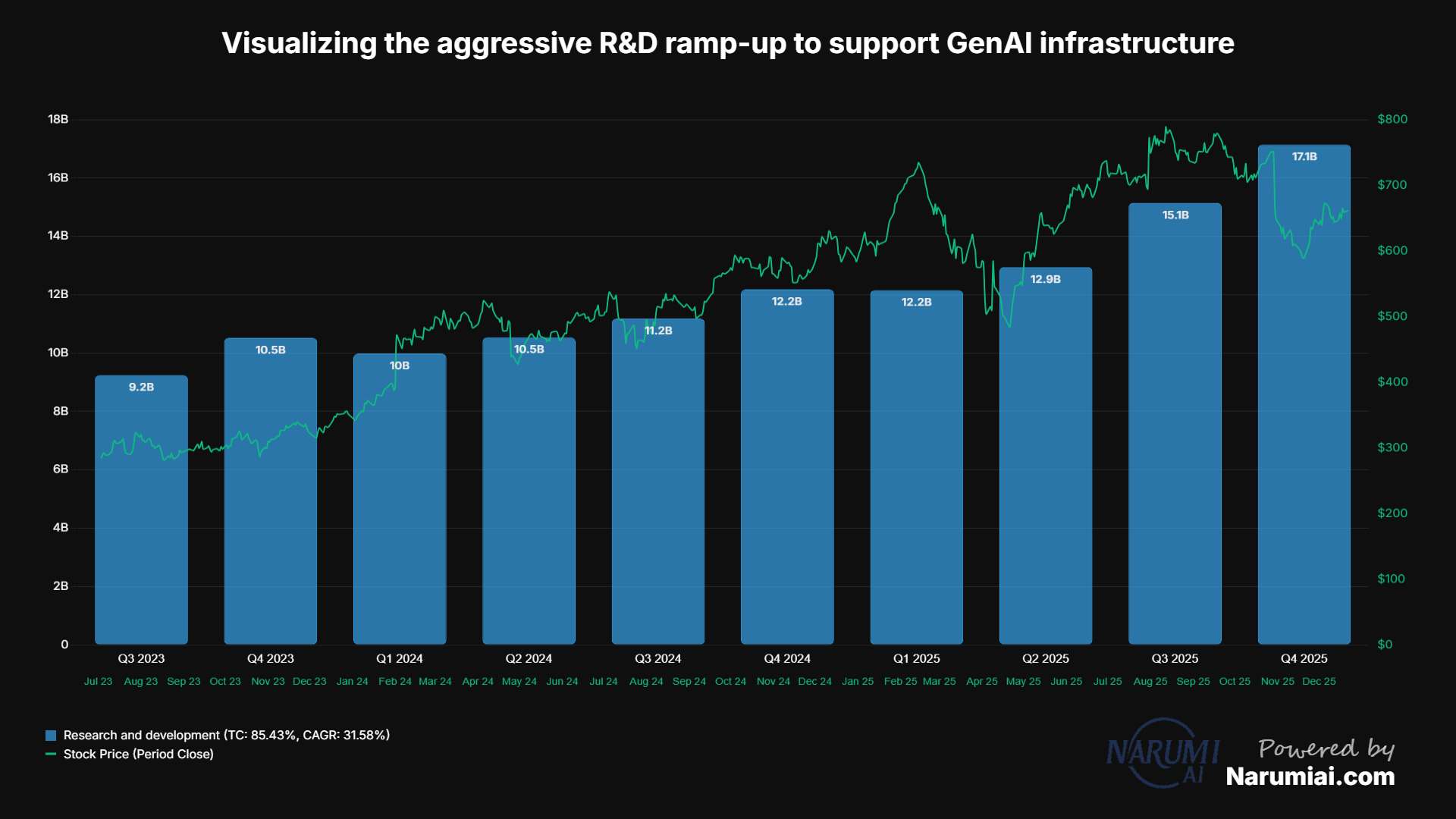
However, this growth comes at a steep price. Meta’s R&D spend has ballooned from $9.24 billion in Q3 2023 to $17.13 billion by Q4 2025.
The Silicon Battle: Google vs. Intel
While Meta leans on open-source dominance to commoditize the intelligence layer, Google ($GOOGL) is doubling down on vertical integration. By designing its own TPUs, Google is attempting to solve the 'total cost of ownership' problem that threatens to erode search margins. If Google can successfully migrate the bulk of its Gemini workloads to its internal silicon, it will have a massive efficiency moat that competitors renting third-party GPUs simply cannot bridge.
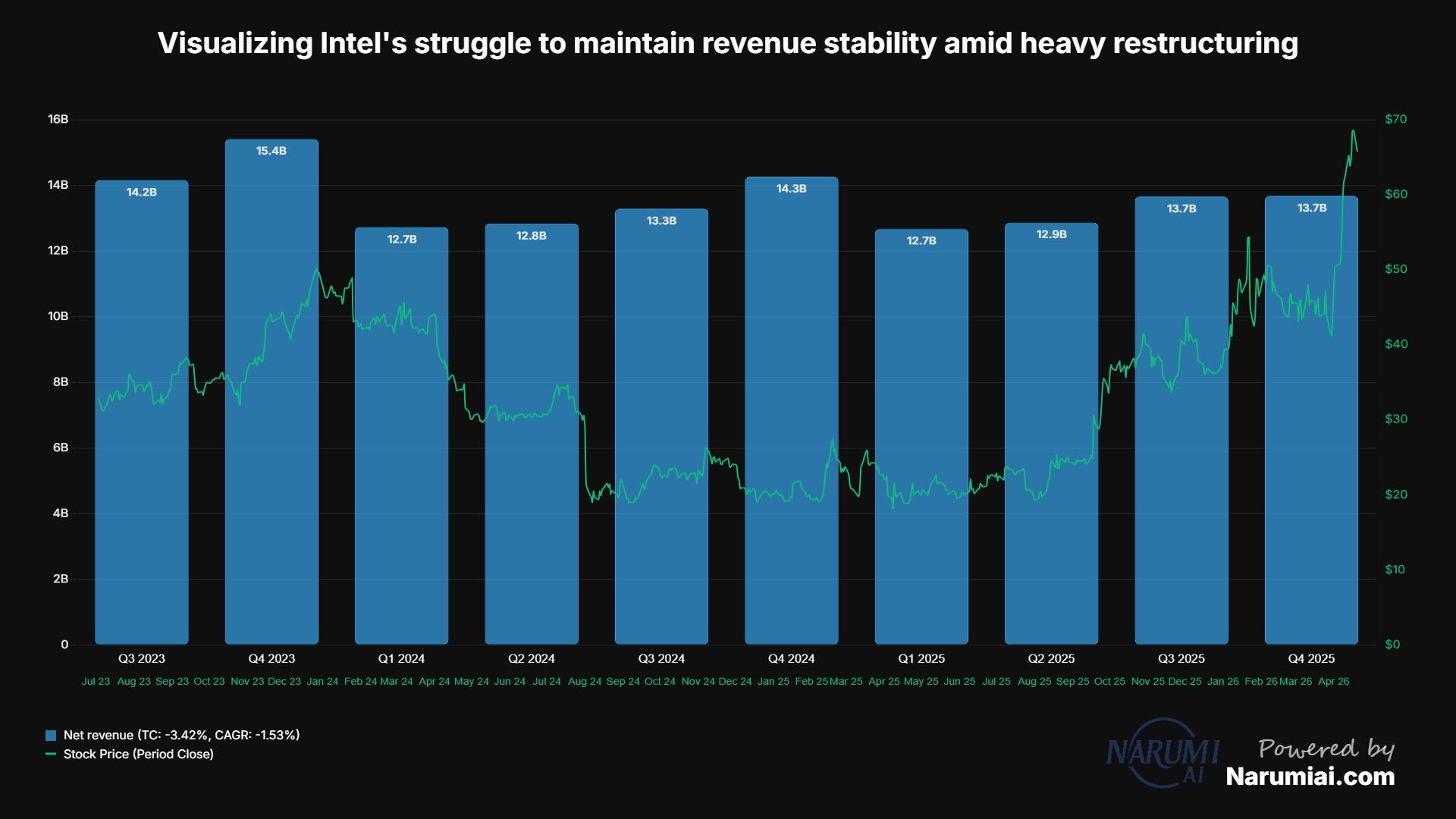
Intel ($INTC), meanwhile, is playing a different game. With its recent 'Buy' rating from HSBC, the market is betting on a resurgence of the x86 architecture as the 'head node' for agentic AI architectures. Intel is targeting the mid-tier enterprise market, promising a 50% discount on inference costs relative to NVIDIA’s high-end chips. But the risk is tangible; Intel’s market share in server CPUs is under constant pressure from AMD’s 2nm efficiency lead.
The Regulatory Wall
Beyond the spreadsheets, a shadow hangs over the $908 target. Regulators are increasingly viewing 'predictive discovery'—the very mechanism driving Meta’s ad revenue—as a high-risk activity. As the EU’s AI Act evolves, the ability for these giants to harvest behavioral signals to power their models will be tested. If Meta is forced to offer meaningful opt-outs for its AI recommendation algorithms, the 'conversion flywheel' could hit a structural ceiling. The split between UBS’s $908 target and BofA’s more cautious $820 view isn't just about revenue; it’s about how much of this AI-driven growth is sustainable under a tightening regulatory net.
Check out our Interactive Charting Tool.