The $7 Billion Hangover: Why SMCI’s Massive Backlog Just Spooked the Street
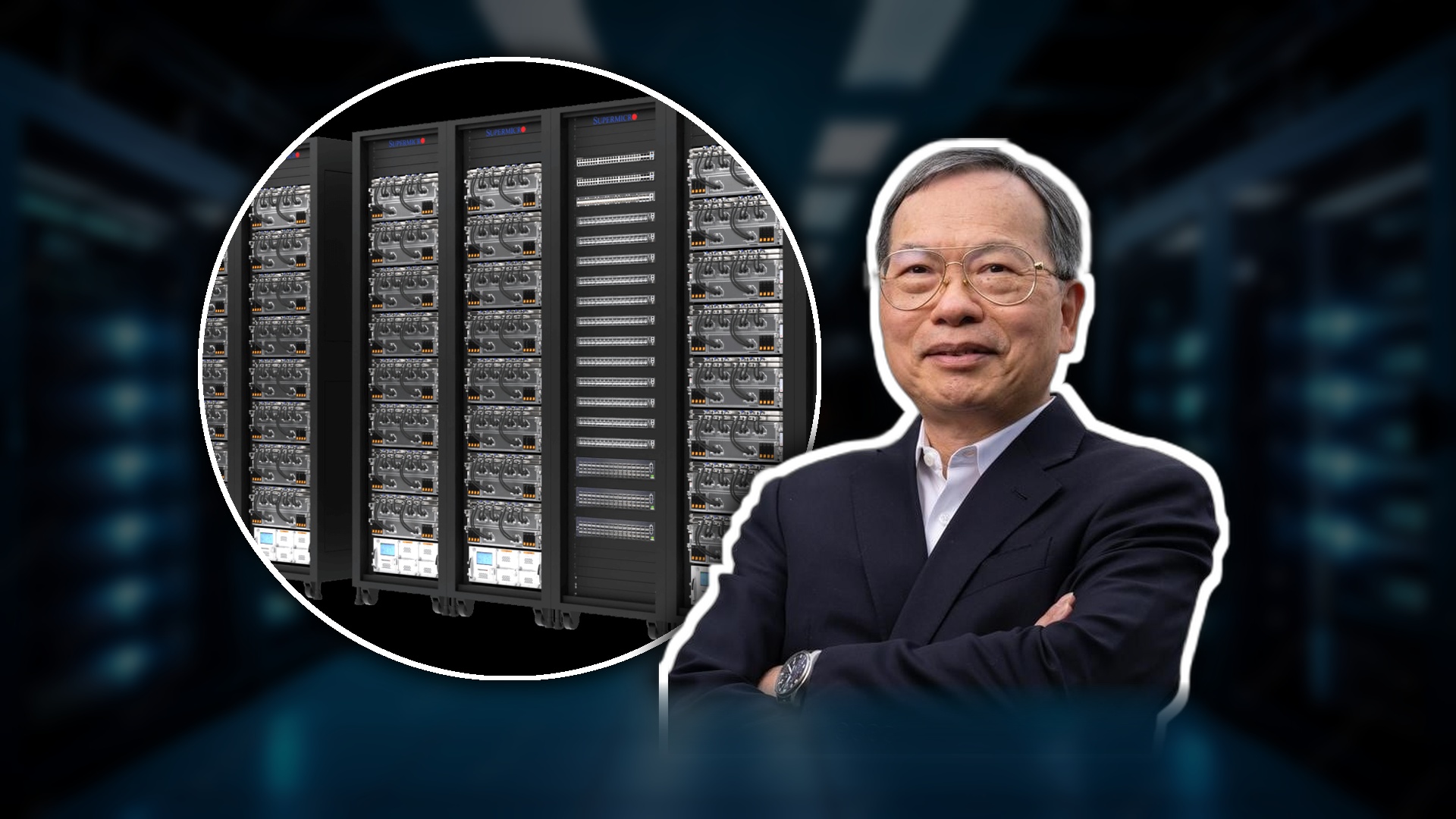
The Most Expensive 'Congratulations' in Tech History
Imagine you run the hottest restaurant in town. The line is around the block, and your reservation book is filled for the next three years. There’s just one problem: you don’t have enough cash to buy the steak and lobster needed to feed the crowd. To keep the kitchen running, you have to ask your current investors for a massive pile of cash, effectively telling them their slice of the pie just got significantly smaller.
That is precisely the predicament Super Micro Computer ($SMCI) finds itself in. On June 12, 2026, the AI server darling saw its shares plummet 28% after announcing a staggering $7 billion capital raise. While the company pointed to a massive $39 billion order backlog as proof of its dominance, the market saw something else: a desperate scramble for liquidity in an industry that is becoming a bottomless pit for cash.
The Brutal Reality of the 'Working Capital Trap'
In the world of high-end AI servers, you don't just 'build' a product; you orchestrate a supply chain miracle. To fulfill an order for a liquid-cooled rack, SMCI needs to secure ultra-scarce components like Nvidia’s Blackwell GPUs and Broadcom’s high-speed switches. The catch? These suppliers often demand payment upfront or on very strict terms. This creates a 'Working Capital Trap' where a company can be drowning in orders but starving for cash.
SMCI’s trailing 12-month free cash flow has been hovering in deep negative territory—roughly a $6.85 billion burn. This tells us that even with record sales, the business cannot fund its own growth. The $7 billion raise isn't a victory lap; it's a survival kit for the manufacturing cycle.
When a $39 Billion Backlog Becomes a Liability
To the casual observer, a $39 billion backlog sounds like a guaranteed winning lottery ticket. However, Wall Street is starting to look at that number with a healthy dose of skepticism. In its own filings, SMCI admitted that much of this backlog consists of recent orders that aren't necessarily 'firm' or non-cancellable.
This has raised the specter of 'Phantom Demand.' During the height of the chip shortage, many tech buyers engaged in 'double-ordering'—placing the same order with multiple vendors just to see who could deliver first. If the AI gold rush cools even slightly, that $39 billion backlog could evaporate faster than a liquid-cooled server in a desert. This 'Visibility Discount' is why the stock didn't moon on the news; it cratered.
The Revenge of the Boring Blue-Chips
While SMCI is diluting its shareholders to keep the lights on, legacy giants like Dell Technologies ($DELL) and Hewlett Packard Enterprise ($HPE) are watching from the sidelines with a smirk. These companies possess 'Fortress Balance Sheets' and diversified revenue streams that allow them to finance AI growth without begging the public markets for billions.
Institutional investors are already beginning to rotate capital. The 'Flight to Quality' is real. Why bet on a pure-play integrator facing 25%+ dilution when you can own a diversified giant that can fulfill the same orders using its own internal cash flow? Dell and HPE are now positioning themselves as the 'adults in the room,' offering stability to hyperscalers who are increasingly wary of SMCI’s financing volatility.
The Regulatory Shadow and the 'Blackwell' Bottleneck
As if the financial gymnastics weren't enough, SMCI is also operating under a regulatory microscope. The U.S. Department of Justice has been sniffing around the company’s export practices, specifically regarding servers ending up in restricted markets like China. While SMCI hasn't been directly charged, the 'compliance overhang' is a heavy weight on the stock.
Furthermore, the company's fate is inextricably linked to Nvidia ($NVDA). If Nvidia perceives that SMCI is a financial or regulatory risk, they can simply shift chip allocations to more stable partners like Dell. In the AI era, chips are the new oil, and SMCI just showed the world that its pipeline is looking a little leaky.
The Verdict: Execution is Everything
The $7 billion raise effectively de-risks SMCI’s ability to buy parts for the next few quarters, which is why the stock stabilized after the initial shock. But the honeymoon period for 'growth at any cost' is officially over. Investors are now laser-focused on the August Q4 FY2026 earnings report.
The goalposts have moved: the market doesn't just want to see a big backlog; it wants to see Gross Margins stay above 9% and revenue hit at least $12 billion. If SMCI can't prove that its massive orders translate into real, profitable cash flow, that $7 billion raise will be remembered as the moment the AI hardware bubble started to show its first real cracks.
Check out our Interactive Charting Tool.