The $2.6 Trillion High: Inside SpaceX’s Plan to Own the Sky
The Atmosphere of Irrational Exuberance
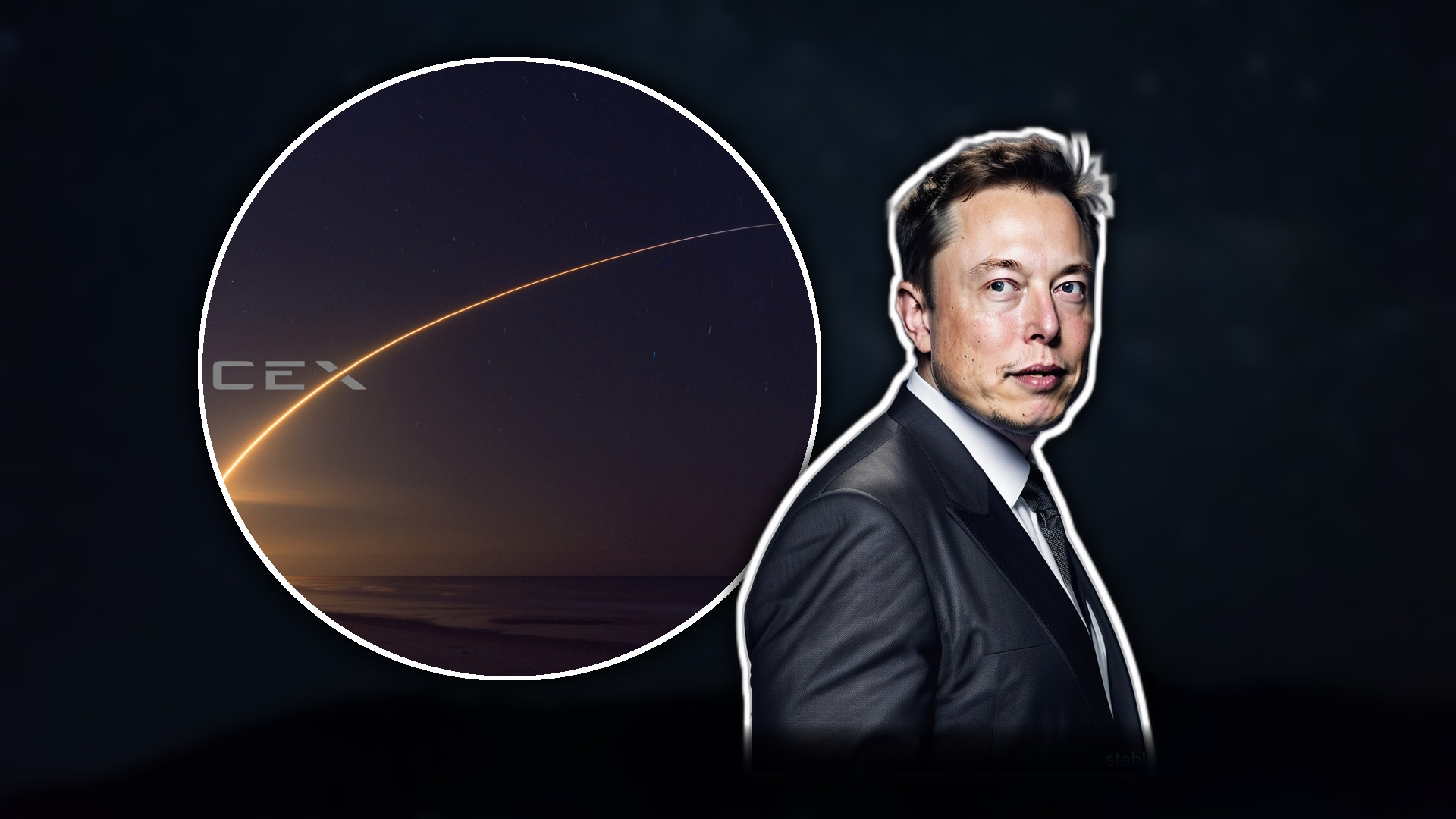
On the trading floors of Lower Manhattan this June, the air is thin, and the oxygen is being sucked out of every other ticker by a single four-letter symbol: $SPCX. Just days after its record-breaking $75 billion IPO, SpaceX has defied the gravity of traditional valuation, soaring to a $2.6 trillion market capitalization. It is a figure that doesn't just challenge the likes of Amazon and Microsoft; it mocks them. We are no longer watching a launch provider; we are witnessing the birth of a vertically integrated, orbital superpower that intends to bypass the Earth’s terrestrial bottlenecks entirely.
The skepticism in the room is palpable, yet the momentum is undeniable. With a Price-to-Sales (P/S) multiple exceeding 130x, the 'retail stampede' has turned $SPCX into one of the most traded stocks in history. But beneath the hype of the 120 ETFs now holding the stock, a deeper, more calculated game is being played.
The $60 Billion 'Vibe Coding' Nexus
The catalyst for this week’s frenzy wasn’t a rocket launch, but a merger. SpaceX’s $60 billion all-stock acquisition of Anysphere—the developer behind the AI coding agent Cursor—is a masterstroke of strategic integration. While the market initially balked at the price tag for a software firm with $2.6 billion in annualized revenue, the logic is clear: SpaceX is securing the 'software brain' required to orchestrate a distributed, autonomous supercomputer in the sky.
To dominate AI infrastructure, SpaceX cannot rely on terrestrial data centers, which are increasingly throttled by power grid failures and land scarcity. By owning Cursor, SpaceX gains an immediate pipeline of 50,000 corporate teams and the tools to write hyper-optimized, low-overhead code tailored to its proprietary radiation-hardened hardware. It is a direct assault on Microsoft’s VS Code and GitHub Copilot, moving the developer's desk from the office to the low-Earth orbit (LEO).
The Orbital Data Center vs. The Terrestrial Grid
The conflict here is one of physics. Amazon and Microsoft are tied to the dirt—locked into multi-gigawatt power purchase agreements with nuclear plants to keep their terrestrial clouds humming. SpaceX is betting on the 'Gigasat.' These 150kW AI1 compute satellites leverage near-continuous solar power and the vacuum of space for cooling. It is a sovereign, 'un-killable' cloud that sits outside any single nation’s regulatory jurisdiction.
This 'Sovereign Space Cloud' is the primary driver behind Musk’s aggressive target of $1 trillion in annual revenue by 2030. If the 2010s were about the cloud, the 2020s are about who owns the light-speed, point-to-point laser routing across the Starlink constellation.
The Fundamental Disconnect
However, the numbers tell a story of extreme tension. SpaceX is balancing astronomical capital expenditures—including its 2-gigawatt terrestrial data centers and the Starship production line—against an FY2025 revenue baseline of roughly $18.67 billion. The gap between that revenue and the $2.6 trillion valuation is a chasm filled with retail hope and institutional fear.
Institutional investors are navigating a 'Tesla-esque' volatility. Elon Musk commands roughly 85% of the voting shares, meaning public shareholders are essentially along for the ride with zero say in massive capital shifts like the Anysphere merger. Key-man risk has never been higher, and the regulatory target on SpaceX's back is growing. From Senator Elizabeth Warren’s scrutiny of IPO metrics to the looming 'Orbital Antitrust' battles at the ITU, the hurdles are as high as the orbit.
The Verdict: A New Asset Class
SpaceX has successfully moved the goalposts. It is no longer competing with Boeing or Lockheed Martin; it is competing with the very concept of the terrestrial economy. For those holding $SPCX, the bet is simple: that the next generation of AI dominance will be won in space, and that the rockets are merely the delivery trucks for the world's most valuable data. Whether the $2.6 trillion valuation is a bubble or a new floor depends entirely on if Starship can drive the cost of orbit below $100 per kilogram. Until then, the market remains in a state of weightless euphoria.
Check out our Interactive Charting Tool.