The $225 Billion AI Land Grab: Why Wall Street is Drunk on 'Greed'
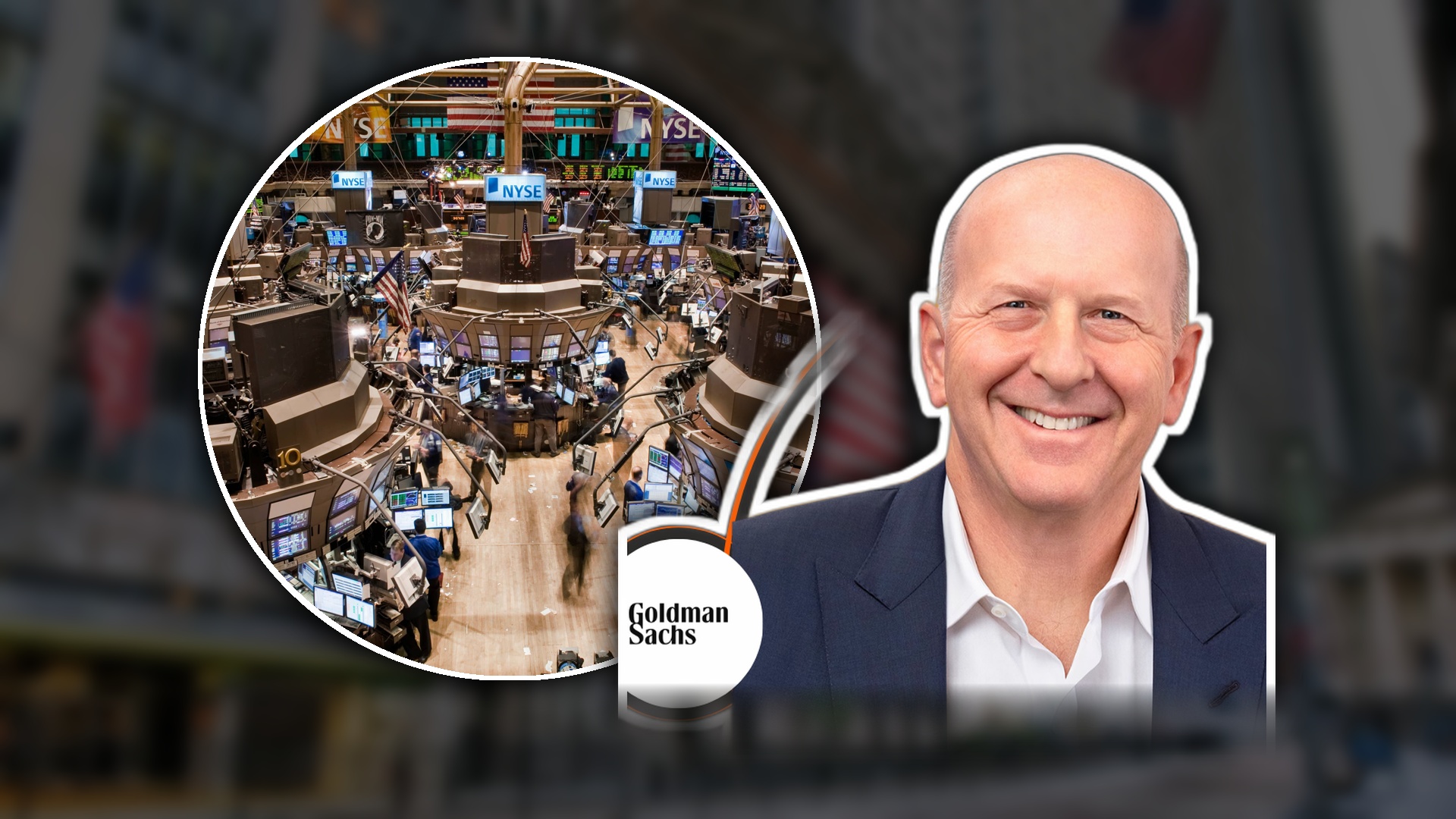
The $225 Billion Floodgates Just Opened
If you thought the AI hype was cooling off, Goldman Sachs just dumped a tanker of jet fuel on the fire. We are officially entering what analysts are calling the 'Mega-Scale' era of public equity. After a relatively sleepy 2025, the IPO market is projected to explode to a staggering $225 billion in 2026—nearly six times the previous year’s total. This isn't just a rebound; it’s a structural transformation of how the world’s most powerful companies fund their futures.
Goldman Sachs CEO David Solomon isn't mincing words, describing the current market sentiment as a state of 'greed.' While that word usually sends a shiver down the spine of cautious value investors, the sheer volume of liquidity currently sloshing around the system seems more than ready to absorb the incoming tide of shares. The message from the big banks is clear: the window is open, the cash is cheap, and the time to build is now.
The 'Compute Cartel' and the Death of the Asset-Light Startup
For the last decade, the tech playbook was simple: write some code, host it on someone else's cloud, and scale with minimal overhead. That era is officially over. The new AI titans—SpaceX, OpenAI, and Anthropic—are moving toward public listings not to hire more developers, but to build massive, physical infrastructure. We are talking about a brute-force buildout of data centers, energy grids, and specialized silicon that looks more like the 1880s railroad boom than the 2010s SaaS boom.
SpaceX is reportedly eyeing a massive $75 billion offering at $135 per share, while Alphabet has stunned the market with a surprise $80 billion share sale. Why would a cash-rich giant like Alphabet dilute its shareholders? Because in the AI race, having 'enough' cash isn't the goal—having a sovereign-scale war chest is. This capital concentration is creating what insiders call a 'Compute Moat.' If you don't own the power grid and the chips, you're just a tenant in someone else's digital empire.
The Liquidity Vacuum Cleaner
While the 'greed' sentiment provides ample liquidity, it isn't being distributed equally. These mega-IPOs act as liquidity vacuum cleaners, sucking capital away from defensive sectors, small-caps, and traditional value stocks. We are seeing a bifurcated market: a hyper-liquid, richly valued top tier of AI infrastructure players, and a neglected baseline economy struggling with sticky input costs and cooling consumer demand.
This shift effectively redefines 'Tech' as an asset class. It’s no longer just software; it’s a hybrid of industrials, utilities, and commodities. When you buy into an AI IPO today, you aren't just betting on an algorithm; you’re betting on the company’s ability to secure gigawatts of power and thousands of H100 chips before the competition does.
Mind the ROI Chasm
Despite the euphoria, there is a massive 'ROI Chasm' that institutional investors are quietly obsessing over. The current investment thesis relies on the idea that massive CapEx (Capital Expenditure) today will lead to exponential revenue tomorrow. However, the actual enterprise revenue generated by generative AI is still a fraction of the hundreds of billions being spent on hardware.
There’s also the risk of 'Stranded Assets.' In the railroad era, the tracks stayed in the ground even if the company went bust. In the AI era, a $10 billion data center could become obsolete in three years if a more efficient chip architecture or a smaller, more optimized AI model takes over. The depreciation cycles for this hardware are brutal, and if the revenue doesn't materialize fast enough, those balance sheets will need some painful revisions.
The Regulatory Tripwire
Beyond the financial metrics, a series of 'hidden' catalysts could flip the script on this greed-driven cycle. The most significant is the legal framework surrounding AI training data. If courts eventually mandate that AI developers must pay recurring royalties for copyrighted data, the high-margin dream of 'infinite intelligence' evaporates. Suddenly, these companies look less like high-growth tech firms and more like traditional media companies with heavy licensing burdens.
Furthermore, the 'Compute Cartel' is already drawing the eye of antitrust regulators. The exclusive partnerships between cloud providers and model developers—think Microsoft and OpenAI—are being scrutinized as potential data monopolies. Any aggressive intervention here could break the 'circular capital' loops that currently keep valuations afloat.
Navigating the Greed Cycle
So, what’s a retail investor to do when the market is in a 'greed' phase? The key is to look past the hype and focus on the plumbing. Institutional allocators aren't just buying the 'frontier' models; they are diversifying into the broader value chain—cooling providers, industrial component manufacturers, and energy firms. They are hedging against the 'Scaling Law' plateau by betting on the physical necessities of the revolution.
The $225 billion wave is coming. It will likely make the early 2020s look like a warm-up act. But as the liquidity pours in, remember that in a land grab, the winner isn't always the one who runs the fastest—it’s the one who actually knows how to farm the land once the dust settles.
Check out our Interactive Charting Tool.