The $20 Billion Bleed: Intel’s High-Stakes Foundry Fever Dream
The Smell of Cleanrooms and Burning Cash
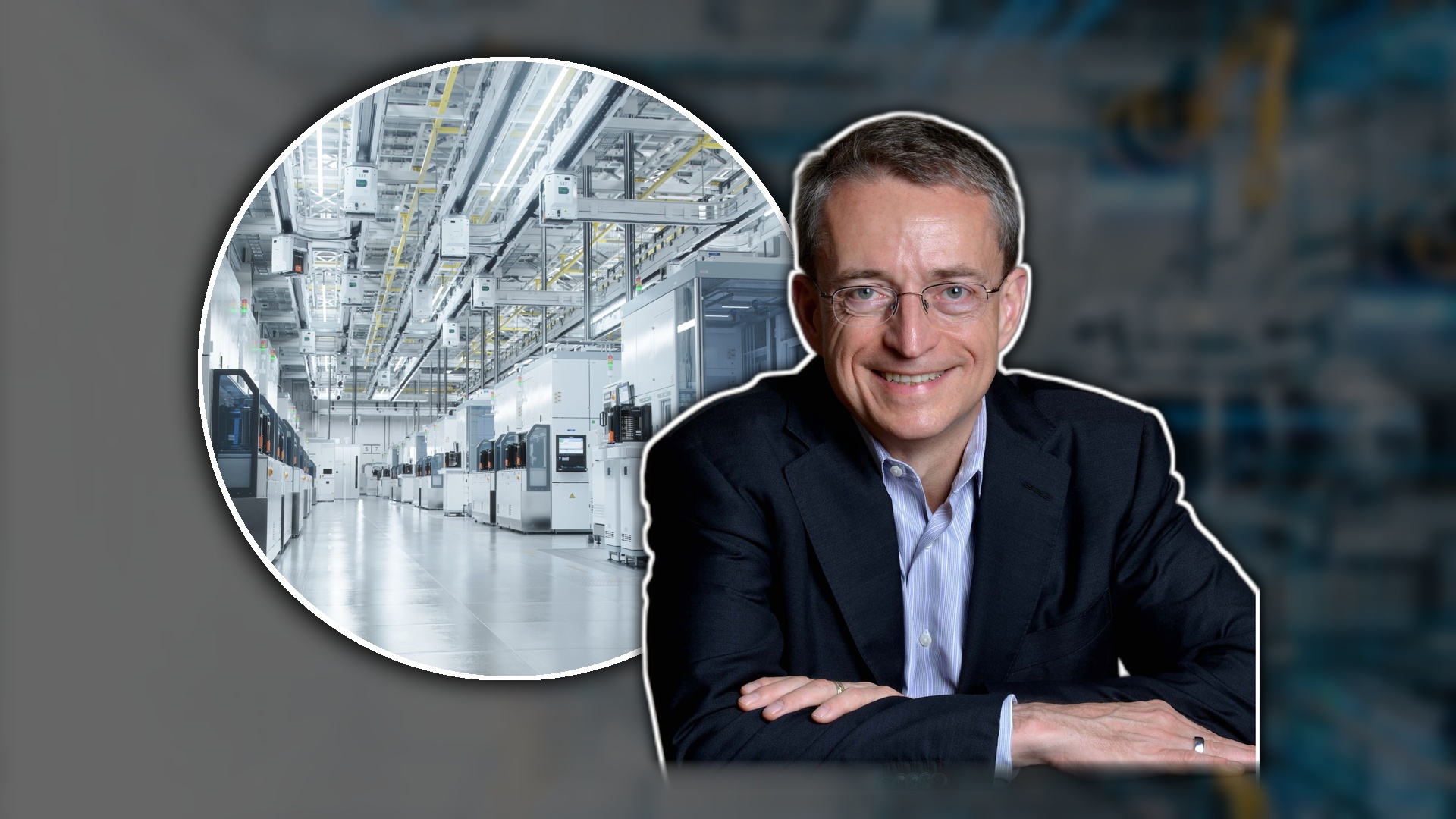
On the outskirts of Columbus and the plains of Magdeburg, the cranes are a permanent fixture of the skyline—monuments to Pat Gelsinger’s audacity. Intel ($INTC) is currently engaged in the most expensive corporate pivot in history, a $20 billion capital expenditure blitz designed to transform a fading processor giant into the Western world’s premier silicon foundry. But while the PR machine hums with talk of '18A' and '14A' nodes, the income statement tells a darker story. It is a story of a silent bleed, where the cost of building the future is cannibalizing the present.
As of July 2026, the financial disconnect is jarring. While the hyperscale AI boom has minted fortunes for Nvidia and provided a second wind for AMD, Intel is stuck in a capital-intensive purgatory. The bank’s revenue is not just stagnant; it is eroding. In Q4 2023, Intel reported net revenue of $15.4 billion. Fast forward to Q4 2025, and that figure has shriveled to $13.67 billion. This is not the profile of a company catching the AI wave; it is the profile of a company struggling to keep its head above water while building its own ocean.
The Operating Margin Mirage
To understand the true pressure on Intel, one must look past the adjusted earnings and into the raw machinery of the business. By manually calculating the operating margin—dividing operating income by net revenue—the fragility of the turnaround becomes clear. In Q4 2025, with an operating income of $580 million on $13.67 billion in revenue, Intel’s operating margin sits at a razor-thin 4.24%. Compare this to the heights of late 2023, where operating income reached $2.58 billion, and you see a business that is structurally less profitable than it was two years ago.
The core conflict lies in the 'Foundry Trap.' Intel must spend $20 billion annually to chase TSMC, which is currently outspending the entire industry with a staggering $60B–$64B capex budget for 2026. While Intel Foundry Services (IFS) secures the occasional design win, it is currently operating at a multi-billion dollar quarterly loss during its scaling phase. The 'silent bleed' is no longer silent; it is a roar on the cash flow statement.
The Helios Shadow and the Nvidia Moat
Intel’s struggle is made more acute by the maneuvers of its rivals. AMD has recently introduced its Helios rack-scale system, a direct assault on Nvidia’s data center dominance. By packing 72 Instinct MI455X GPUs and EPYC 'Venice' CPUs into a single liquid-cooled chassis, AMD is attempting to offer hyperscalers like Microsoft and Meta a viable exit from the CUDA ecosystem. Unlike Intel, which is burdened by its own factories, AMD’s fabless model allows it to pivot with surgical precision, leveraging TSMC’s superior yields to attack Nvidia’s margins.
Meanwhile, Nvidia ($NVDA) is undergoing a transformation of its own. Once the darling of speculative hyper-growth, institutional investors are now re-evaluating Jensen Huang’s empire as a 'Quality Compounder.' The forward P/E multiple has compressed from the 70s to a more grounded 20x–23x. This shift signals a market that is growing skeptical of 'AI fatigue' among hyperscalers. If the likes of Amazon and Alphabet throttle their infrastructure spending, the 'Bullwhip Effect' will hit equipment suppliers like ASML and Applied Materials first, but it will leave Intel’s $20 billion factories as expensive, underutilized shells.
The Verdict: A Race Against Obsolescence
The likelihood of Intel generating positive free cash flow before 2027 is virtually zero. With capital intensity remaining exceptionally high and net income attributable to Intel swinging back to a $591 million loss in Q4 2025, the company is reliant on the kindness of strangers—specifically, US CHIPS Act grants and European subsidies. These are the life-support systems keeping the foundry dream alive.
Intel is currently a 'Fundamental Disconnect' personified. Its market cap of $167 billion (Q4 2025) is being held up by the geopolitical necessity of a domestic foundry, not by the efficiency of its current operations. If Gelsinger can deliver on the 18A node and secure a 'whale' customer away from TSMC, the gamble pays off. If not, Intel risks becoming the most subsidized failure in the history of the Silicon Valley.
Check out our Interactive Charting Tool.