The $2 Trillion Rocket: SpaceX’s IPO is Sucking the Air Out of the Market
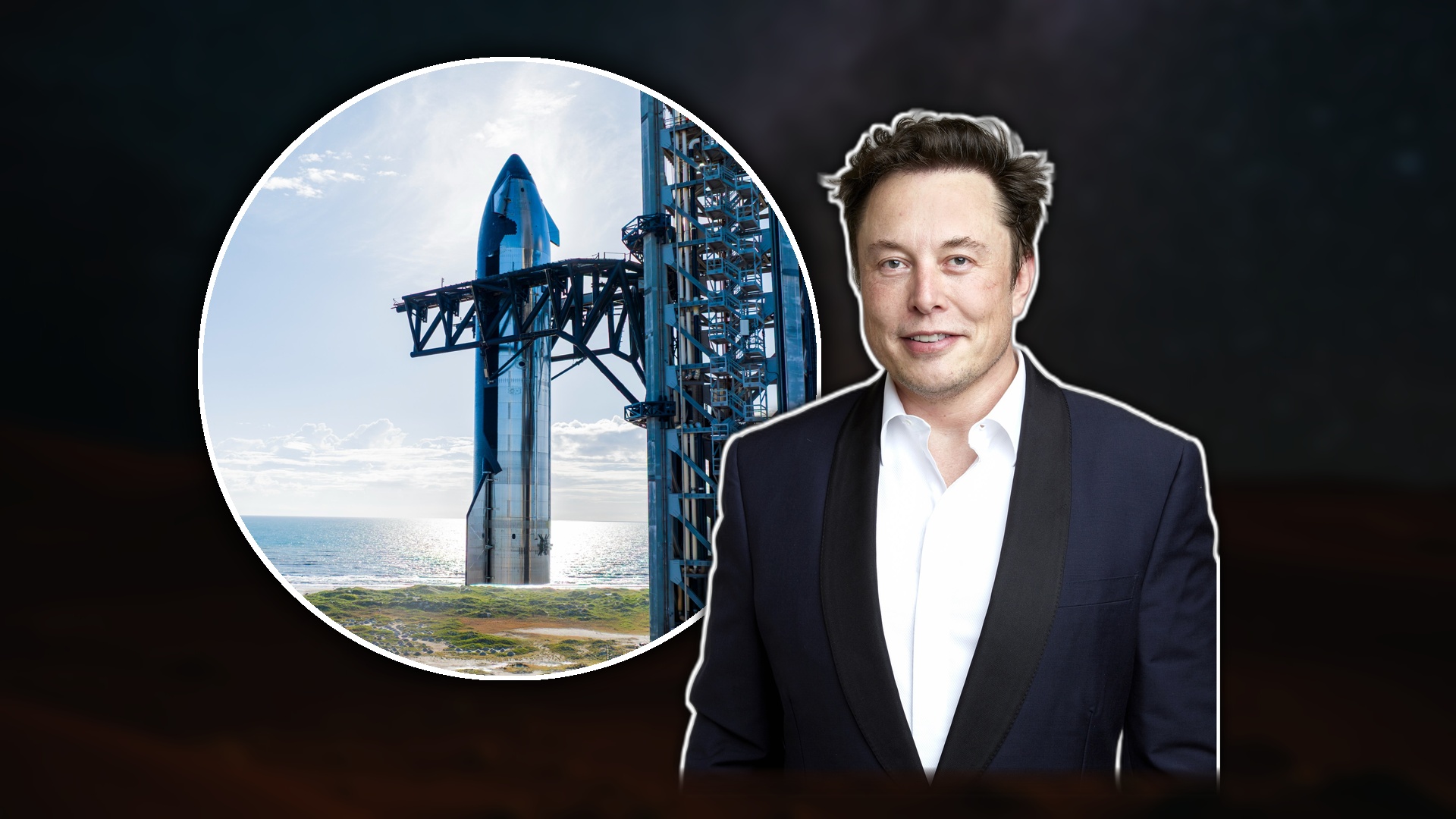
Buckle up. The most anticipated financial launch in history is finally on the pad, and the gravitational pull is already warping the entire market. SpaceX is set to price its IPO this Thursday, and the numbers are, quite frankly, interstellar. We’re talking about a valuation between $1.75 trillion and $2 trillion, fueled by a staggering $250 billion in investor demand. To put that in perspective, the offering is nearly four times oversubscribed. This isn't just an IPO; it’s a tectonic shift in how the world values deep tech, and Powerlaw Corp ($PWRL) is strapped directly to the nose cone.
The $250 Billion Vacuum
The sheer scale of this debut is creating what analysts call a "Liquidity Siphon." When you have $250 billion chasing a $75 billion to $80 billion allocation, that money has to come from somewhere. Institutional giants, sovereign wealth funds, and retail traders are liquidating existing holdings in blue-chip tech and legacy aerospace to free up dry powder for SpaceX. This mass exodus is putting downward pressure on the broader markets, effectively making the SpaceX IPO a "crowding-out" event for every other growth stock on the board.
Powerlaw’s High-Stakes Hitchhike
For investors in Powerlaw Corp ($PWRL), this isn't just news—it’s a portfolio-defining moment. $PWRL has disclosed a $117 million stake in SpaceX, making the private-turned-public giant its largest single holding. At nearly 20% of its Net Asset Value (NAV), $PWRL has effectively become a proxy for SpaceX performance. While this is great news for those who wanted early access to the rocket ship, it brings intense volatility. Because $PWRL is a closed-end fund, its stock price often trades at a premium or discount to the actual value of its holdings. As SpaceX fluctuates in the public market, expect $PWRL to swing even harder.
To manage this, $PWRL may need to implement "NAV Smoothing" or tactical rebalancing. If the SpaceX stake balloons too far, the fund might be forced to trim its position to reinvest in other unicorns like OpenAI or Stripe to maintain its "Power Law" diversification strategy.
Valuation Gymnastics: 110x Revenue?
Let’s talk about the math, because it’s enough to make a value investor faint. At a $1.8 trillion market cap, SpaceX is entering the market priced at roughly 110 times its trailing revenue. Keep in mind, the company reportedly booked a GAAP net loss of nearly $5 billion in 2025. This creates a massive "Fundamental Disconnect." The bulls argue that you aren't buying a rocket company; you're buying a vertically integrated conglomerate that owns the launchpad, the satellite internet (Starlink), and the orbital AI infrastructure (via the xAI merger).
The "New Space" vs. "Old Space" Chasm
The SpaceX IPO is a nightmare for legacy aerospace firms like Boeing and Lockheed Martin. These "Old Space" companies trade at modest single-digit multiples based on steady government contracts. SpaceX, with its triple-digit revenue multiple, is rewriting the rulebook. This chasm in valuation gives SpaceX a hyper-potent currency to poach talent and acquire smaller competitors, further widening its competitive moat. If you’re holding traditional defense stocks, the "SpaceX Effect" might feel more like a lead weight than a lift-off.
Beyond the Launchpad: The Regulatory Friction
It’s not all clear skies. As SpaceX goes public, it faces a gauntlet of regulatory hurdles that were easier to ignore as a private entity. Antitrust scrutiny from the DOJ and FTC is a real threat, given SpaceX’s dominance in both launch and satellite broadband. Furthermore, the FAA is already flagging concerns about high-cadence Starship launches disrupting commercial flight paths. For $PWRL shareholders, these aren't just technical glitches—they are existential risks to the fund's valuation.
Then there is the "Elon Premium." SpaceX’s governance structure is highly aggressive, with Musk retaining massive voting rights despite the public float. The company also lacks a majority of independent directors, which might lead to a "governance discount" from ESG-focused institutional funds. For $PWRL, the long-term investment thesis depends on whether SpaceX can transition from a visionary-led private firm to a disciplined public powerhouse without losing its innovative edge.
The Verdict for Retail Investors
The SpaceX IPO is a generational event. While the "Liquidity Siphon" might cause short-term pain for your other tech stocks, the validation of a $2 trillion space economy is a massive long-term signal. For those holding $PWRL, you are now essentially invested in a SpaceX-heavy ETF. Expect a bumpy ride as the 180-day lock-up period approaches and early investors look to take profits. The rocket has cleared the tower, but the real mission—sustaining a $2 trillion valuation—has only just begun.
Check out our Interactive Charting Tool.