The $1.7 Trillion Gravity Well: SpaceX’s IPO Reckoning
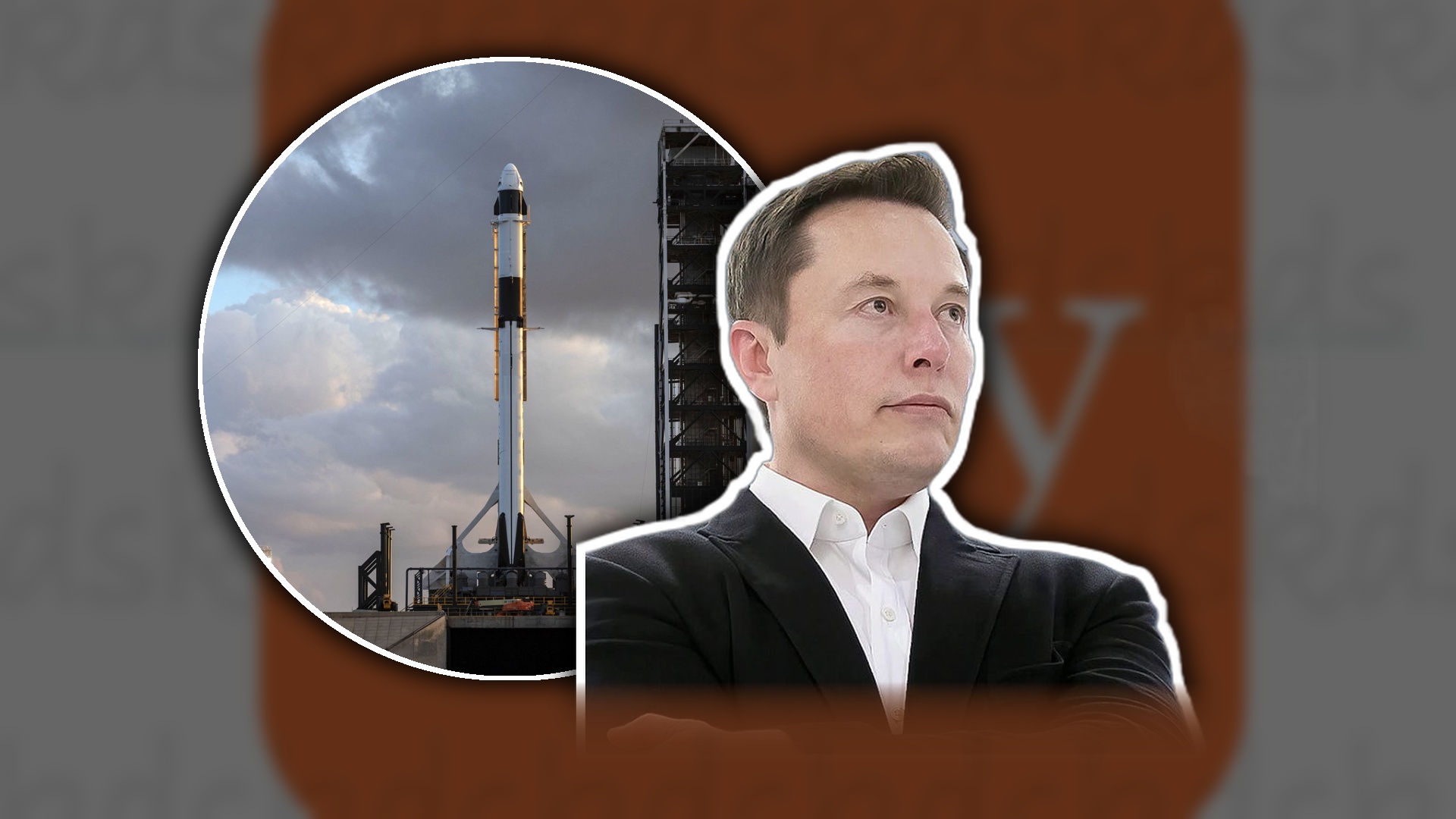
A Sovereign-Scale Liquidity Event
On June 12, 2026, the floor of the Nasdaq will witness something more akin to a sovereign wealth fund mobilization than a traditional corporate debut. SpaceX is coming to market with a fixed share price of $135, a $1.77 trillion valuation, and a mandate to vacuum up $75 billion in primary capital. In the hushed hallways of lower Manhattan, the skeptics are calling it a 'liquidity black hole.' By skipping the traditional Wall Street book-building process, Elon Musk isn't just asking for capital; he is dictating terms to a market that has no choice but to listen.
This isn't just an IPO; it’s a structural realignment of the global economy. The sheer scale of the $75 billion raise risks draining the lifeblood from the rest of the tech sector. For years, venture capital has chased 'the next SpaceX,' but as the original prepares to go public, it may leave its competitors gasping for air in a vacuum of its own making.
The Valuation Delta: Rockets vs. Reality
To understand the audacity of a $1.77 trillion valuation, one must look at the wreckage of the legacy aerospace sector. For decades, giants like Boeing and Lockheed Martin have been valued on the steady, predictable drip of government cost-plus contracts, trading at modest P/E multiples in the mid-teens. SpaceX has shattered that mold, trading at a staggering 92x trailing revenue multiple. While the old guard is judged on operating margin stability, SpaceX is being granted a 'tech pass' to burn billions in pursuit of a monopoly on the final frontier.
The conflict is clear: SpaceX swallowed a $4.9 billion net loss in 2025, yet its valuation dwarfs the combined market caps of almost the entire legacy defense sector. This disconnect creates immense pressure on the incumbents to modernize or face a slow slide into irrelevance. We are seeing a bifurcation where legacy firms are being pressured to spin off high-margin data assets just to defend their market share against this newly liquid behemoth.
The xAI Merger: When Compute Goes Orbital
The secret sauce in this trillion-dollar recipe isn't just liquid oxygen; it's silicon. The recent merger with xAI has transformed SpaceX from a logistics firm into a vertically integrated AI infrastructure play. The vision being sold to institutional allocators involves 'Orbital AI Data Centers'—massive, solar-powered compute nodes that bypass the terrestrial bottlenecks of power grid constraints and cooling water scarcity. By 2030, xAI is projected to comprise up to 70% of SpaceX's business.
The Starlink Subscription Trap
While the 'Mars' narrative captures the imagination, the 'Starlink' narrative captures the cash. To justify its valuation, SpaceX must scale from 10 million subscribers to a projected 100 million by 2030. This requires a delicate balancing act of maintaining a 39% operating margin while fighting the inevitable churn of a maturing global market. Investors will be laser-focused on Average Revenue Per User (ARPU) across maritime, aviation, and the military-grade Starshield wing.
However, the dependency on Starship remains the ultimate 'single point of failure' for the financial model. Starship is the only vehicle capable of deploying the V3 satellites necessary for this scale. If Starship encounters prolonged developmental delays, the hyper-growth narrative collapses, and the 92x multiple will face a violent correction. The market is pricing in perfection for a vehicle that has yet to achieve a full commercial cadence.
A New Benchmark for the Final Frontier
SpaceX is effectively playing the role of Cisco Systems in the 1990s—selling the 'picks and shovels' of the orbital economy. Just as Cisco manufactured the routers that built the internet, SpaceX owns the transport (Starship) and the highway (Starlink). This creates a 'SpaceX Premium' that will likely compress the valuations of smaller startups like Rocket Lab or Blue Origin, who must now prove they can compete with a company that has $75 billion in fresh dry powder.
As the June 12 listing approaches, the question isn't whether SpaceX can reach orbit—it’s whether the public markets have the stomach for the volatility of an interplanetary balance sheet. For the first time, the 'Elon Musk risk' will be quantified in real-time, every second of the trading day.
Check out our Interactive Charting Tool.