The $145 Billion Landlord: Meta’s High-Stakes Pivot to AI Cloud
The Hum of the Silicon Vineyard
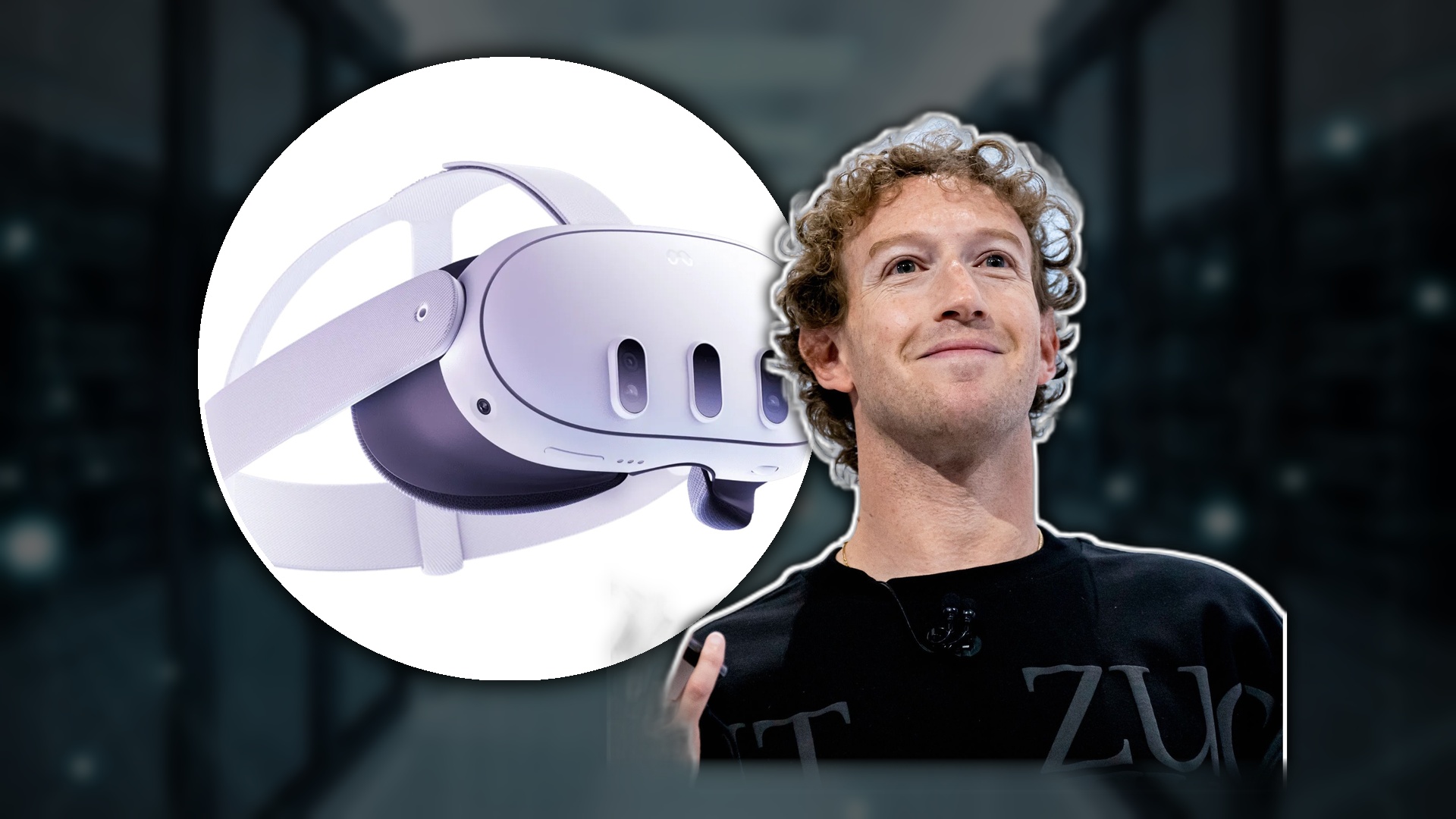
In the glass-walled corridors of Menlo Park, the conversation has shifted from the ephemeral—likes, shares, and viral reels—to the industrial. Mark Zuckerberg is no longer just building a social network; he is building a power plant. The reported discussions between Meta Platforms and Anthropic for a potential $10 billion, two-year compute leasing deal signal the end of the 'Metaverse' era of pure speculation and the beginning of the 'Meta Compute' era of hard-asset monetization. Meta is effectively becoming the world’s most expensive landlord, renting out the digital equivalent of high-yield real estate: Nvidia H100 clusters.
Weaponizing the Sunk Cost
For two years, Wall Street looked at Meta’s capital expenditure (CapEx) with a mix of awe and terror. The company’s projected 2026 CapEx is expected to hit a staggering $125 billion to $145 billion. To put that in perspective, Meta’s 'Property and equipment, net' has ballooned from $91.77 billion in Q3 2023 to a massive $176.4 billion by the end of 2025.
The conflict was clear: the bank's revenue was soaring, but the 'silent bleed' of infrastructure depreciation threatened to hollow out the bottom line. However, by leasing this capacity to Anthropic—a direct competitor to Meta’s own Llama models—Zuckerberg is executing a masterful pivot. He is transforming what was once viewed as an 'overbuilt' liability into a high-margin revenue stream. This is the AWS playbook, rewritten for the generative AI age.
The Efficiency Dividend
Despite the massive spending, Meta’s operational engine remains remarkably lean. A deep dive into the numbers reveals that while Research and Development (R&D) costs nearly doubled—climbing from $9.24 billion in Q3 2023 to $17.13 billion in Q4 2025—the company's operating margin has actually expanded. In Q4 2025, Meta generated $24.74 billion in operating income on $59.89 billion in revenue, representing a 41.3% operating margin. This is up from the 40.2% margin seen in Q3 2023, proving that the scale of the ad business is still successfully subsidizing the AI buildout.
Cannibalizing the Hyperscalers
Meta’s entry into Infrastructure-as-a-Service (IaaS) is a direct shot across the bow of AWS, Azure, and Google Cloud. Unlike those giants, which must price their compute to satisfy the profit requirements of their cloud business units, Meta’s infrastructure is already 'paid for' by its advertising goldmine. This allows Meta to offer 'deflationary pricing.' They can afford to undercut the market on raw compute, placing structural pressure on specialized AI clouds like CoreWeave and forcing the traditional hyperscalers to defend their margins.
Furthermore, Meta’s Llama ecosystem acts as a Trojan horse. By distributing open-weights models for free, Meta creates a massive developer base. When those developers need to scale to enterprise-grade fine-tuning, Meta can offer a native 'Model-as-a-Service' (MaaS) environment that is hardware-optimized for Llama, likely running on Meta’s own custom 'Iris' AI chips. This vertical integration—owning the model, the chip, and the data center—is a trifecta that even Microsoft struggles to match.
The Regulatory Tightrope
However, the pivot is not without its 'noisy neighbors.' Transitioning from a single-tenant internal network to a multi-tenant enterprise cloud introduces massive operational risks. Regulators in the FTC and European Commission are likely already sharpening their pens. The primary concern? 'Self-preferencing.' If Meta is hosting Anthropic’s Claude while simultaneously training its own Muse Spark models, the temptation to prioritize internal traffic or scrape telemetry data from competitors will be under constant scrutiny.
The Verdict: From Likes to Liquid Cooling
The financial markets have already cast their vote. Institutional investors have shifted from 'CapEx anxiety' to 'asset accumulation.' By the end of 2025, Meta’s net income reached $22.76 billion in a single quarter, a far cry from the $2.7 billion dip seen during the Q3 2025 transition period. With $35.8 billion in cash and $45.7 billion in marketable securities, Meta has the cleanest balance sheet in the AI race.
Meta is no longer just a social media company. It is a foundational utility of the 21st century. As it prepares to lease $10 billion of its silicon soul to Anthropic, the message to Wall Street is clear: the spending wasn't a burn; it was a bridge to a new, diversified empire where Meta doesn't just host the conversation—it owns the electricity that powers the thoughts.
Check out our Interactive Charting Tool.