The $100 Billion Desert Tax: TSMC’s AI Fortune Meets the Arizona Reality
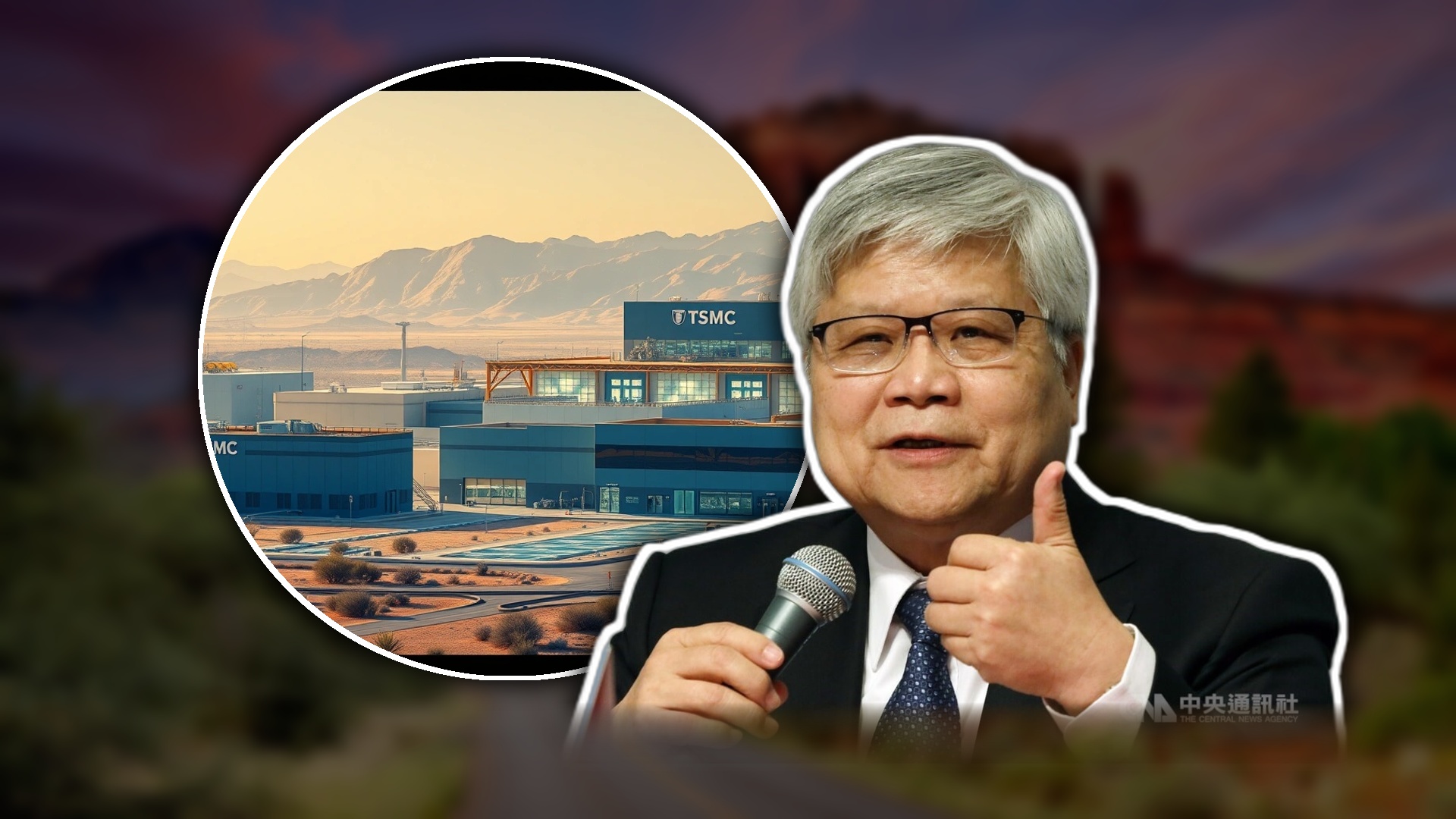
A Golden Shield Built on Silicon
In the high-humidity cleanrooms of Hsinchu, the machines never stop. They are currently churning out the central nervous systems of the AI revolution, a feat of engineering that has just handed Taiwan Semiconductor Manufacturing Co. ($TSM) a staggering $22 billion net profit for the second quarter of 2026. To put that in perspective, that is a 77.4% year-over-year surge—a financial windfall that most sovereign nations would envy. But as the champagne corks pop in Taipei, a more sober reality is taking shape 7,000 miles away in the scorched earth of Phoenix, Arizona.
TSMC is currently a company of two worlds. In one, it is the undisputed king of the 'AI Gold Rush,' enjoying nearly 100% market share in the advanced nodes required for Nvidia’s latest accelerators and Apple’s next-generation silicon. In the other, it is a foreign titan navigating the treacherous waters of American labor unions, cultural friction, and an eye-watering $100 billion capital expenditure plan that threatens to dilute the very margins that made it a trillion-dollar darling.
The High Price of Geopolitical Insurance
The decision to expand in Arizona was never purely about economics; it was about survival. With the 'Silicon Shield' of Taiwan under constant geopolitical scrutiny, TSMC’s massive investment is effectively a premium paid for global stability. However, the 'Arizona Premium' is proving to be more expensive than internal models likely predicted. The cost of human capital remains the most immediate drag. Engineering labor in the U.S. doesn't just cost more; it operates differently. TSMC’s dominant manufacturing model relies on a disciplined, almost military-like 24/7 work culture. Translating this to a competitive U.S. market has led to what insiders describe as a 'cultural divergence,' resulting in higher turnover and a reliance on expensive expatriate talent to bridge the gap.
Despite these headwinds, TSMC is leveraging its absolute dominance to protect its bottom line. The company has begun signaling a 'value-based pricing' model. If customers want the security of chips made on American soil, they will have to pay for it. This cross-subsidization is key: the high-margin 3nm and upcoming 2nm production in Taiwan are effectively funding the early, lower-yield phases of the Arizona expansion.
The 'Systems Foundry' Counter-Strike
While TSMC grapples with the desert heat, its rivals are not sitting idle. They are using TSMC’s geographic transition as an opening to rewrite the rules of the foundry business. Intel Foundry has pivoted from being a mere manufacturer to a 'Western champion,' recently securing a historic 9.9% direct equity stake from the U.S. government. Intel isn't just building fabs; it’s building a 'Systems Foundry' that combines logic, advanced packaging, and sovereign security to woo hyperscalers like Microsoft.
Meanwhile, Samsung is playing the 'One-Stop-Shop' card. Unlike TSMC, which must coordinate with SK Hynix or Micron for memory, Samsung can manufacture the 2nm logic, supply the HBM4 memory, and handle the 3D packaging all under one roof in Taylor, Texas. This integration is designed to reduce latency and simplify the supply chain for AI giants like Tesla and Anthropic, who are increasingly wary of being beholden to a single supplier's timeline.
The Margin Tightrope in the Sonoran Desert
Can TSMC maintain its legendary 53% gross margin target? It is a question that haunts institutional investors. The sheer volume of incoming cash—that $22 billion quarterly profit—provides a massive cushion, allowing TSMC to raise its 2026 CapEx guidance to as high as $64 billion without blinking. This capital independence means they don't need to go to the bond markets, even as they build out six massive fabs in the U.S.
Furthermore, the U.S. CHIPS Act is finally beginning to flow. With billions in direct grants and 25% investment tax credits, the federal government is effectively subsidizing the depreciation costs that would otherwise crush a lesser company’s balance sheet. But the real test will come in 2027, when the Arizona fabs are slated for high-volume production. If yields don't match the Taiwanese benchmarks, the 'AI windfall' might find itself swallowed by the desert sands.
The Verdict: A King with a New Crown
TSMC remains the most important company in the global economy, and its Q2 performance proves that the AI boom is far from over. However, the narrative is shifting from pure technological leadership to operational endurance. The company is no longer just a chipmaker; it is a geopolitical actor managing a $100 billion hedge. For now, the AI premium is more than enough to cover the Arizona tax, but in the cyclical world of semiconductors, nothing—not even a 77.4% profit surge—lasts forever. Investors are cheering today, but they are watching the construction cranes in Phoenix with a very skeptical eye.
Check out our Interactive Charting Tool.