Tesla’s Identity Crisis: Is This a Car Company or a Robotics Lab?
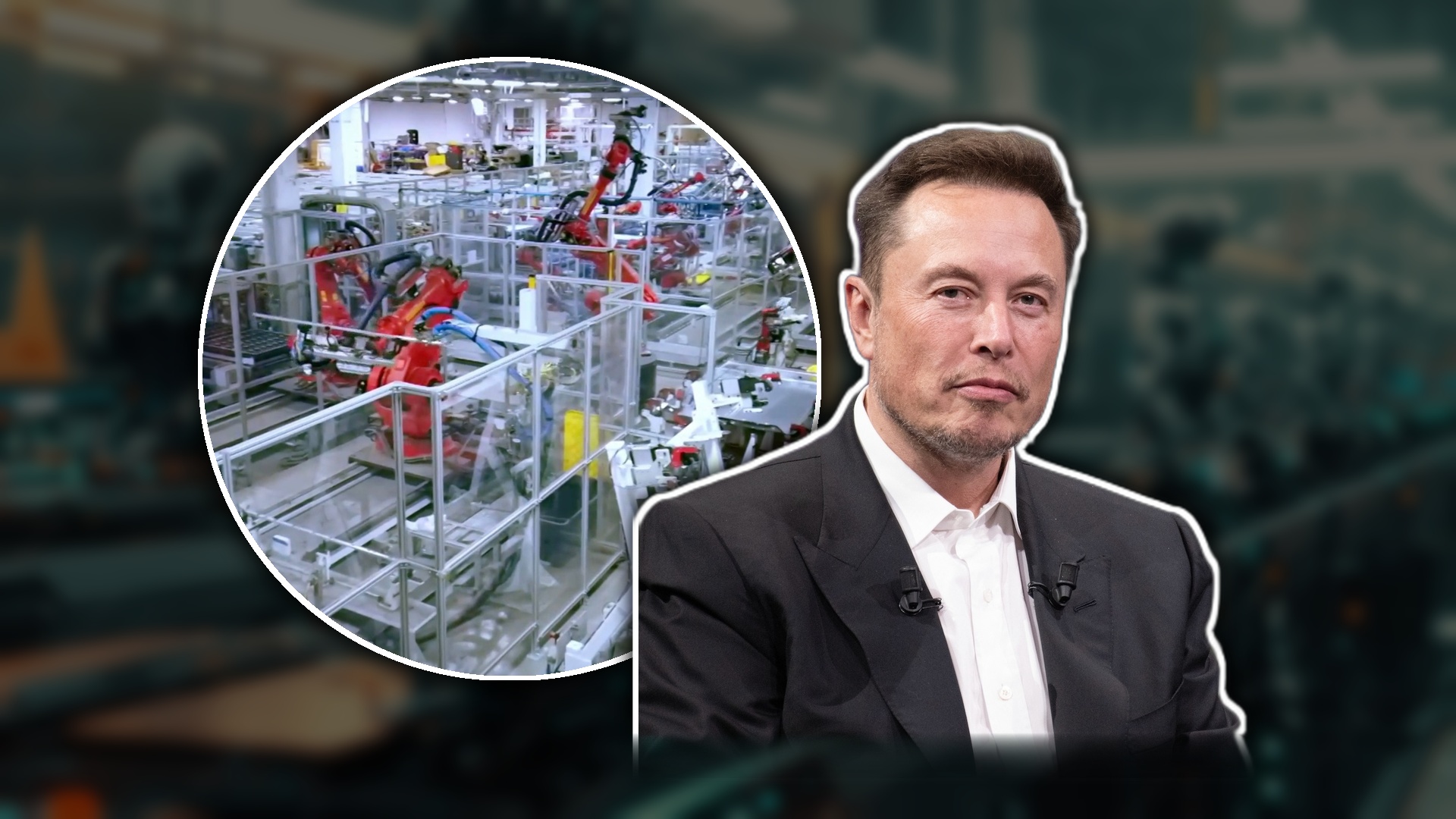
The Price Umbrella is Leaking
For years, Tesla was the golden child of the automotive world, boasting margins that made Ferrari blush. But fast forward to July 2026, and the narrative has shifted from 'conquering the road' to 'surviving the price war.' Tesla’s latest earnings report is a stark reminder that even the most innovative companies aren't immune to the gravity of a maturing market. As average selling prices (ASPs) continue to slide, the company’s operating margin—essentially the profit left over after paying the bills to keep the lights on—has compressed significantly.
In Q4 2025, Tesla's operating margin sat at roughly 5.66%, a far cry from the nearly 18% peaks seen during the post-pandemic boom. To put that in perspective, legacy automakers like Ford and GM typically live in the 6% to 9% range. Tesla is no longer just competing with other EVs; it’s being pulled down into the 'commodity' mud where every dollar of profit is a dogfight.
The $25 Billion Venture Studio
If you listened to the earnings call, you’d be forgiven for thinking you were tuned into a Silicon Valley seed round rather than a trillion-dollar automaker's update. Elon Musk is aggressively rotating capital away from traditional EV production and toward what analysts call 'Physical AI.' We're talking about massive investments in NVIDIA GPU clusters, the Dojo supercomputer, and the Optimus humanoid robot.
This pivot isn't cheap. Tesla is currently funnelling over $25 billion into capital expenditures (Capex). In simple terms, Capex is the money a company spends to buy, maintain, or improve its fixed assets. When that number balloons while car margins shrink, it puts immense pressure on Free Cash Flow (FCF)—the actual 'spendable' cash a business generates. In Q4 2025, FCF per share dropped to $0.44, down from $0.65 just two years prior. If these AI bets don't pay off soon, Tesla risks burning through its cash fortress just to keep the robots learning how to walk.
The BYD Shadow and Vertical Integration
While Tesla is looking at the stars (and robots), Chinese rivals like BYD are eating its lunch on the ground. These competitors have mastered 'Vertical Integration'—the art of owning every piece of the puzzle, from the lithium mines to the battery factories. BYD’s 'Blade Battery' tech allows them to produce cars so cheaply that they can match Tesla’s price cuts without breaking a sweat.
Tesla’s response has been to lean into its software, but the 'Monetization Gap' is real. It takes years to train an AI to drive a Cybercab or fold laundry (Optimus), but it only takes a few months for a competitor to launch a cheaper hatchback. This creates a dangerous timing mismatch for investors: the car profits are drying up today, while the robot profits are 'coming soon' (maybe).
The Valuation Paradox
Here is the weirdest part: despite the margin squeeze, Tesla still trades at a Price-to-Earnings (P/E) ratio of over 400x. For the uninitiated, the P/E ratio tells you how much investors are willing to pay for every $1 of a company's profit. A typical car company trades at 8x or 10x. Tesla’s 400x multiple means investors aren't buying a car company; they are buying a call option on the future of human labor and autonomous transport.
The Energy Bridge: A Secret Weapon?
If there’s a silver lining in the numbers, it’s the Energy Generation and Storage segment. While car sales feel stagnant, Tesla’s Megapack deployments are booming. Revenue from this segment jumped from $1.56 billion in Q3 2023 to a whopping $3.84 billion by the end of 2025. This business carries much higher margins than hardware and acts as a 'profitability bridge' while the company waits for FSD (Full Self-Driving) to finally lose the 'Supervised' tag.
To justify its premium valuation, Tesla needs to prove that it can transition from a hardware manufacturer to a software and services giant. Until then, expect the stock to trade more like a volatile tech startup than a blue-chip automaker. Keep your eyes on the 'Unsupervised' miles driven—that's the real metric that will decide if this $25 billion gamble was a masterstroke or a massive mistake.
Check out our Interactive Charting Tool.