Tesla's Empty Victory: The Hidden Cost of 480,000 Deliveries
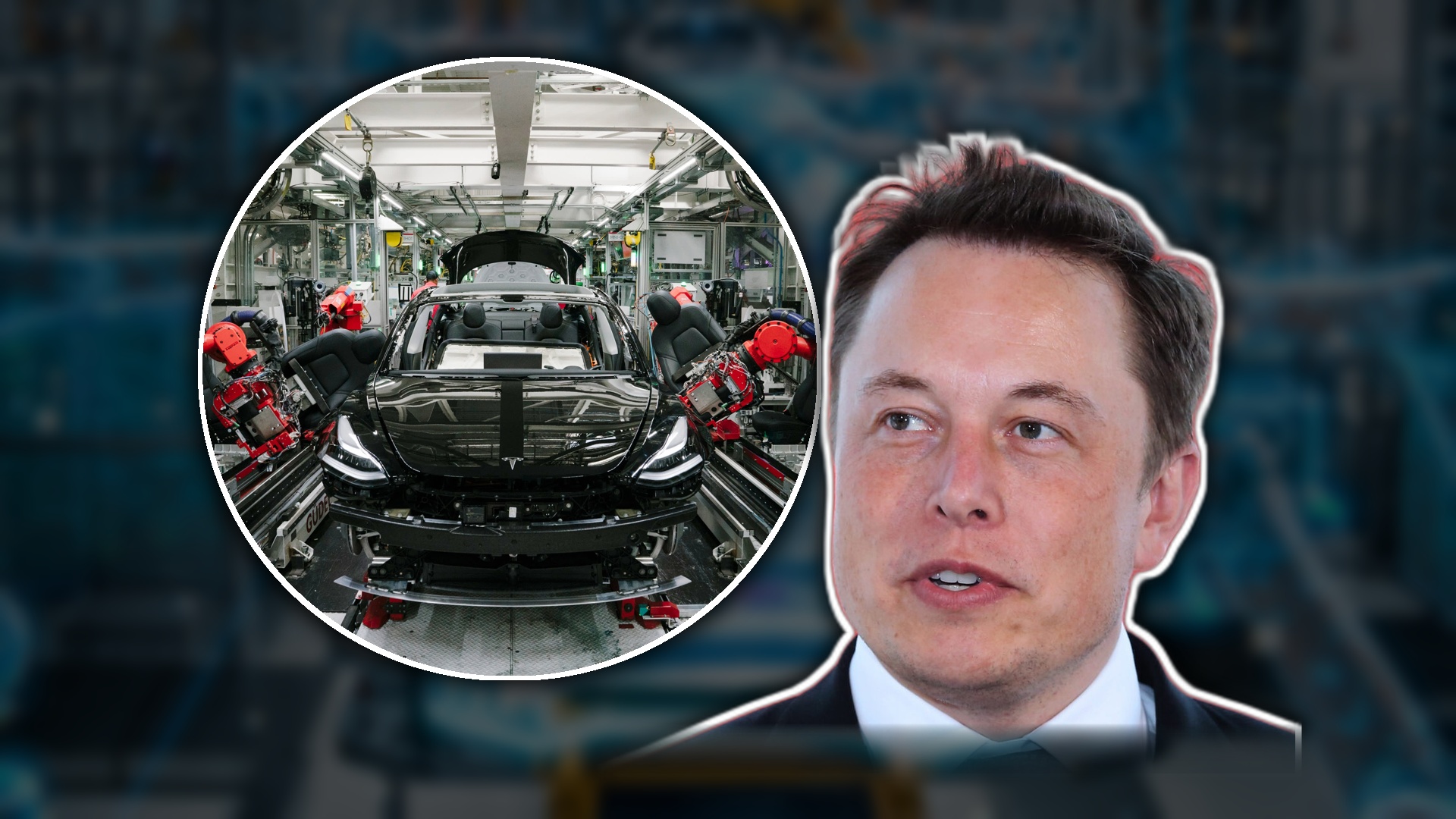
Picture the scene inside the executive suites of Giga Texas. The monitors flash the final tally for the second quarter: 480,126 vehicles delivered. It is a stunning 25% year-over-year growth trajectory, utterly obliterating Wall Street’s consensus estimate of 406,000. For the retail investors and the corporate PR machine, it is a moment of pure vindication. The aggressive price cuts and subsidized financing packages rolled out over the last year have done exactly what they were designed to do: clear the lots and keep the factories humming.
But down in the finance department, the celebratory toast is likely cut short. Behind the headline-grabbing volume lies a stark, uncomfortable reality. Tesla is locked in a classic industrial trade-off, sacrificing its once-enviable profitability to defend its market share. The delivery surge is not a sign of effortless dominance; it is the expensive result of a grueling price war of attrition.
The Sugar Rush of Subsidized Volume
To understand the structural shift taking place under Tesla’s hood, one must look past the delivery numbers and examine the relationship between top-line revenue and bottom-line profit. In the third quarter of 2023, Tesla generated $23.35 billion in total revenue, yielding a net income of $1.878 billion. Fast forward to the fourth quarter of 2025, and while quarterly revenue crept up to $24.90 billion, net income collapsed to just $856 million.
This is the definition of a silent bleed. Tesla is working harder, building more cars, and utilizing more factory capacity, yet it is taking home less than half the profit it did two years prior. The culprit is average selling price (ASP) compression. By continuously lowering prices and offering low-interest financing promotions—which act as stealth price cuts—Tesla has severely eroded its unit economics.
The Profitability Paradox
For years, Tesla’s valuation premium was justified by its software-like margins, which left legacy automakers looking like relics of a low-margin past. But that margin umbrella is rapidly folding. Tesla's Operating Margin—the percentage of revenue left over after paying for the direct costs of production and administrative overhead—slid from 7.55% in Q3 2023 to a mere 5.66% in Q4 2025.
This margin erosion highlights the limits of operational cost deflation. While Tesla has pioneered brilliant manufacturing innovations, such as single-piece gigacastings, and renegotiated battery supply contracts, these efficiency gains are hitting a wall of diminishing marginal returns. The cost of vehicle incentives is simply falling faster than Tesla can optimize its assembly lines.
Detroit's Strategic Retreat
While Tesla is using its balance sheet to wage a pure-play EV volume war, its traditional rivals in Detroit are playing a completely different game. Rather than matching Tesla’s price cuts dollar-for-dollar and destroying their own margins, Ford and General Motors have actively retreated from the battlefield to preserve capital.
Ford recently took a massive $19.5 billion structural charge to restructure its Model e EV business, canceling several planned three-row electric SUVs. Similarly, General Motors absorbed over $7 billion in special charges and asset write-downs as it scaled back its near-term EV capacity. Instead of forcing fully electric vehicles (BEVs) onto an unwilling public, both automakers are redirecting their capital toward high-margin gasoline trucks, hybrids, and extended-range electric vehicles (EREVs).
By using the steady cash flows from traditional internal combustion engines to subsidize a slower, more disciplined transition to electrification, Ford and GM are building a buffer. They are letting Tesla carry the heavy financial burden of establishing the mass EV market, waiting to strike with lower-cost, next-generation architectures when the supply chain matures.
The Fragile Autonomy Bridge
If Tesla's automotive business is starting to resemble a traditional, cyclical car manufacturer, why does its stock price continue to trade at a staggering price-to-earnings (P/E) ratio of 416.41x in Q4 2025?
The answer lies in what institutional investors call the "Autonomy Bridge." Bulls do not value Tesla on the number of Model 3s or Model Ys it rolls off the assembly line. Instead, they view each vehicle delivered as a data-collecting node for Tesla's unsupervised Full Self-Driving (FSD) software, a future Robotaxi network, and the eventually commercialized Optimus humanoid robotics platform.
But this tech-company valuation is highly fragile. Transitioning from supervised FSD to fully autonomous Level 4 operations requires navigating a minefield of federal regulatory scrutiny, state-by-state licensing, and complex localized data laws. If these regulatory approvals are delayed by years, or if hardware margins remain compressed under the weight of international competition from low-cost Chinese rivals like BYD, institutional models will face a violent repricing back to fundamental automotive multiples.
Tesla’s record-breaking delivery quarter is undoubtedly a operational triumph. But as the gap between volume and profitability continues to widen, the pressure on Elon Musk to deliver on the promise of autonomous AI has never been higher. Until the software revenue arrives, Tesla is running faster and faster just to stand still.
Check out our Interactive Charting Tool.