Space Lasers & $1.7 Trillion IPOs: AI’s New Frontier
The $1.75 Trillion Orbital Gambit
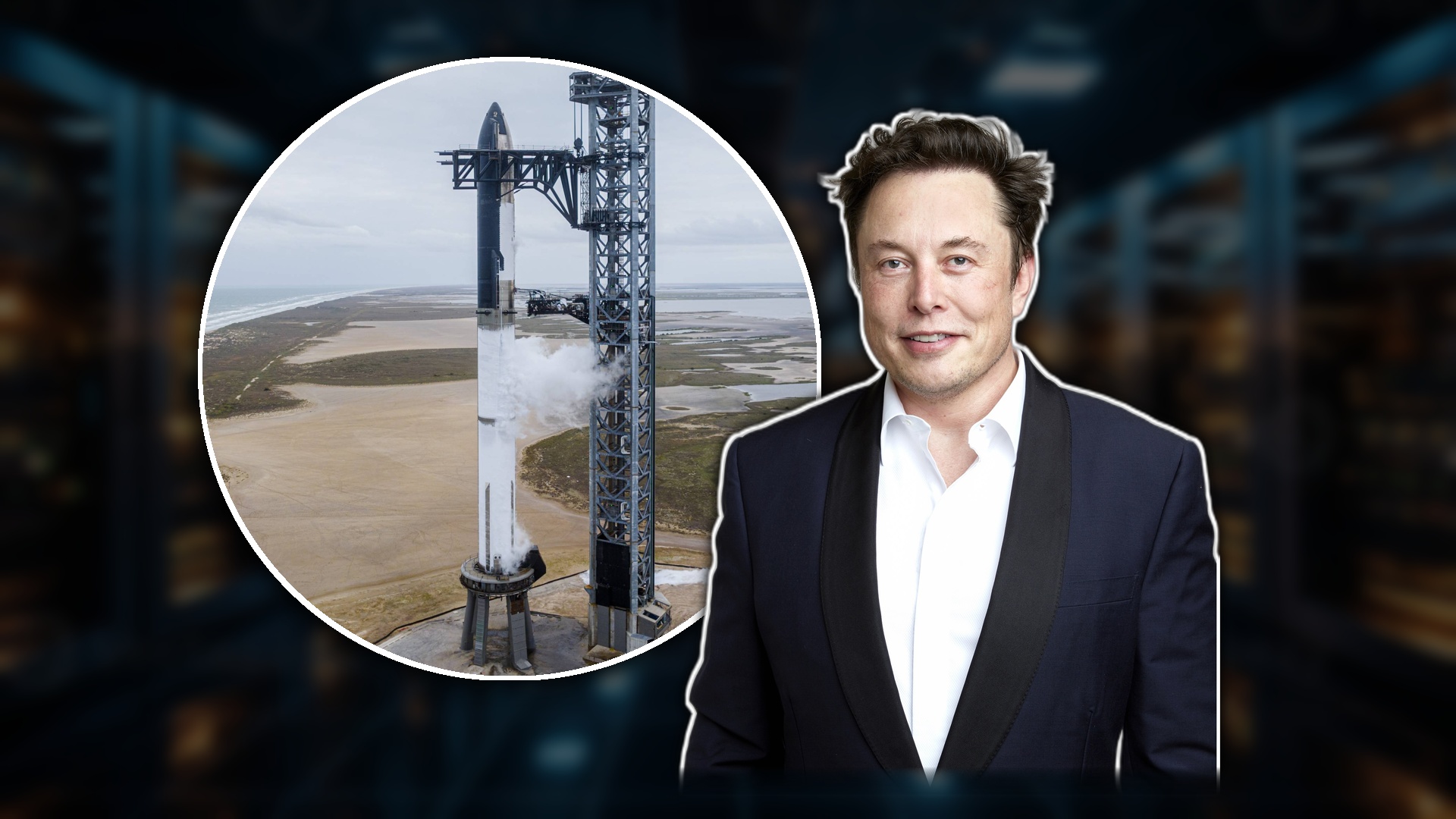
Forget the cloud; we’re going to the stars. In a move that feels ripped straight from a sci-fi screenplay, SpaceX has announced an unconventional fixed-price IPO at $135 per share. The goal? A staggering $1.75 trillion valuation. But Elon Musk isn’t just looking for a payday—he’s looking for the high ground. The proceeds are earmarked for a constellation of orbital AI data centers, leveraging the Starship platform to put compute where the sun always shines and the cooling is, quite literally, absolute zero.
This isn't just about bragging rights. By launching space-based AI clusters, SpaceX is aiming for the ultimate vertical integration. They own the rockets, they own the Starlink delivery network, and now they want to own the processing power. For terrestrial giants like Amazon AWS and Microsoft Azure, the 'Maintenance Gap' suddenly becomes a competitive moat. After all, if a GPU fries in orbit, you can't exactly send a technician down the hall with a screwdriver. Yet, the allure of abundant solar power and bypassing national data borders makes this the most ambitious infrastructure play in human history.
Anthropic’s Mythical Public Debut
While SpaceX looks up, Anthropic is looking across the globe. The AI safety darling has confidentially filed for its own IPO, riding the momentum of its new 'Claude Mythos' model. Unlike the general-purpose chatbots of 2023, Mythos is being positioned as a safety-critical utility. Anthropic is already deploying this brainpower into the critical infrastructure of 15 countries—managing everything from power grids to water systems.
However, the road to the public markets isn't without its potholes. Anthropic finds itself in an 'Incumbent Squeeze.' They rely on Google and Amazon for the very compute they need to train Mythos, even as they compete with them for the souls of sovereign nations. Furthermore, regulators are breathing down their necks. The 'Black Box' problem remains: if Claude makes a split-second decision that affects a national power grid, can Anthropic explain *why* it happened? The EU AI Act and Canada’s AIDA are already demanding machine-readable 'Deployment Authorizations' that could make or break Anthropic’s global expansion.
The Agentic Shield: Palo Alto’s Record Run
If you need proof that the 'AI-pocalypse' fears were overblown, look no further than Palo Alto Networks ($PANW). The cybersecurity giant just dropped record earnings, fueled by a 60% surge in AI-driven security tools. We have officially entered the era of 'Agentic Defense.' In a world where state-sponsored AI can hunt for software vulnerabilities at machine speed, human-in-the-loop security is a death sentence.
Palo Alto’s success highlights a massive bifurcation in the market. On one side, you have 'Platform Giants' that can ingest global telemetry streams to feed their autonomous engines. On the other, you have 'Point Solutions' that simply can't keep up. This isn't just about better software; it's about a 'Vendor Consolidation Moat.' Enterprises are flocking to the few providers who can offer a fully autonomous, real-time remediation loop. But this brings a hidden risk: 'Monocultural Fragility.' If every major corporation uses the same AI shield, a single glitch in that shield becomes a systemic threat to the entire digital economy.
Wall Street Opens the Gates to the Machines
The final pillar of this new era comes from the mahogany halls of Morgan Stanley. The firm is opening its massive $7.35 trillion wealth management platform to external AI agents. This isn't just a fancy calculator; it’s a full-scale automation of complex stock plan administration. By using the 'Model Context Protocol' (MCP), Morgan Stanley is allowing AI agents from various providers to securely 'handshake' with their financial databases.
Institutional investors are watching this with a mix of 'Cash-Flow Optimism' and 'Systemic Tail Risk' dread. On one hand, the potential for margin expansion is enormous. Scaling a wealth management business used to mean hiring thousands of back-office staff. Now, it means spinning up more agents. On the other hand, the fiduciary questions are a nightmare. Who is liable when an autonomous agent miscalculates a cross-border tax withholding for a Fortune 500 executive? Until the SEC provides a 'Safe Harbor' framework, this will remain a high-stakes experiment.
The Death of the AI-pocalypse
As we head into the second half of 2026, the narrative has fundamentally shifted. The 'AI-pocalypse'—the fear that robots would replace every human worker—is being replaced by the 'Augmentation Era.' Industry leaders like Jensen Huang are emphasizing that AI agents will increase human utility rather than replace it. For investors, this changes everything. We are moving away from valuing companies based on 'AI hype' and back to traditional metrics: Net Retention Rate (NRR) and Return on Investment (ROI).
The winners of this era won't just be the ones with the fastest chips or the biggest models. They will be the companies that can seamlessly embed intelligence into existing human workflows. Whether it's a SpaceX satellite providing low-latency compute or a Morgan Stanley agent managing your 401(k), the goal is the same: making humans more productive. The 'AI-pocalypse' isn't coming; the 'AI-Upgrade' is already here.
Check out our Interactive Charting Tool.