Nvidia’s $250 Billion Shadow Bank
The 10-Gigawatt Ghost in the Machine
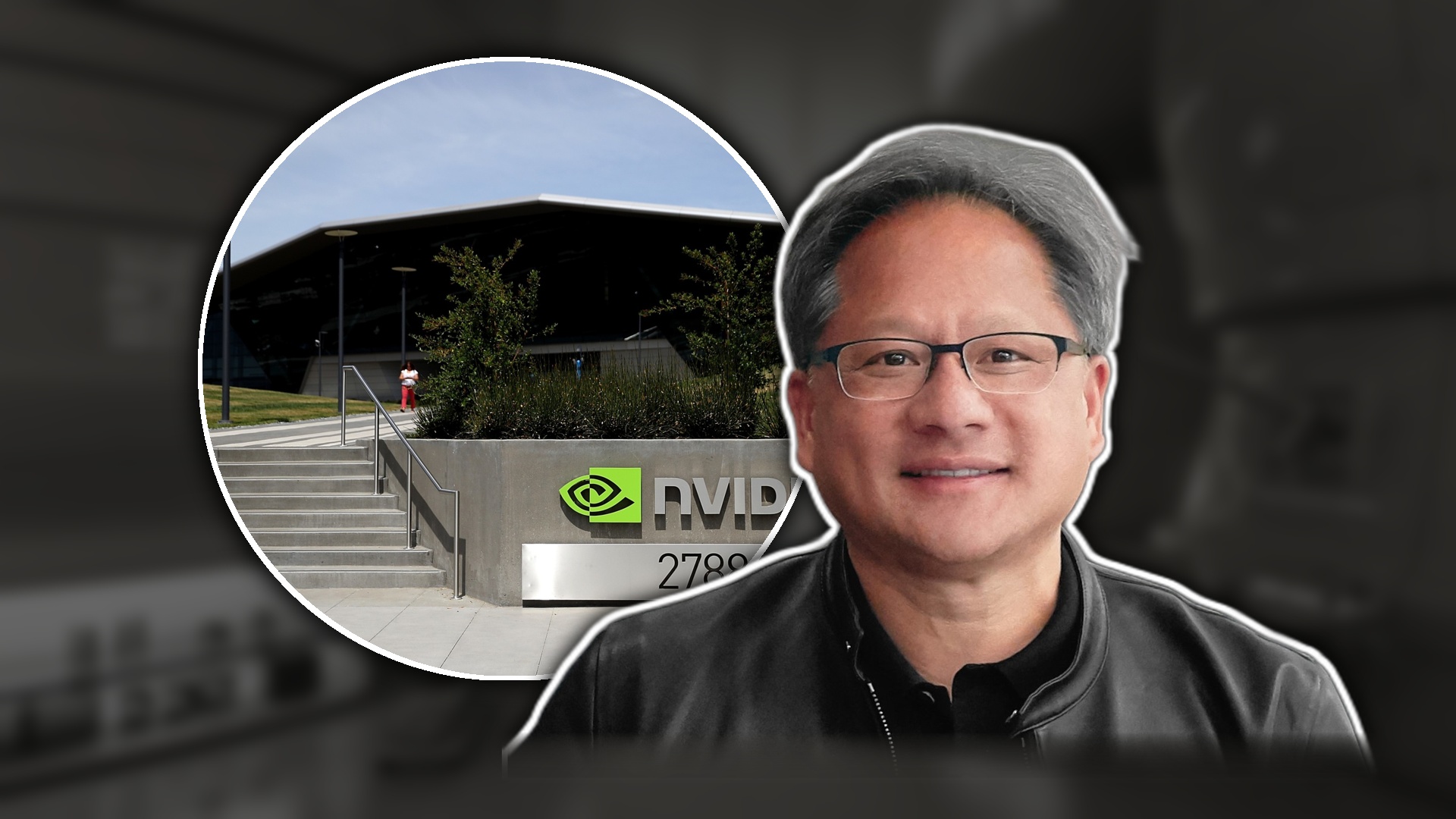
In the quiet cornfields of southern Ohio, a project is taking shape that represents either the pinnacle of human innovation or the most expensive monument to corporate hubris in history. OpenAI is scouting a 10-gigawatt data center—a facility so massive it would require the power equivalent of several nuclear reactors. But the real story isn’t the concrete or the cooling fans; it’s the checkbook behind it. Reports from deep within the valley suggest that NVIDIA ($NVDA) is in talks to provide a staggering $250 billion in financing guarantees to backstop this project. In doing so, Jensen Huang is not just selling the shovels for the AI gold rush; he is becoming the bank that finances the mine, the miners, and the land they stand on.
The Great Circular Capital Loop
This isn't traditional vendor financing. When a company like NVIDIA steps in to guarantee $250 billion for a customer like OpenAI—which, despite its multi-billion dollar valuation, remains an unprofitable entity without an investment-grade credit rating—it enters the realm of 'shadow banking.' NVIDIA is effectively bypassing traditional financial intermediaries to ensure its own order book remains full. It is a closed loop: NVIDIA provides the credit, the credit buys the chips, and the chip sales drive the record-breaking revenue we see in the quarterly filings.
However, this financial engineering creates a systemic vulnerability. If the end-market demand for generative AI fails to yield the productivity gains required to justify these trillions in CapEx, the default won't just hit OpenAI; it will cascade directly back onto NVIDIA’s balance sheet. We are witnessing the birth of a 'too big to fail' ecosystem where the supplier is the sovereign lender.
The Liquidity Squeeze Behind the Record Profits
On the surface, NVIDIA’s Q4 2025 results are a masterclass in growth. Revenue hit $68.1 billion, a massive leap from the $18.1 billion reported in Q3 2023. Net income followed suit, soaring to $42.9 billion. But for those of us who spend our nights in the footnotes of SEC filings, a more skeptical picture emerges. Despite the cash pile, NVIDIA’s Cash Ratio—a key measure of a company's ability to pay off short-term liabilities with only cash and equivalents—has steadily eroded. It dropped from 0.61 in Q3 2023 to just 0.33 in Q4 2025.
This 'silent bleed' suggests that while NVIDIA is printing money, it is also locking that capital into increasingly complex long-term commitments. Inventory has also ballooned from $4.7 billion to $21.4 billion over the same period. If the music stops and the 'hyperscalers'—the big tech firms buying these chips—suddenly find themselves with overcapacity, NVIDIA will be left holding $21 billion in rapidly obsolescing silicon and $250 billion in guarantees for empty data centers.
Oracle’s BBB- Albatross
While NVIDIA plays the role of the bank, its customers are beginning to buckle under the weight of the debt required to stay in the race. Oracle ($ORCL) was recently hit with an S&P Global downgrade to BBB-, just one notch above junk status. The reason? A debt-fueled infrastructure binge that has seen their interest expense climb as they try to build out their own AI cloud. Oracle’s total liabilities now sit at a staggering $218 billion, and unlike Microsoft or AWS, they do not have the diversified cash flow to self-fund this expansion.
Oracle is trapped in an asymmetric war. Every dollar they borrow costs more than it does for their cash-rich competitors. This creates a 'refinancing wall'—if the AI monetization timeline stretches out, Oracle may find itself unable to service its debt without sacrificing the very R&D needed to remain competitive. They are building a digital empire on a foundation of high-interest paper.
Tesla’s Billion-Dollar Robotics Void
If Oracle is the cautionary tale of debt, Tesla ($TSLA) is the warning shot for free cash flow. Elon Musk has pivoted the company’s narrative from electric vehicles to AI and robotics, but the transition is proving incredibly expensive. Tesla reported a negative free cash flow of $1.1 billion, driven by a 142% year-over-year jump in capital expenditures. Musk is betting the farm on the 'Dojo' supercomputer and Optimus robots, but institutional investors are growing wary of the asset-liability mismatch. AI hardware needs to be replaced every 3 to 5 years, yet the debt used to finance it often carries much longer terms. Tesla is burning cash today for a robotics future that remains, at best, speculative.
The Systemic Cliff Edge
The concentration of AI spending among a few players—backed by NVIDIA’s creative financing—has created a 'single-point-of-failure' feedback loop. Moody’s has already issued macro-credit warnings about the unprecedented spending pressuring the credit quality of hyperscalers. If an economic slowdown hits, enterprise IT budgets will be the first to go. A minor contraction in AI API calls could trigger a wave of defaults that would force NVIDIA to absorb the very debt it guaranteed.
We are no longer just tracking a chip cycle; we are tracking a credit cycle. NVIDIA’s $250 billion guarantee isn't just a bet on OpenAI; it's a bet that the global economy can grow fast enough to pay for the intelligence NVIDIA has already sold. In the world of Narumi AI, we call that a 'fundamental disconnect.' The question isn't whether NVIDIA can build the future—it's whether the future can afford to pay NVIDIA back.
Check out our Interactive Charting Tool.