Hardware is Eating Software's Lunch (And IBM is Paying the Bill)
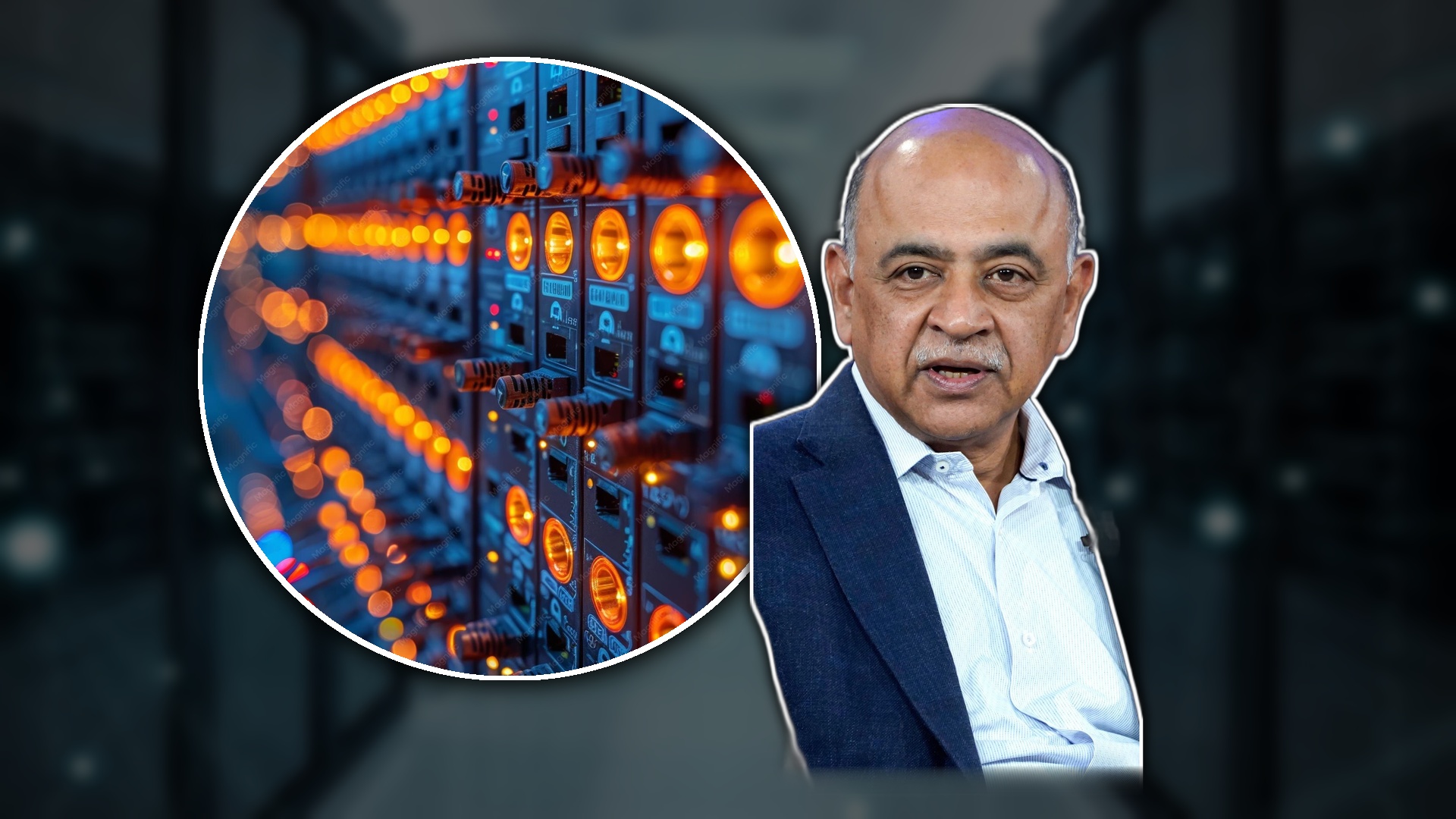
Big Blue just got a big reality check. In July 2026, legacy tech giant IBM ($IBM) saw its stock plummet to $212.67, a steep fall from its May high of $301. The culprit? A preliminary Q2 revenue miss that sent shockwaves through Wall Street. But this isn't just an IBM problem—it is the first major casualty of a massive, systemic shift in how corporate America is spending its technology dollars.
For the past few years, the tech sector's golden child was enterprise software. Predictable recurring revenue, high gross margins, and neat software-as-a-service (SaaS) models commanded massive valuation premiums. But today, Chief Information Officers (CIOs) are abruptly pausing software renewals and digital transformation projects. Instead, they are pooling every spare dollar to buy hyper-expensive hardware infrastructure. Think of it as trying to buy high-tech smart-home software before you’ve even poured the concrete foundation of your house. Companies have realized that before they can run complex AI models, they need the physical raw computing power to support them.
The Great Tech Budget Cannibalization
IBM’s Q2 2026 results laid bare this brutal capital rotation. The company’s software growth decelerated sharply to just 5%, down from 11% in the previous quarter. Its consulting pipeline flattened as clients deferred long-term software integrations. This pivot directly threatens IBM’s long-term financial thesis, which has relied heavily on transitioning to high-margin software ecosystems like Red Hat and HashiCorp.
Historically, IBM has shown a slow but steady trajectory of top-line growth, with total quarterly revenue climbing from $14.107 billion in Q3 2022 to $16.331 billion in Q3 2025. But that steady rise is hitting a brick wall of hardware prioritization.
The danger here is structural margin erosion. Software licenses carry gross margins north of 80%. When tech budgets rotate toward physical mainframes, custom servers, and consulting, IBM’s product mix shifts toward lower-margin segments. While IBM boasted a solid operating margin of 21.74% in Q4 2025, a prolonged software freeze could severely compress those margins in the coming quarters.
The Unstoppable Silicon Land Grab
While software-heavy legacy names are bleeding, pure-play semiconductor and memory manufacturers are throwing a historic party. The capital being carved out of software budgets is flowing directly into the bank accounts of hardware titans like Micron ($MU) and Samsung ($005930).
Look no further than Micron’s jaw-dropping quarterly performance. In Q2 2024, Micron reported a modest $5.824 billion in revenue. Fast forward to Q3 2026, and that figure has exploded to an unbelievable $41.456 billion, with net income reaching a record $28.243 billion.
This is not a normal semiconductor cycle; it is a structural supercycle. Generative AI workloads require massive amounts of High Bandwidth Memory (HBM3E and HBM4) and advanced DDR5 memory modules to function. Because memory chip supply is incredibly tight, Micron has immense pricing power. The company recently revealed it has secured over $100 billion in cumulative customer commitments through 2030, including billions in upfront cash deposits just to reserve allocation. When a CIO cuts a check for a massive hardware deposit, that is cash that is directly cannibalized from their operational software budget.
Samsung is playing a similarly aggressive hand. The South Korean giant is shifting up to 22% of its total DRAM wafer allocation toward high-margin HBM and DDR5 nodes. This strategic move has intentionally created a global supply shortage in legacy DDR4 memory, driving up average selling prices across Samsung's entire product portfolio and sending its semiconductor operating profits into the stratosphere.
How to Value a Giant in a Chip-First World
This budget rotation has forced institutional asset managers to completely rewrite their valuation models. Legacy software-heavy companies are no longer being rewarded for predictable, recurring revenue streams. Instead, Wall Street is applying a "software digestion" discount, fearing that legacy codebases will be automated away and that sales cycles will remain frozen until the physical infrastructure build-out is complete.
So, is this a permanent shift or a temporary vendor mismatch? The data suggests we are firmly locked in an infrastructure build-out phase. Until global data centers achieve baseline AI compute capacity, hardware suppliers will continue to command the lion's share of enterprise IT budgets. For legacy giants like IBM, the challenge will be defending their margins and weathering the storm until the software layer finally gets its turn to shine again.
Check out our Interactive Charting Tool.