Halliburton’s Playbook: The New Energy Fortress

The Pivot to 'Just-in-Case' Energy
In the world of oilfield services, the buzzword for 2026 isn't 'efficiency'—it's 'sovereignty.' Halliburton ($HAL) is leaning hard into the concept of energy security, positioning itself as the indispensable partner for nations looking to insulate their power grids from the chaos of global supply chains. While the broader market watches commodity prices, Halliburton is busy securing multibillion-dollar integrated service awards, most notably in Argentina’s Vaca Muerta shale.
This isn't just about drilling holes; it's about becoming a 'Security Specialist.' By focusing on well construction and completions—where they hold top-tier market share—Halliburton is capturing the immediate spend of national oil companies that are prioritizing domestic production over global dependence.
The Battle of the Big Three
The competitive map is sharpening. Schlumberger (SLB) continues to play the 'Digital and Offshore' long game, leveraging AI-driven platforms like Delfi to dominate deepwater projects. Meanwhile, Baker Hughes (BKR) has successfully pivoted into an energy technology powerhouse, capturing the midstream and LNG infrastructure demand that often follows the extraction phase.
While SLB and BKR chase high-concept digital integration and massive LNG turbines, Halliburton’s pure-play focus on the wellhead is yielding immediate, high-intensity margins. However, this strategy comes with a caveat: if the definition of 'energy security' shifts from fossil fuels to diversified renewables by the 2030s, HAL will need to broaden its portfolio to avoid being left with legacy assets.
The Hidden Ceiling: Labor and Logistics
Despite the recovery in North American markets, the industry is hitting a structural wall that has nothing to do with capital. The 'idle rig' phenomenon is real—equipment is available, but the crews to operate it are not. With a significant portion of the veteran workforce nearing retirement, Halliburton is forced to rely on automation, like its 'Octiv' systems, to do more with less.
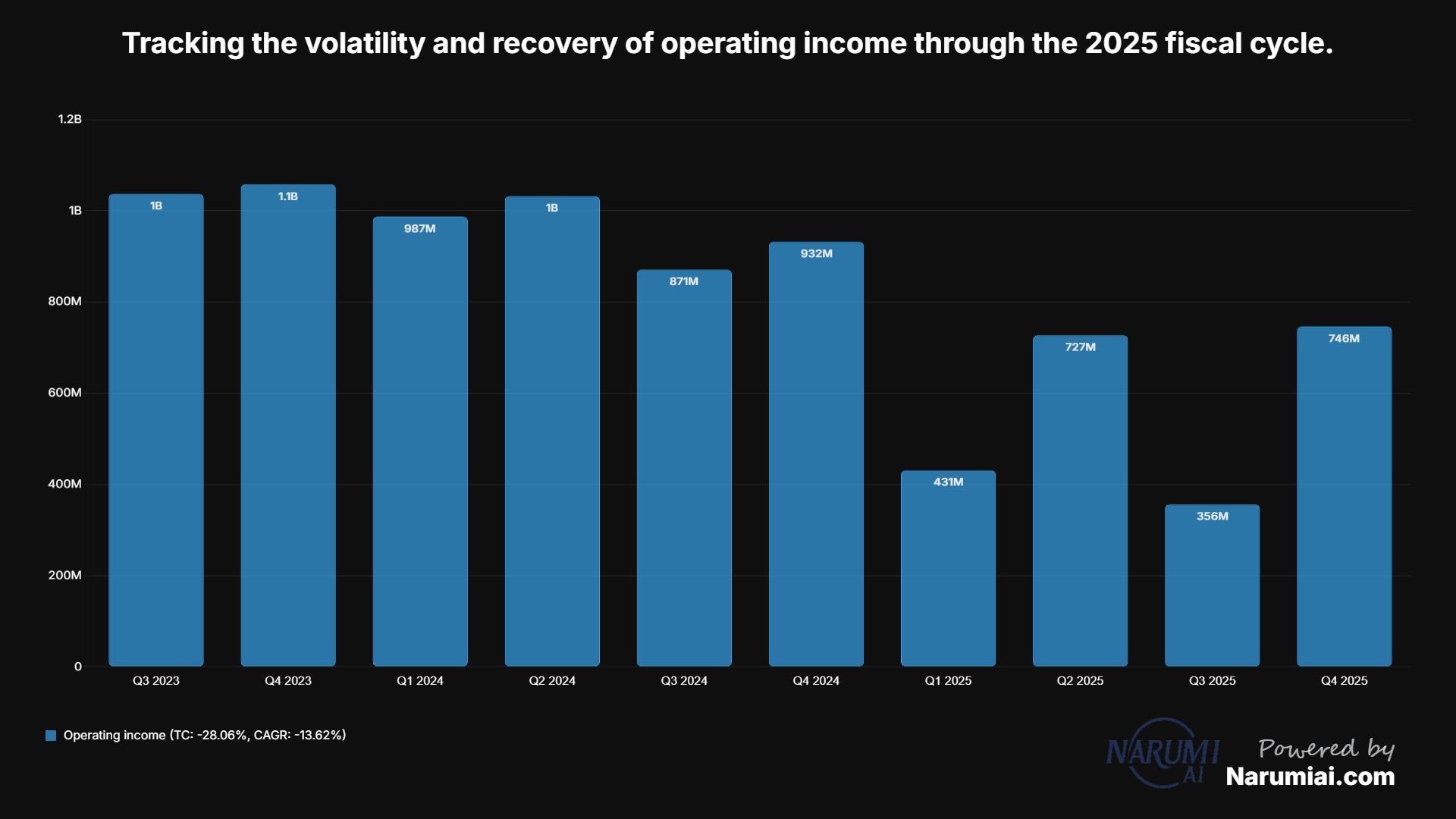
Furthermore, logistics costs have been pushed higher by global conflicts. Yet, Halliburton is managing these by passing costs through to clients who are desperate for supply reliability. Investors are beginning to reward this 'resilience premium,' viewing HAL’s localized supply chain as a necessary hedge against geopolitical shocks.
What to Watch Next
To validate this bullish outlook, keep an eye on two key indicators: the adoption rate of electrification (e-frac fleets) in the Permian Basin and the continued growth of 'Methane-as-a-Service' monitoring. If Halliburton can maintain margin expansion while rig counts remain flat, it proves they have successfully decoupled their growth from the wild swings of commodity prices.
Check out our Interactive Charting Tool.