FanDuel’s $300M Pivot: Betting on Everything but Sports
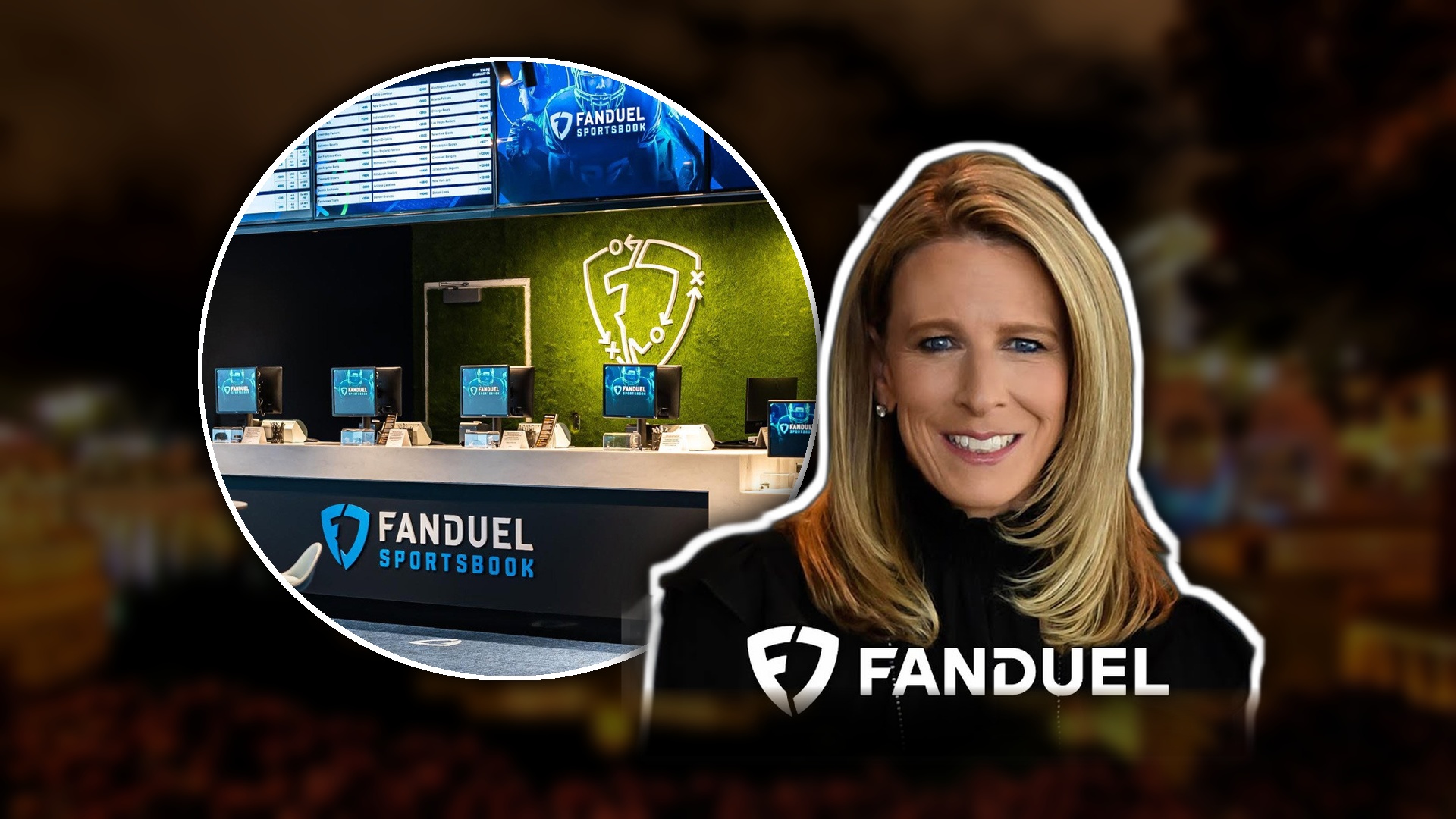
The Wartime Pivot at FanDuel
In the world of high-stakes wagering, the house usually wins. But lately, Flutter Entertainment ($FLUT), the parent company of FanDuel, has been feeling the squeeze. On May 6, 2026, the company dropped a double-whammy: CEO Amy Howe is out after a five-year run, and President Christian Genetski is stepping into the top spot. This isn't just a change of nameplates on the office door; it’s a fundamental shift in how the world’s largest sportsbook plans to survive an era of shrinking disposable income and aggressive new rivals.
The backdrop for this leadership swap is a stock price that looks like a ski slope, falling 54% since the start of the year. Investors are nervous, and Flutter is responding with a massive $300 million offensive into a category that sounds more like Wall Street than a Vegas bookie: prediction markets.
From 'Builder' to 'Protector'
Amy Howe was the architect of FanDuel’s aggressive expansion, helping the brand capture over 40% of the U.S. market. But as the industry matures, the challenges have shifted from "how do we get users?" to "how do we keep the regulators away and the margins high?" Enter Christian Genetski. A legal veteran who steered FanDuel through the daily fantasy legal wars of the mid-2010s, Genetski is the "wartime CEO" Flutter believes it needs to navigate the murky legal waters of event-based contracts.
The move comes as FanDuel’s core business shows signs of fatigue. In Q1 2026, the company reported a 9% year-over-year decline in handle (the total amount wagered) and a 1% slip in monthly active players. When the bread-and-butter sports betting starts to cool, you have to find a new oven. That oven is "FanDuel Predicts."
The $300 Million Loophole
Why is FanDuel dumping $300 million into prediction markets? It’s not just because they want you to bet on the next Fed rate hike or the Oscar for Best Picture. It’s about geographic arbitrage.
Currently, massive markets like California, Texas, and Florida still haven't legalized traditional sports betting. However, prediction markets—often categorized as "event contracts" or derivatives—occupy a legal gray area. By launching "FanDuel Predicts," Flutter can legally acquire millions of customers in these "forbidden" states. It’s a genius customer acquisition play: build brand loyalty now with inflation contracts so that when sports betting eventually goes legal, FanDuel is already the only app on the user's home screen.
This strategy also addresses the "Cannibalization Crisis." Investors have wiped $30 billion off Flutter’s market cap recently, fearing that apps like Kalshi and Polymarket are stealing the "entertainment-first" bettor. By building its own exchange, FanDuel is essentially saying, "If you're going to stop betting on the NFL to trade the CPI print, we’d rather you do it with us."
The Financial Squeeze and the 'One App' Dream
The pivot isn't free. Flutter management warned that US adjusted EBITDA slumped 26% to $119 million in Q1, largely because they are burning cash to build this new infrastructure. They are also moving to act as their own "market maker," cutting out third-party partners like the CME Group to capture more of the thin margins inherent in exchange-based betting.
To keep users engaged while inflation eats away at their fun money, Flutter launched its "One App" strategy. The goal is simple: seamless switching. If you’re tired of losing parlays, you can instantly pivot to trading a contract on the 2026 World Cup or the price of eggs. It’s designed to boost Average Monthly Players (AMPs) by giving them something to do 365 days a year, not just on NFL Sundays.
The Rivals are Re-tooling
FanDuel isn't playing in a vacuum. DraftKings ($DKNG) is reportedly working on its own "Super App" following its acquisition of Railbird Technologies. While FanDuel is leaning into economic contracts via its CME partnership, DraftKings is expected to double down on "cultural markets" like climate events and entertainment awards. Meanwhile, BetMGM is playing it safe, focusing on high-margin casino games and "premium mass" players who aren't as affected by a 5% jump in gas prices.
The Verdict: High Risk, High Rake
The "Genetski Mandate" is clear: turn FanDuel from a gambling house into a financial exchange. But the risks are "stealthy." Unlike traditional betting where the house has a mathematical edge, an exchange model relies on a "rake" (a small fee). If FanDuel can’t generate massive volume, the revenue might not replace what’s being lost in the core sportsbook.
Furthermore, the legal battle is just beginning. While the CFTC has taken a permissive view in 2026, 38 state attorneys general are currently revolting, claiming these are just illegal gambling contracts in a fancy suit. If the Supreme Court sides with the states, FanDuel’s $300 million growth engine could be stalled before it even hits top gear. For now, investors are in wait-and-see mode, looking for Q4 2026 to prove that betting on the future is actually a winning bet.
Check out our Interactive Charting Tool.