Exxon’s Cash Pile Is Vanishing Just as the Iranian Oil Glut Arrives
The 60-Day Fuse in the Global Oil Market
The quiet hum of the Treasury’s Office of Foreign Assets Control (OFAC) just sent a shockwave through the glass towers of Irving and San Ramon. By issuing General License X—a 60-day sanctions waiver for Iranian oil—the U.S. has effectively invited a ghost to the dinner table. Brent and WTI crude didn’t just slip; they tumbled over 3% in a single session, leaving energy giants like ExxonMobil ($XOM) and Chevron ($CVX) staring at a future where the 'higher-for-longer' commodity price narrative is being rewritten by a diplomatic pen.
For ExxonMobil, the timing is particularly prickly. Having recently digested its $60 billion acquisition of Pioneer Natural Resources, the company is now the undisputed king of the Permian Basin. But being the king of a basin is a precarious position when the global price floor starts to crack. While Exxon's scale is a shield, its internal liquidity metrics suggest the company is entering this price war with a much thinner cushion than it had just two years ago.
The Silent Bleed on the Balance Sheet
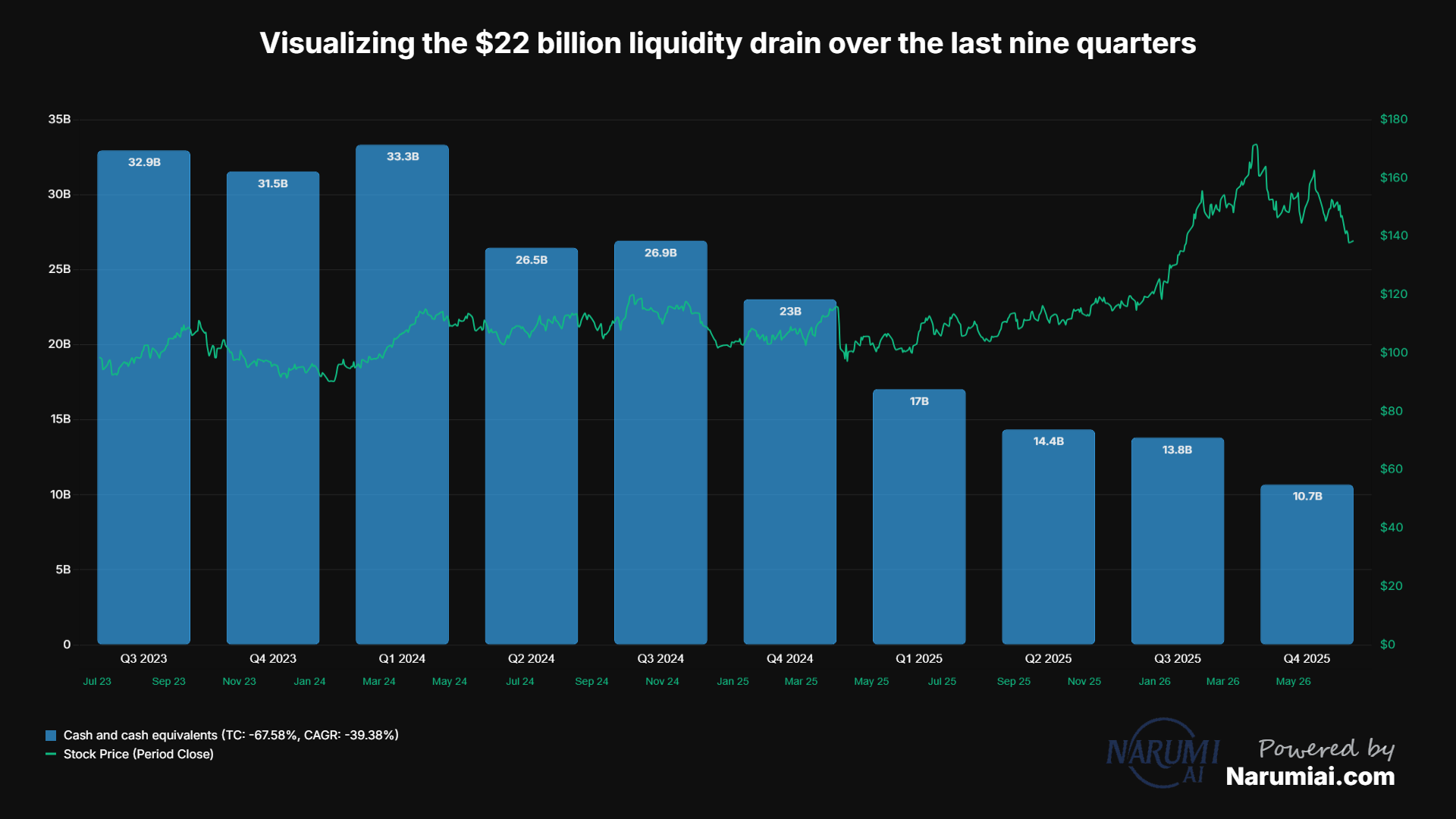
To understand the vulnerability of the world’s largest non-state oil company, one must look past the quarterly revenue and into the vault. In the third quarter of 2023, Exxon sat on a formidable cash pile of $32.9 billion. By the end of 2025, that figure had withered to just $10.6 billion—a staggering 67% decline in liquidity over a nine-quarter period. This isn't just a rounding error; it's the result of a relentless pursuit of shareholder returns and massive capital deployment into the Permian and Guyana.
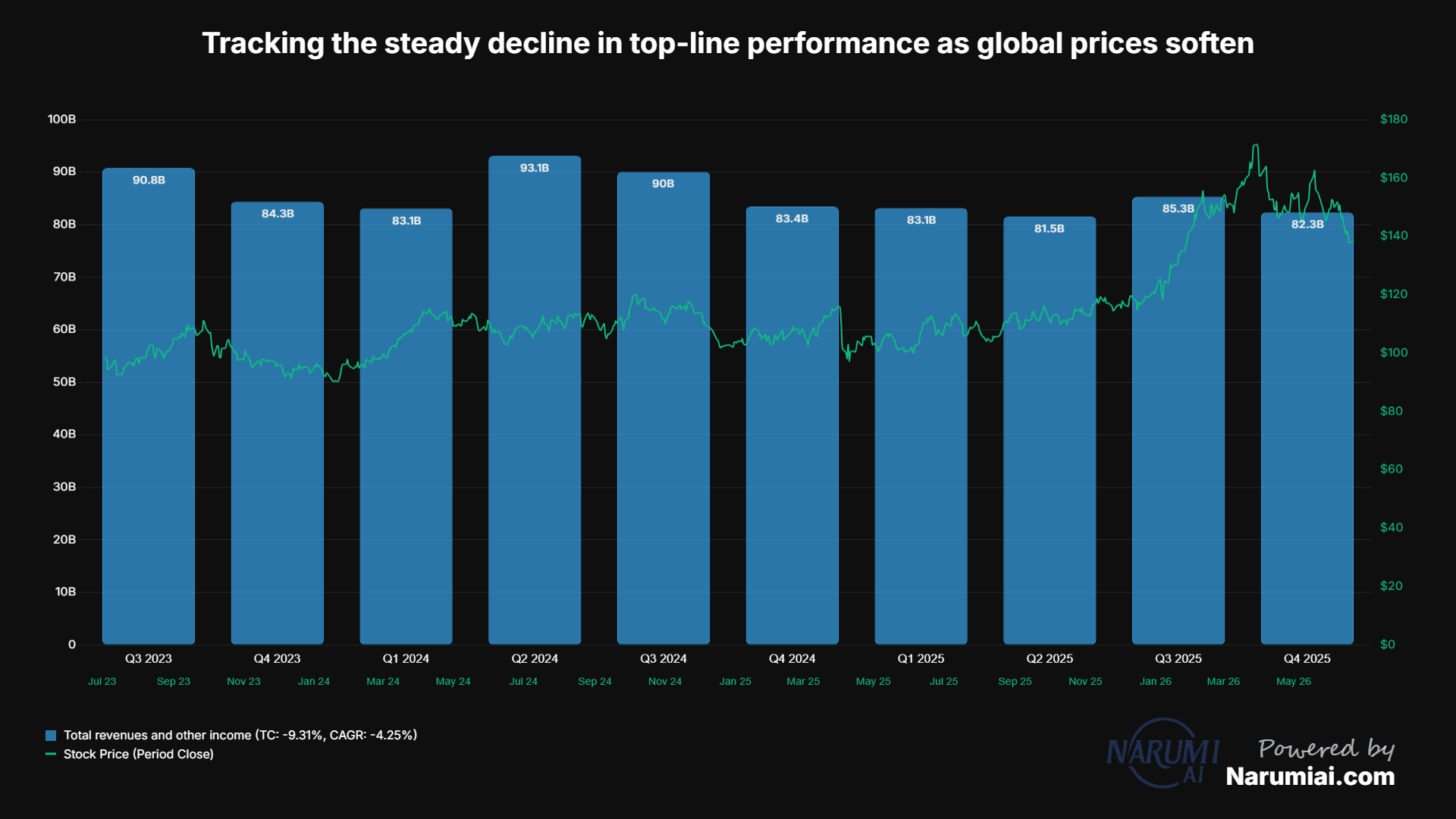
As prices soften, the 'Permian Premium'—Exxon's ability to drive production costs down to $35 or $40 per barrel—becomes the company's primary defense. However, the income statement already shows signs of erosion. Total revenues and other income fell from $90.7 billion in Q3 2023 to $82.3 billion in Q4 2025. When you factor in the Iranian waiver, which threatens to keep crude in the $70 range, the margin for error disappears. Exxon’s operating margin, which sat at a healthy 15.1% in late 2023, has already compressed toward the 10% mark. This 'silent bleed' is the true conflict at the heart of the boardroom: how to fund a $20 billion share buyback program when the cash flow from operations is no longer overflowing.
Chevron’s Deepwater Dilemma and the BP Hedge
While Exxon doubles down on short-cycle shale, its rival Chevron ($CVX) is navigating a different set of risks. Chevron’s integration of Hess has tied its future to the deepwater riches of Guyana. Unlike shale, where a rig can be sidelined in weeks, deepwater projects are multi-decade commitments that cannot be paused for a 60-day sanctions waiver. Chevron’s 'value over volume' posture is being tested as its net margin (which hovered at 12.5% in 2023) faces the same compression as Exxon's, dropping toward 6% in some recent quarterly estimates.
BP, by contrast, offers a different foil. As a European major with a massive global trading desk, BP is better positioned to arbitrage the logistical chaos that the Iranian waiver creates. As legal Iranian barrels re-enter the market, they will re-scramble the crude slates of Asian refiners. BP’s ability to play the spread between different crude grades provides a downstream shield that the more upstream-heavy American giants lack. While Exxon and Chevron fight for every cent of margin at the wellhead, BP is betting on the volatility of the trade itself.
The 'Snapback' Trap and the Logistics of Ghost Fleets
The 60-day window of General License X is a logistical nightmare. A typical tanker journey from the Persian Gulf to a refinery in India or China takes 30 to 45 days. If Exxon or its partners adjust their supply chains to account for this new supply, they risk being caught in a 'snapback trap.' If peace talks in Switzerland collapse before August 21, 2026, sanctions will return instantly. Any oil mid-transit could become a legal liability overnight.
Furthermore, the return of legal Iranian crude disrupts the 'Teapot' arbitrage in China. For years, independent Chinese refiners have feasted on discounted, illicit Iranian oil. If state-backed refiners in India and Japan can now legally bid on these barrels using U.S. dollars, the discount disappears, and the global pricing map is redrawn. This creates a ripple effect that hits Exxon’s export desks in the Gulf Coast, as their barrels face stiffer competition in the lucrative Asian markets.
Dividends: The Last Line of Defense
Despite the tightening liquidity and the Iranian supply shock, Exxon and Chevron are unlikely to blink on their dividend policies. With 43 and 39 consecutive years of dividend growth respectively, these payouts are treated as sacred obligations. However, something has to give. If Brent stays suppressed below $75, the primary casualty will be the share buyback program. Exxon has used its buyback machine as a shock absorber for years; expect that machine to slow down significantly in the second half of 2026.
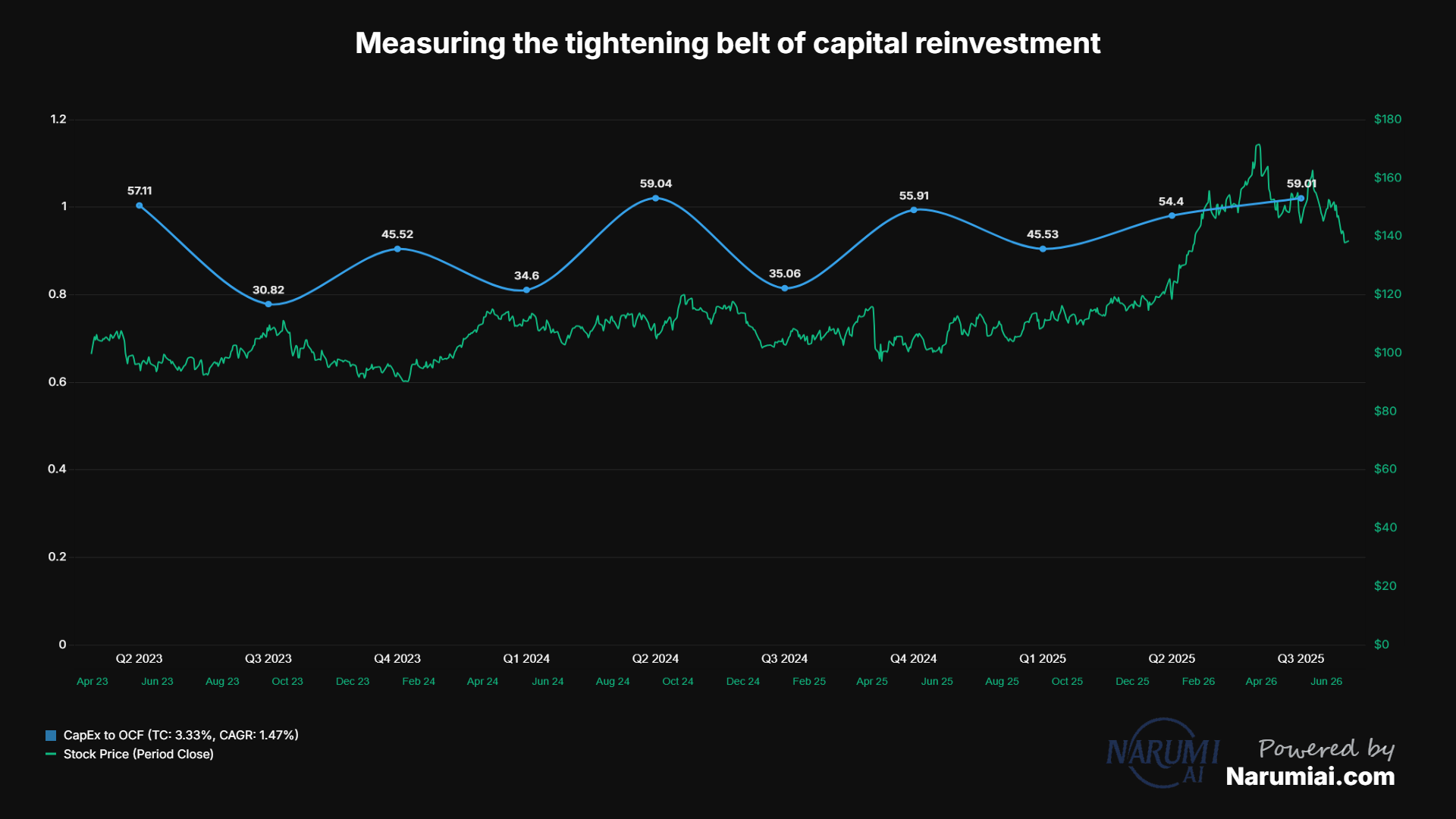
The ultimate verdict for investors rests on the August 21 deadline. If the waiver is extended, the era of $90 oil may be over for the foreseeable future, forcing Exxon to prove that its 'low-cost' Permian strategy can actually sustain the company's massive valuation in a $70 world. If the talks fail and sanctions snap back, the current price dip will be remembered as a brief, tactical retreat before the next supply crunch. For now, the world's most powerful oil executives are watching the news from Switzerland as closely as they watch their own pressure gauges.
Check out our Interactive Charting Tool.