Boeing’s Beijing Lifeline and the Death of Cheap Flight
The Art of the Diplomatic Currency
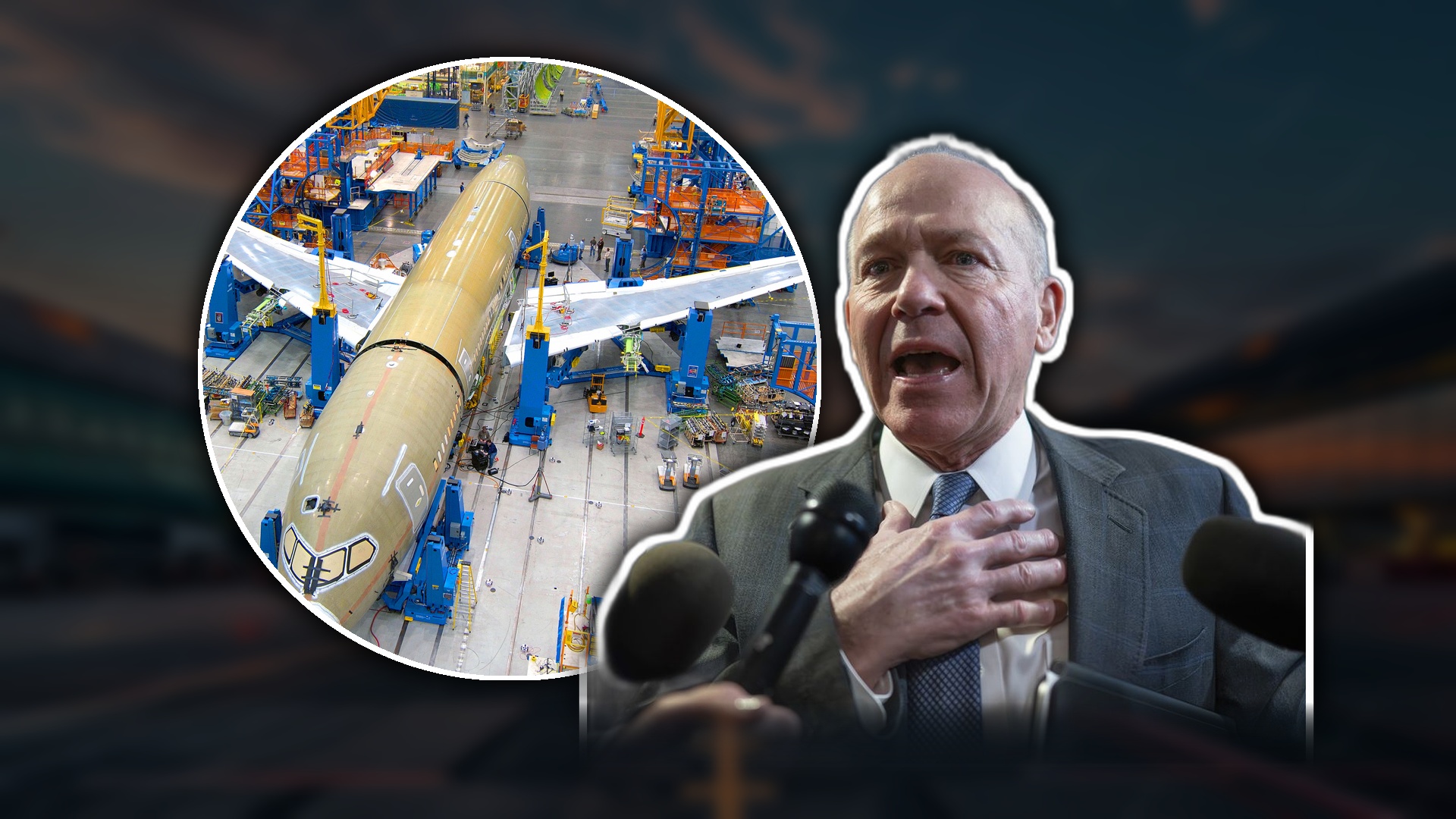
In the high-stakes theater of global trade, aircraft are rarely just machines; they are the ultimate bargaining chips. As President Trump stepped onto the tarmac in Beijing this May, the announcement of a 200-jet order for Boeing ($BA) felt less like a commercial victory and more like a tactical peace offering. For a company that has spent the better part of a decade dodging regulatory lightning and production scandals, the deal is a vital 'demand signal' to a jittery U.S. supply chain. Yet, behind the celebratory handshakes, the numbers suggest Boeing is still playing a desperate game of catch-up. While 200 jets sounds massive, it is a drop in the bucket compared to the nearly 700 commitments Airbus has secured from Chinese carriers since 2022. Airbus hasn’t just sold planes; they’ve built a 'moat' with their Final Assembly Lines in Tianjin, effectively neutralizing the geopolitical tariffs that continue to haunt Boeing’s balance sheet.
The Ghost of Spirit and the Margin-First Manifesto
The aviation landscape of 2026 is being haunted by the wreckage of Spirit Airlines—the largest industry failure in a generation. The collapse sent a shockwave through the 'Ultra-Low-Cost Carrier' (ULCC) segment, proving that volume without a niche is a suicide mission. In its wake, we are seeing a fundamental pivot. Allegiant Air’s $1.5 billion acquisition of Sun Country isn't about flying more people; it’s about flying more profitably. By absorbing Sun Country’s diversified revenue—specifically its lucrative cargo contracts with Amazon—Allegiant is insulating itself from the volatile whims of the budget traveler. This is a 'margin-over-growth' strategy that is forcing the rest of the industry to evolve or vanish. Southwest Airlines, once the king of the budget sky, is now retreating from its 'fortress' positions, testing 'Premium-Lite' seating and extra legroom to capture the higher-yielding leisure travelers who have abandoned the bottom-tier experience.
The Crack Spread Trap and the $1,800 Tonne
If the ghost of Spirit is the industry's warning, jet fuel is its executioner. Since February 2024, fuel prices have doubled, peaking near $1,800 per tonne this month. But the real 'silent bleed' isn't just the price of crude—it’s the 'Crack Spread.' This is the cost of refining crude into jet fuel, a metric that many mid-tier carriers failed to hedge. While giants like Delta and Qantas protected their crude exposure, they left their refining margins wide open, leading to hundreds of millions in unforecasted costs. For short-haul carriers, this is a mathematical dead end. Takeoff and climb are the most fuel-intensive phases of flight; when a $50 ticket must become a $90 ticket just to cover the kerosene, the 'demand cliff' becomes inevitable. We are seeing a 'K-shaped' aviation economy where the wealthy continue to fly premium, while the budget segment is being systematically priced out of the sky.
Structural Scarcity and the Engine Bottleneck
The most critical catalyst for the remainder of 2026 isn't the number of orders, but the number of operable engines. The industry is currently mired in a 'structural scarcity.' Thousands of airframes—often referred to as 'gliders'—are sitting in storage because they lack engines, largely due to the ongoing metal powder inspections at Pratt & Whitney. Maintenance facilities are backed up for over 250 days. This means that even with the 'Beijing Reset,' Boeing and Airbus are hitting a hard ceiling. Institutional investors are no longer looking at the order book; they are looking at 'MRO' (Maintenance, Repair, and Overhaul) turnaround times. The winners in this new era won't be the ones with the most planes on paper, but the ones with the most engines in the air and the most sophisticated AI to manage the 'irregular operations' that have become the new normal.
Check out our Interactive Charting Tool.