Apollo’s $40 Billion "I Told You So"
The Smartest Guy in the Room Just Left the Party
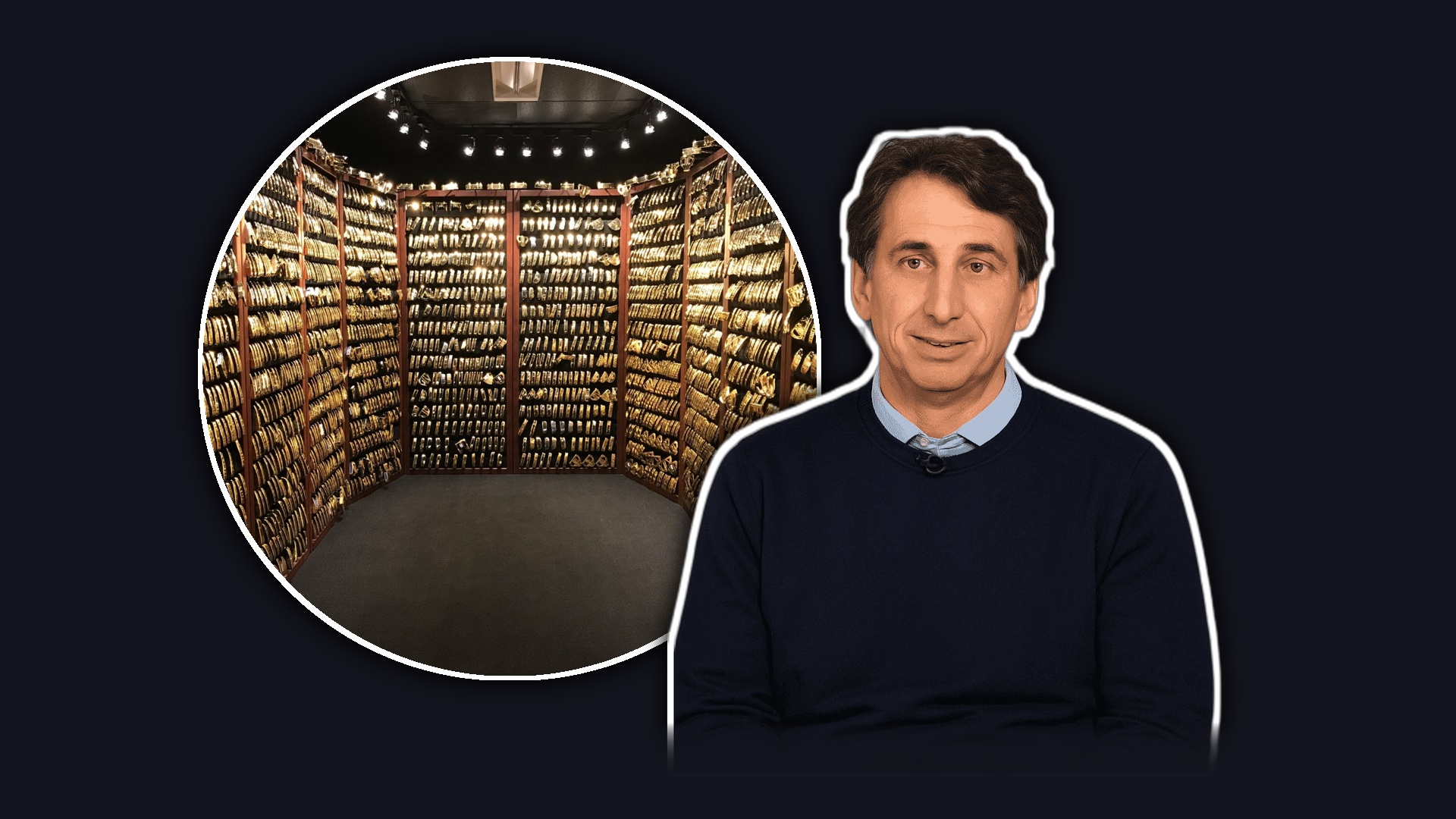
Imagine you’re at a high-stakes gala. The music is pumping, the AI-themed cocktails are flowing, and everyone is toasted on 60% year-over-year gains. Suddenly, Marc Rowan—the CEO of Apollo Global Management ($APO)—stops the music, grabs the mic, and tells everyone there’s a 35% chance the roof is about to cave in. Then, he walks out and starts boarding up his windows with $40 billion in cash.
That is essentially what happened this week. Rowan isn't just a pessimist; he’s a strategist who manages nearly half a trillion dollars. His warning of a 'major market shock' driven by geopolitical resets and AI disruption has sent a chill through the spine of the tech-heavy markets. While retail investors are still chasing the semiconductor dragon, Apollo is quietly de-risking, slashing exposure to 'risky' software, and preparing for a world where the AI hype meets a very cold, hard reality.
The $40 Billion Doomsday Vault
Apollo’s financials tell a story of a company that is scaling its 'steady' income while bracing for impact. Look at the management fees—the 'rent' Apollo collects for just existing. In Q3 2023, management fees sat at $462 million. By Q4 2025, they’ve climbed to $681 million. That’s a 47% increase in high-margin, recurring revenue.
However, the real action is in the 'Retirement Services' arm, which is essentially an insurance engine. Net investment income here has ballooned from $3.16 billion to $5.11 billion in the same period. But here's the kicker: while they preach safety, their debt in the retirement segment has more than doubled, jumping from $3.6 billion to $7.8 billion. They are leveraging up to buy 'safe' assets, a classic Apollo move that works until it doesn't.
The Fundamental Disconnect: $APO vs. $SOXX
While Apollo builds a fortress, the semiconductor sector ($SOXX) is living in a penthouse made of glass. The 'Big Short' himself, Michael Burry, has reportedly placed massive bets against the semiconductor sector using puts expiring in 2027. Why? Because the math is getting weird.
In the chip world, we have a 'concentration crisis.' AI chips (the fancy stuff from Nvidia) drive 50% of the revenue but represent only 0.2% of the actual volume of chips produced. It’s like a car company making all its money on three gold-plated Ferraris while its fleet of millions of sedans sits unsold. If Big Tech (the 'hyperscalers') decides to slow down their AI spending even slightly, the $SOXX index could face a liquidity crunch that would make the dot-com bubble look like a minor fender bender.
The Insurance 'Canary' in the Coal Mine
Marc Rowan didn't stop at AI. He took a swing at his own rivals, flagging 'egregious' practices at other insurance firms. He’s worried about 'regulatory arbitrage'—essentially, companies using accounting tricks to look safer than they are. If a major insurer fails because they were reaching for yield in risky software debt, it could trigger a 'forced liquidation' event.
When a massive institution needs cash fast, they don't sell their 'stuck' private assets; they sell their most liquid 'winners.' Right now, that means dumping $SOXX. A crisis in the 'boring' insurance world could actually be the catalyst that pops the tech bubble.
How to Play the Paranoia
So, what’s a retail investor to do when the giants are fighting? The Research Dossier suggests a few tactical pivots:
Watch the 'AI ROI' Signpost: If Microsoft or Google start reporting that AI isn't actually making them more money yet, get out of the way of the chip stocks.
The Fortress Strategy: Follow Apollo’s lead into 'Productive Credit.' Instead of betting on the next 10x chip stock, look at firms with vertical integration (like Texas Instruments) that own their factories and serve boring industries like cars and washing machines.
Hedge with Gold or Defense: As geopolitical tensions rise, these sectors act as a natural 'shock absorber' for your portfolio.
Apollo’s margin profile shows the strain of this defensive posture. In Q3 2023, their Net Margin (Net Income / Total Revenue) was a healthy 18.1%. By Q4 2025, that has compressed to roughly 10.4%. Scaling the massive retirement business is expensive, and 'safety' has a price. Apollo is willing to pay that price to ensure they are the ones holding the cash when the music finally stops.
The Final Verdict
We are in a '2026 Paradox.' Semiconductor revenues are hitting record highs ($975B), yet the smartest money in the room is terrified. Apollo isn't just hoarding cash; they are waiting for the 'liquidity gap' to open so they can buy the very assets Burry is shorting at cents on the dollar. For the rest of us, it’s a reminder that in a market driven by hype, cash isn't just king—it's the only life jacket that actually floats.
Check out our Interactive Charting Tool.