American Airlines Wants Your Fancy Suitcase Money
Chasing the Champagne: American’s Multi-Billion Dollar Makeover
For years, American Airlines ($MARKET) has been the 'reliable-enough' middle child of the legacy carrier family. While Delta ($DAL) was busy curating an aura of luxury and United ($UAL) was scaling its global footprint like a tech giant, American was often seen as the high-frequency domestic workhorse. But CEO Robert Isom is officially over it. The airline is pivoting hard toward the high-spending traveler, attempting to close a multibillion-dollar profit gap that has left it trailing its peers.
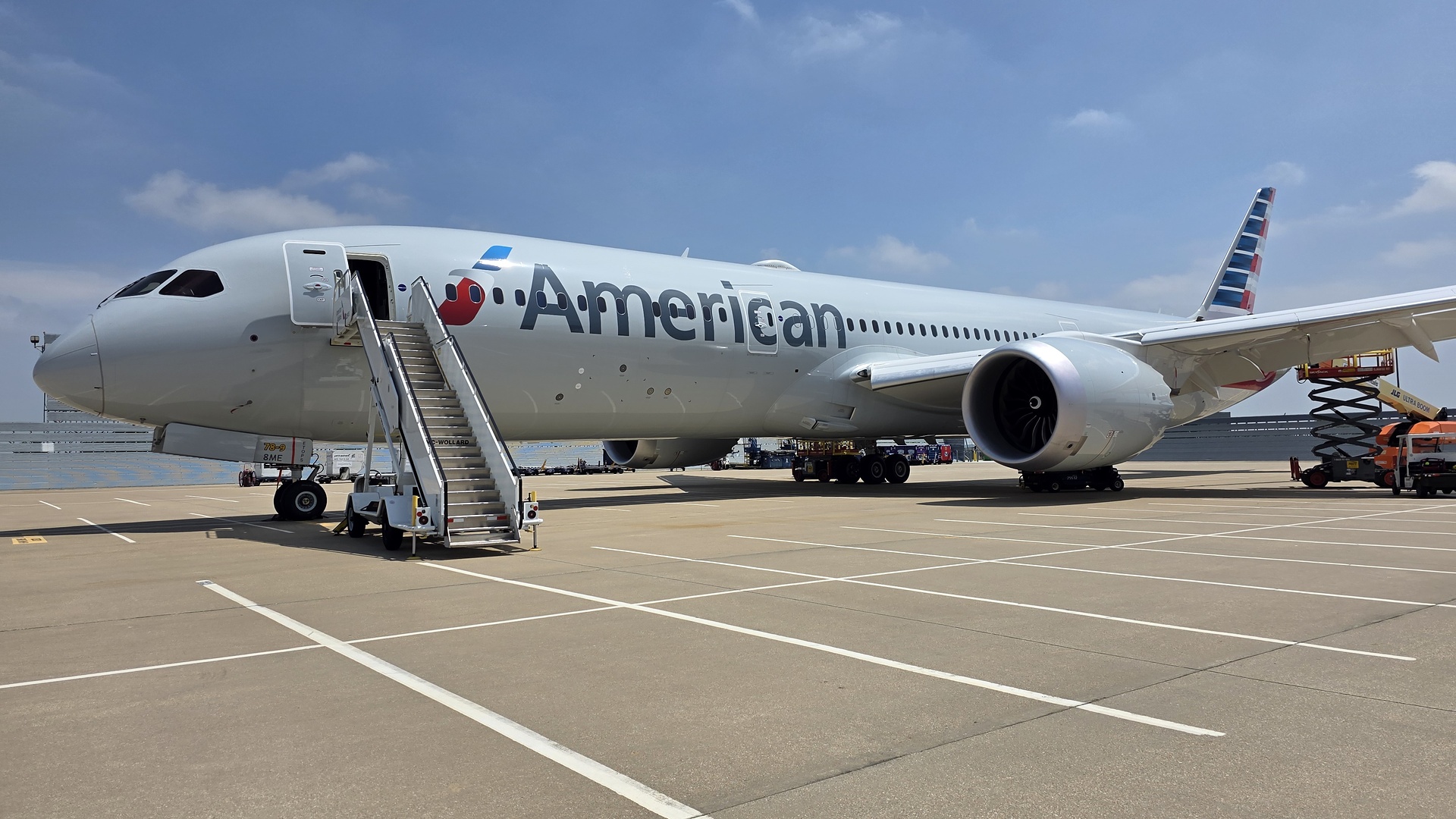
The plan is simple but expensive: more luxurious cabins, expanded Admirals Clubs, and revamped Flagship lounges. Think of it as a house flip, but the house is a fleet of Boeing 787s and the budget is measured in billions. American is acknowledging that it has lagged in the 'premium' segment, and in a world where travelers are increasingly willing to pay for a lie-flat seat and a pre-flight shower, that lag is costing them dearly.
The $35 Billion Financial Tightrope
While the vision is all caviar and cashmere, the balance sheet looks a bit more like a clearance rack. American enters this transformation with a massive weight around its neck: debt. We’re talking roughly $34.7 billion to $36.5 billion in total debt. To put that in perspective, United holds about $25 billion, and Delta has managed its adjusted net debt down to around $14 billion.
This isn't just a number on a spreadsheet; it’s a straitjacket. American’s Interest Coverage Ratio—a metric that tells us if a company earns enough to pay the interest on its debt—sits at a razor-thin 1.1x. For every dollar they make in operating income, nearly 91 cents is spoken for by the bank. Compare that to Delta’s robust 8.6x or United’s 4.6x, and you see the problem. American has almost zero margin for error.
Delta’s Moat and United’s Scale: The Incumbent Wall
American isn't just fighting its own balance sheet; it’s fighting two rivals who have spent the last five years building digital and physical fortresses. Delta has the 'Amex Ecosystem'—a co-branded credit card powerhouse that locks in high-spenders before they even book a flight. By tying elite status to credit card spend, Delta ensures its best customers wouldn't dream of switching to an American Flagship lounge, no matter how good the shrimp cocktail is.
Meanwhile, United has been on a 'United Next' tear, retrofitting its fleet with a massive proportion of premium seats. They’ve mastered Granular Cabin Segmentation—the art of charging you a little more for a middle seat that stays empty or a few extra inches of legroom. They have the scale to flood the market with premium options, making it hard for American to find oxygen.
The Labor Trap: When Service Meets Reality
There is a hidden cost to going 'Premium.' It’s labor-intensive. You can't run a luxury lounge with a skeleton crew, and you can't provide world-class in-flight service if your staff is stretched thin. This brings us to the union pressure. American is facing significant heat from labor unions regarding staffing levels and wages.
The airline is dealing with a rising CASM-ex (Cost per Available Seat Mile, excluding fuel). This is the 'baseline' cost of flying a seat one mile. As new labor contracts lock in double-digit raises, American’s cost floor is rising. If they successfully attract premium flyers, those higher fares might just be swallowed whole by the increased cost of the people serving the drinks.
The Institutional Verdict: Show Me the Money
Wall Street is watching one specific metric above all else: Paid Premium Load Factor. Historically, those fancy seats were often filled by 'upgraders'—loyal flyers using points or status to sit in the front. To justify this pivot, American needs to prove people are actually opening their wallets and paying cash for the privilege. Institutional investors are also keeping a close eye on the Loyalty Remuneration target of $1 billion per quarter. If the Citi co-branded card doesn't start printing money at that rate, the 2027 EPS rebound projections might just be wishful thinking.
As American Airlines attempts this mid-air transformation, the stakes couldn't be higher. They are betting that the American traveler’s appetite for luxury is bottomless. If they're right, they close the gap. If they're wrong, that $35 billion debt load is going to feel a lot heavier.
Check out our Interactive Charting Tool.